Everest Base Camp Trek for Beginners
The Complete 2025/26 Guide for First-Time US Trekkers
By Bimal Dahal, Lead Guide & Founder, Happyland Treks | TAAN Registered | Nepal Tourism Board Licensed | 15+ Years on EBC
Last Updated: March 2026 · Guide version reviewed against 2025/26 permit & regulation changes
|
⭐ 4.9 / 5 Google Reviews |
🏔 15+ Years EBC Expertise |
🇳🇵 TAAN Member Reg.167517/73/074 |
💚 3% Revenue To Local Communities |
Written from personal trekking experience on the EBC trail, and from long conversations with Bimal Dahal — owner of Happyland Treks and an EBC guide for 15+ years — whose stories and occasional frustrations are woven throughout this guide. His words appear in quotation marks throughout. Mine are everything else.
(If you're reading this at 11:47 pm with six tabs open and a Google Maps screenshot of Nepal on your phone — you're exactly the person I wrote this for.)
Can You Do This?
Can a Normal Person Do EBC?
Short answer: yes — if you really want it.
When I first started researching EBC, I kept circling the same question: Can a normal person actually do this? Not a professional athlete. Not someone who grew up in the mountains. Just a person who wanted it badly enough and was willing to show up for twelve weeks of training and then go slowly when everything in them wanted to push.
Every year, thousands of Americans land in Kathmandu carrying a dream most people never actually chase. They've seen the photos. They've quietly Googled 'can a normal person do Everest Base Camp?' at midnight — probably more than once. The answer, consistently, is yes.
Happyland Treks has been taking trekkers to EBC for over 15 years. A lot of our clients fly in from California having never trekked at altitude before. Some have never owned a proper pair of hiking boots. Most of them make it — not because EBC is easy, but because with the right pace and people who know wh
at they're doing, it's genuinely achievable for a determined beginner.
Already decided? Skip ahead
If you're past the 'Can I do this?' question and into the 'What will it take?' phase — jump straight to: Cost Breakdown · Booking Timeline · Training Plan · or call us directly at +977 984 941 7757 to start building your itinerary.
For $1,598— roughly a third of what Western operators charge for the same trek — you get a guide who grew up in the shadow of Everest, a local team that solves problems in real time in their native language, and the knowledge that 3% of what you spend goes directly back to the Sherpa communities. That’s the Happyland Treks difference.
The fears that keep people from booking EBC
• "I'm not fit enough." Fitness matters less than most people think. Stubbornness and pacing matter more. If you can hike 6 miles (9 km) with a light pack and build from there over 12 weeks, you have enough to start.
• "Altitude will stop me." Most people who turn back did so because they went too fast — not because their body couldn't adapt. A properly spaced itinerary with real acclimatization days is your primary protection.
• "I'm going alone (as a woman)." EBC is one of the safest long-distance treks in the world for solo women. There's a full section on this below — read it before you decide.
• "It's too dangerous." Thousands of beginners complete EBC safely each season. Respect the mountain, prepare properly, and listen to your guide. The trail is well-traveled for a reason.
So: can you do this? Yes — if you want it enough to train, to go slowly when everything in you wants to push, and to keep moving when it gets hard. The mountain will meet you halfway.
|
If these fears sound familiar, you're in the right place. We've designed itineraries specifically for first-time US trekkers who start from exactly this point. Talk to us: happylandtreks.com/customize-trip Still deciding? WhatsApp Bimal directly: +977 984 941 7757. He answers. Not a booking form, not a support queue — the person who will actually be on the mountain with you.
|
EBC Trek Difficulty Rating: What the Scores Actually Mean
Every trek database rates EBC differently, and the variation is wide enough to confuse anyone planning their first high-altitude trip. Lonely Planet calls it 'moderate to strenuous.' AllTrails users average it at 'hard.' Nepal tourism boards classify it as 'strenuous' on their official scale. All of these are technically accurate and practically unhelpful.
Here is what the difficulty scores are actually measuring — and what they're not.
The official EBC trek difficulty classification
|
Rating System |
EBC Rating |
What It Measures |
What It Ignores |
|
Nepal NTB Official |
Strenuous |
Days, altitude gain, distance |
Your actual fitness starting point |
|
Lonely Planet |
Moderate–Strenuous |
Terrain + altitude combined |
Psychological stamina |
|
AllTrails |
Hard (4.1/5) |
User-reported difficulty |
Varies wildly by user fitness |
|
Happyland Treks |
Moderate with preparation |
Fitness + pace + acclimatization |
Nothing — this is the honest one |
What the rating systems all agree on: EBC is not technically difficult. There is no climbing, no ropes, no scrambling, no navigation. It is a walking route — a long, high, demanding one. The difficulty is cardiovascular and psychological, not technical. A person who has never owned crampons can complete EBC. A person who refuses to slow down often cannot.
The five factors that actually determine your difficulty
|
Factor |
Impact |
Notes for US beginners |
|
Altitude |
Highest |
Cannot be trained around at sea level — only managed through pacing & acclimatization |
|
Daily walking hours |
High |
5–9 hrs/day for 12 days. Cumulative fatigue is the real enemy, not any single day. |
|
Terrain |
Moderate |
Rocky, uneven, steep in sections. No scrambling. Ankle support matters. |
|
Weather |
Variable |
October is stable. Conditions above 5,000m can change in under 30 minutes. |
|
Psychological load |
Underrated |
Distance from home, physical discomfort, altitude headaches — all manageable with the right guide. |
Compared to other major treks worldwide: EBC is often considered more demanding than popular Kilimanjaro routes (such as the Marangu route), largely because its 14-day itinerary includes more sustained altitude exposure — though Kilimanjaro reaches a higher summit elevation (19,340 ft vs. EBC’s 17,598 ft ) and comparable to — and arguably harder than — EBC: the Annapurna Circuit crosses Thorong La Pass at 17769 ft (higher than Base Camp), covers 99–143 miles, and has greater cumulative elevation gain. It’s a useful benchmark if you’re already experienced. The Three Passes circuit in the same region is significantly harder. Tour du Mont Blanc in Europe is physically similar but at much lower altitude. Patagonia’s W Trek is easier.
Bottom line on difficulty: if you can hike 6–8 miles with a loaded pack on consecutive days, and you commit to the 12-week training plan below, EBC is achievable. The mountain will test you. It will not defeat you unless you rush it.
Is the Everest Base Camp Trek Right for You?
EBC is not a technical mountain climb. No ropes, no crampons, no climbing experience required. What you need is cardiovascular endurance, the mental stubbornness to keep moving when your legs are having a different conversation, and the willingness to listen to your guide and go slow — especially when you feel fine and think you don't need to.
The trail is a well-worn path with teahouses every few hours. Thousands complete it every season — families with children, people in their 60s on their first trek, first-timers from sea-level cities who'd never owned proper hiking boots before they found this page.
The Real Fitness Benchmark for Beginners
People love to ask whether they're 'fit enough.' Here's a more useful question: can you hike 6–8 miles with a 15–20 lb daypack without feeling destroyed the next day? Can you climb 10–12 flights of stairs without stopping? Can you walk for 5–8 hours at a moderate pace on consecutive days? If the answer to all three is yes or close to yes, your body can get ready in 12 weeks.
What Bimal emphasises most — after 15 years watching people succeed and fail on this trail — isn't peak fitness. It's flexibility and mentality. The mental habit of walking 5 to 9 hours per day. 'Age does not matter,' he says. 'Anyone can come and can do it — as long as the motivation "I can do it" is there.' We've guided 60-year-olds who made it look easy. We've had 28-year-old gym regulars who struggled. The correlation between gym fitness and EBC success is genuinely weak.
|
Close to these benchmarks already? Tell us where you're starting from when you inquire and we'll build a 12-week ramp-up plan around your actual schedule. happylandtreks.com/customize-trip |
The single biggest mistake US beginners make during EBC
It's speed. Not fitness, not gear, not experience — speed. In 15 years of guiding, Bimal has watched the same pattern so many times he describes it with weary familiarity.
"The biggest mistake US beginners make," he says, "is they just run. They run and at the very beginning they apply a lot of force. On the first day it's easy down there — they feel great, so they push hard. And sometimes they say, 'Oh, nothing has happened to me,' and even reduce their acclimatization days."
This is the part that surprises people: feeling strong at 12,000 feet tells you almost nothing about how you'll feel at 17,000 feet. The altitude is the real challenge on EBC — not the distance, not the terrain, not your fitness level. Trekkers who push hard early, skip acclimatization days, or try to compress the itinerary are the ones who end up symptomatic and have to descend. It's almost never the people who go slowly who have to turn back.
What most beginners get wrong about EBC
Most first-timers imagine EBC as some kind of survival expedition — cold rations, tents, cut off from civilization. The reality surprises almost everyone. One of the most persistent misconceptions Bimal encounters: people compare EBC to Kilimanjaro. "Some percentage of tourists think EBC and Kilimanjaro have similarities. Kilimanjaro is an all-camping trek — but Everest Base Camp doesn't have camping now. It's all teahouses, all the way up to Gorakshep."
Out of 1,000 clients who trek to EBC, around 20 actually sleep at Everest Base Camp itself — with expedition teams. The other 980 sleep in teahouses. Proper teahouses with beds, dining rooms, hot food, and intermittent WiFi. This is not a wilderness survival exercise.
The trail is also more emotional than most people expect. Something shifts up there that's difficult to put into words — maybe the altitude, maybe the scale of the Himalayas, maybe standing at Tengboche Monastery with prayer flags snapping in the wind and suddenly feeling very, very small. Clients who arrive as practical, skeptical Americans often leave describing something that felt almost spiritual. We've stopped being surprised by it.
When to Book: Your EBC Planning Timeline
This question gets searched constantly and answered almost nowhere. Most guides say 'book early' and leave it there. Here's the actual breakdown, because the timing windows are more specific than people realize — and missing them costs money.
Why timing matters more than you'd think for EBC trek
Flights from California to Kathmandu during October are among the most competitive routes in adventure travel. Prices from LAX and SFO spike sharply inside the 6-month window, especially for Turkish Airlines, Air India, Cathey Pacific, Qatar and Emirates. It's not just price either. Late bookers end up with worse connection times, more layovers, and much less flexibility when an outbound flight gets delayed in LA. I've seen clients lose their Lukla flight because they were 4 hours late landing in Doha due to a connection they'd picked to save $180. Not worth it.
On the trekking side: small-group departures with good local operators fill up — especially October and early November, when the trail is at its most crowded and its most beautiful. Teahouse rooms in Namche, Dingboche, and Gorakshep fill up weeks in advance in peak season. In Namche, the Khumbu Lodge and Hotel Namche are reliable mid-range options; in Dingboche, the Garden View Lodge and Hotel Peaceful are well-regarded; in Gorakshep, the Yak Hotel is the most-used by groups. Book through your operator — good teahouses at these stops are genuinely short supply during peak weeks. Book 3 months out and your preferred dates may simply not exist anymore.
The planning timeline
|
When to Act |
What to Book/Do |
Why |
|
9–12 months out |
Book international flights (Oct–Nov travel) |
Peak fares from California rise sharply after 6 months. Choice narrows too. |
|
6–9 months out |
Book trek package with Happyland Treks |
Small-group departures and good guides fill up — especially Oct/Nov. |
|
4–6 months out |
Start 12-week training plan (build in buffer time) |
Gives space to build fitness gradually and recover from injury if needed. |
|
3–4 months out |
Research core gear; begin breaking in boots |
Boots need 1–2 months of real use. Not days. This is non-negotiable. |
|
6–8 weeks out |
Confirm travel insurance covers helicopter evacuation |
Read the actual policy, not the summary. Details matter here. |
|
2–4 weeks out |
Pre-trek doctor visit; discuss Diamox if relevant |
Prescriptions take time. Don't leave this to the last week. |
|
1–2 weeks out |
Full gear test hike wearing everything you're bringing |
Last chance to find problems before Nepal. |
|
Day of departure |
Keep permits + insurance docs in carry-on bag |
Checked bags disappear. These documents do not get re-issued quickly. |
One note specific to October trekkers: Nepal's Dashain festival falls in October and affects transport and staffing in Kathmandu. Your operator handles this — but it's worth knowing when you're planning your arrival days.
|
Tell us your target window and we'll confirm availability immediately — October spots are filling. WhatsApp/Call: +977 984 941 7757 | happylandtreks.com/customize-trip |
Getting to Nepal from the US
There are no direct flights from the US to Kathmandu (Tribhuvan International Airport, KTM). You'll connect through a Middle Eastern or Asian hub. From the West Coast:
• Doha (Qatar Airways) — most popular among our California clients, good value from LAX and SFO
• Dubai (Emirates) — slightly longer overall but excellent service
• Taipei or Hong Kong — good options via EVA Air or Cathay Pacific
• Delhi — budget option, adds complexity and another variable to manage
Door to door from California, expect 18–24 hours. Plan to arrive at least two days before your trek starts — one for jet lag, one for last-minute gear shopping in Thamel. Everything you forgot to buy at home can be found in Thamel, usually at comparable prices.
Visa and permits
US passport holders get visa on arrival at Kathmandu airport. A 30-day visa costs $50 USD cash — bring USD cash or another major currency (euros, GBP, AUD all accepted); an e-visa option launched in late 2025 at immigration.gov.np can save airport queue time, though early reports note occasional processing delays. You'll also need one passport photo (kiosks at the airport if you forget).
Visa Extensions:If you wish to stay longer, you can extend your visa at the Department of Immigration in Kathmandu or Pokhara for a minimum of 15 days for USD 45, plus USD 3 per day for additional days.
Overstay Penalty:A late fine of USD 5 per day applies if you overstay.
Visa on Arrival:Most travelers can obtain a visa on arrival at Tribhuvan International Airport or designated land border crossings.
The Lukla flight
Lukla gets listed as one of the world's most dramatic airports — short runway, mountainside, the works. It's exhilarating rather than terrifying. The pilots fly this approach dozens of times daily during season. During peak periods (Oct–Nov and March–May), flights often route through Ramechhap Airport, a 4–5 hour pre-dawn drive from Kathmandu followed by a 12–15 minute flight. Flights operate reliably in good weather, though weather cancellations are always possible — especially early and late in the season. We arrange all of this — it's just part of the logistics you don't have to think about.
➜ Read More: Flying via Ramechhap in 2025/26? What to expect, how to prepare for the 2AM departure: Lukla vs Ramechhap Airport — What EBC Trekkers Need to Know in 2026 → happylandtreks.com/ramechhap-airport-guide
Nepal Trekking Permits 2025/2026: What You Need and What It Costs
This is one of the most searched questions before booking EBC and one of the most poorly answered online. The permit structure for the Everest region changed significantly in recent years and the numbers floating around on older blog posts are often wrong. Here is the current picture for 2025/2026.
The two permits required for EBC
|
Permit |
Cost (USD) |
Where Issued |
Notes |
|
Nrs 3000 (~$21) |
Monjo checkpoint on trail |
Required for all trekkers entering the park. Acquired in Kathmandu (National Tourism Board) or Monjo |
|
|
Khumbu Pasang Lhamu Rural Municipality Fee |
Nrs 2000 (~$14) |
Lukla / Monjo |
Local municipality conservation fee, introduced 2020. Acquired in Lukla or Monjo |
|
Included with guide |
Kathmandu / TAAN office |
As of 2023, individual TIMS not required if guide-accompanied — guide registration covers this |
Read more about TIMs Card Here: https://www.taan.org.np/page/about-tims
Total permit cost: approximately ~35 USD in 2025/2026 (two permits: Sagarmatha National Park Entry + Khumbu Pasang Lhamu Rural Municipality). Note: TIMS cards are no longer required for the EBC region as of 2023. These fees are separate from your trek package and paid locally. We handle all permit paperwork as part of our service — you don't queue at government offices.
The 2023 guide requirement — what changed
From April 2023, the Nepal government mandated that all foreign trekkers in the Everest, Langtang, and Annapurna regions must be accompanied by a licensed guide. This regulation was introduced partly to address the number of trekkers who required rescue — a disproportionate number were solo independent trekkers who had gotten into difficulty on the trail without local support. The regulation applies even to experienced trekkers. There are no exceptions for prior EBC completions or mountaineering credentials.
You can be turned back or fined at checkpoints if you try to trek from Lukla without a registered guide, so we strongly advise against attempting to go without one.
What your guide registration covers
• Your guide registers with the TAAN (Trekking Agencies Association of Nepal) and carries their license card
• Group trekker registration is submitted through the trek operator before departure
• TIMS cards are no longer required for the Everest region (replaced by the Khumbu Pasang Lhamu permit) — your two mandatory permits are all that is needed
• Porter registration is handled by the operator — our porters are all registered under our company license
Permit checkpoints on the trail
You will pass through permit check stations at Lukla, Monjo (Sagarmatha National Park gate), and occasionally at other points. Your guide carries copies of all permits and handles checkpoint interaction. You need your original passport for identity verification at the park gate — carry it in your daypack, not in your main duffel with the porter.
|
2025/2026 Permit Summary for US Trekkers ➜ Read More: Full permit walkthrough with checkpoint photos, exact NPR amounts, and what happens if you arrive without one: EBC Trekking Permits 2025/26 — Step-by-Step Guide for Foreign Trekkers → happylandtreks.com/ebc-permits-guide Total cost: ~$35 USD | Sagarmatha National Park Entry Permit: ~$21 (NPR 3,000) | Khumbu Pasang Lhamu Rural Municipality Permit: ~$14 (NPR 2,000). Note: TIMS cards are no longer required for the EBC region. All paperwork handled by Happyland Treks. Bring your passport to the trail checkpoint at Monjo. |
What You'll Really Spend on EBC (Full USD Breakdown
Everest Base Camp Trek Cost 2026: Full USD Budget Breakdown
• Return flights USA–Kathmandu: $800–$1,400
• Nepal visa (30-day): $50 USD cash, airport
• Trekking permits: ~$35 USD total (two permits; TIMS no longer required)
• Trek package (14 days, guide + porter): from $1,598 with Happyland Treks
• Travel insurance with helicopter evacuation: $100–$200 USD
• Gear (if buying new): $300–$800 — reducible significantly by renting in Thamel
• Kathmandu hotel (2 nights pre-trek, 1 post): $40–$120/night
• On-trail spending money: $200–$400 USD (WiFi, hot showers, charging, snacks)
• Tips for guide and porter: $150–$200 USD — customary and genuinely earned
Total realistic budget: $3,000–$4,500 USD all-in for a California trekker. For context: Western operators charge $4,500–$6,000 for the trek package alone — before flights, gear, visa, or tips. Most of that difference is Western overhead, not service quality.
What this means practically: the gap between booking local and booking through a Western brand is roughly $3,000–$4,500 in your pocket, for the same trail, the same mountain, and — we'd argue — a better guide. The local operator has a personal stake in the outcome that a global brand physically cannot replicate. When something goes wrong at Dingboche at 9 PM, your guide calls his cousin who works at the teahouse two valleys over. The Western operators head office in USAmight callan emergency hotline.
|
Ready to see what your specific budget gets you? We'll map out a full itinerary with no commitment. happylandtreks.com/customize-trip | +977 984 941 7757 |
EBC Travel Insurance: The Gaps That Cost People Thousands
Every trekking guide tells you to get travel insurance. Almost none of them tell you why your existing insurance is probably wrong for EBC — and the gap between 'I'm covered' and 'I'm actually covered' costs people thousands of dollars every season.
The credit card insurance trap
This one deserves its own paragraph because it catches so many US trekkers off guard. The travel insurance that comes bundled with premium credit cards — Chase Sapphire, Amex Platinum, various others — is genuinely good for what it's designed for: trip cancellation, lost luggage, delayed flights. It is not designed for helicopter evacuation from 17,000 feet in the Himalayas. Many standard policies either exclude trekking above 4,000 m or do not clearly include helicopter evacuation from remote regions, which is exactly what you might need on an Everest Base Camp trek. Always check altitude limits and helicopter evacuation coverage before assuming your card benefits are enough.
What standard travel insurance gets wrong for EBC
• Altitude caps: many policies cover medical treatment up to 4,000m or 4,500m. Base Camp is at 5,364m. Kala Patthar is 5,545m. If the policy doesn't explicitly state 6,000m coverage, those critical days may be excluded.
• 'Mountaineering' exclusions: some policies classify high-altitude trekking as mountaineering and exclude it entirely. Read the activity definitions. You need 'high altitude trekking' explicitly listed.
• Evacuation wording: 'medical evacuation' is not the same as 'helicopter evacuation from altitude.' Call and ask if it's not stated clearly. A helicopter from the EBC region runs $3,000–$7,000. That bill is yours if the wording is ambiguous.
• Pre-existing conditions: declare everything. Failure to disclose is the most common reason legitimate claims get denied.
• AMS trip curtailment: some policies won't cover early departure due to altitude sickness because it's 'foreseeable.' Read the fine print on this one specifically.
Coverage comparison — what to look for
|
What to Check |
Adequate |
Inadequate |
Why It Matters |
|
Helicopter evacuation |
Explicitly named, $100k+ |
'Medical evacuation' only |
Heli is how you get out. Fast. |
|
Max altitude covered |
6,000m or higher |
Below 5,000m |
EBC 5,364m. Kala Patthar viewpoint 5,545m (true summit 5,644m — trekkers reach the viewpoint). |
|
Pre-existing conditions |
Covered or declared |
Excluded without disclosure |
#1 cause of claim denial |
|
Trek type covered |
High-altitude trekking |
'Hiking' only |
'Mountaineering' exclusions are common |
|
AMS coverage |
Yes — altitude illness |
Excludes altitude illness |
AMS is the #1 evacuation reason |
Providers worth looking at for US trekkers
➜ Read More: Full US-friendly policy comparison, helicopter evacuation checklist, and what to verify before you buy: EBC Travel Insurance for US Trekkers — The Complete 2025/26 Comparison Guide → happylandtreks.com/ebc-travel-insurance
World Nomads Explorer Plan is the most commonly used among our American clients — good altitude coverage, helicopter evacuation included. Just verify the activity list includes high altitude trekking before purchasing. IMG Global (iTravelInsured) has clearer policy language and is a solid alternative. Ripcord Rescue Travel Insurance is specifically built for adventure travel and makes helicopter evacuation a core feature rather than an add-on.
Non-negotiable: helicopter evacuation explicitly covered + altitude to at least 6,000 meters, stated in the policy document. Not the marketing summary — the policy document.
What this means practically: spend 20 minutes reading the actual policy PDF before you buy. The marketing page will not tell you where coverage ends. The PDF will.
|
Not sure if your existing policy covers EBC adequately? Send us the summary page and we'll flag any altitude or evacuation gaps before you commit. No charge, no obligation. happylandtreks.com/customize-trip |
How to Train for EBC: 12 Weeks for Sea-Level Trekkers
If you're still reading, you're probably past 'Is this possible?' and into 'What will it actually take?' This section is the answer to that question.
Most of our California clients start at or near sea level. You cannot acclimatize to high altitude at home — that process only begins when you're actually at elevation. What you can do is build the cardiovascular base and leg endurance that makes the lower sections manageable, so your body has energy in reserve for the altitude work above Dingboche.
Why Gym Fitness Doesn't Prepare You for Altitude (And What Does)
The people who spend five days a week lifting weights or doing HIIT classes arrive fit in a conventional sense — strong, confident, used to pushing through discomfort. And then they apply that same philosophy to the first day on trail, cover ground fast, feel great, push harder on Day 2. By Day 4 they're symptomatic and confused about why their fitness isn't protecting them. The EBC trail doesn't reward the ability to push. It rewards the ability to hold back. The trekkers who do best are usually the ones who've done long-distance hiking — people with the habit of sustained, moderate effort over many hours. That's what the training plan below is trying to build.
What Type of Training Matters Most for EBC and Why Your Hiking Boots Must Be Broken In
Train with your actual boots from Day 1. Every blister that forms in a Namche teahouse began as a brand-new pair of boots worn for the first time in Nepal. Bimal is emphatic on this: 'Boots must be broken in — walk in those same boots for at least one to two months before you start.' Not days. Months.
Bimal's top recommendation: cycling. 'Cycling gives a workout for the lungs and the entire body. I recommend it to everyone.' During COVID, when he hadn't trekked for 3–4 years, Bimal focused entirely on cycling around Kathmandu. When he returned to the mountains, he was — in his words — 'totally fit and fine.' Add weekend paddling or rowing for cardio variety.
Build endurance, not peak output. You'll walk 5–7 hours most days. Long-distance stamina matters more than how fast you can run a 5K or how much you can bench press. Train long and slow, not short and intense.
Train with weight. Carry a 15–20 lb daypack on all training hikes. Even if you hire a porter for your main bag, you carry a daypack every day of the trek.
Weeks 1–4: Build your base
• 3–4 days/week cardio: hiking, cycling, swimming, brisk walking — 45–60 minutes each
• One longer weekend hike of 3–4 hours in your trekking boots
• Stair climbing 20–30 minutes twice a week
• Core and leg strength: squats, lunges, step-ups — nothing fancy
Weeks 5–8: Build endurance
• Increase weekend hike to 5–7 hours with loaded daypack (15–20 lbs)
• Add back-to-back hiking days — Saturday and Sunday hikes build cumulative fatigue tolerance, which is exactly what EBC demands
• California options: Marin Headlands, Mount Tamalpais, Crystal Springs Trail, Sierra foothills
• Start the Diamox conversation with your doctor now — gives you time to trial it and react if needed
Weeks 9–12: Peak and taper
• At least 2 full-day hikes of 8+ hours
• If possible, a weekend at elevation — Lake Tahoe, Mount Whitney Portal, Colorado Rockies. Even a night at 8,000 feet teaches your body something
• Taper the final week: keep moving, reduce intensity, sleep well
• Full gear test hike at least 2 weeks before departure — last chance to catch problems
Altitude Sickness (AMS) Guide: What Every Beginner Must Understand
Altitude doesn't care about fitness. Elite athletes turn back from EBC. First-time trekkers with modest fitness make it to Base Camp. Your body's response to altitude is largely genetic, and there is genuinely no way to know how you'll respond until you're there. This is the part most guides underemphasize — probably because it's alarming. It's also the most important thing in this entire document.
What happens to your body above 10,000 feet
At sea level, oxygen is abundant. At 10,000 feet, you're already breathing about 30% less available oxygen per breath. By the time you reach Base Camp at 17,598 feet, oxygen availability is close to half what your California lungs are used to. Bimal explains it simply: ‘Your body’s oxygen demand roughly doubles when you run instead of walk. At altitude, that doubling simply can’t be met — there isn’t enough oxygen in the air.’ The implication: what’s easy at sea level becomes genuinely dangerous at 5,000 meters.
AMS vs. HAPE: Early Warning Signs Every EBC Trekker Must Recognize
Mild AMS (rest and monitor): headache on waking, mild nausea, fatigue, poor sleep, light-headedness. Rest, hydrate, do not ascend further until symptoms clear. This is very common and manageable.
Watch for early warning signs Bimal specifically flags: dry, tight facial skin; nosebleeds after exertion; energy dropping to about half of what effort should produce; throbbing specifically at the back of the head (front headaches are common and less worrying — back-of-head is a warning — note: this is a practical guide’s heuristic, not a medically validated diagnostic criterion; any persistent headache should be taken seriously); dry, cracking, color-changing lips; balance issues while walking.
Severe AMS — descend immediately, no debate: severe headache unresponsive to ibuprofen, persistent vomiting, loss of coordination, confusion, extreme lethargy. Descent of even 500 meters can be life-saving. This is not a judgment call. Descend.
⚠️ HAPE — High Altitude Pulmonary Edema (know this separately)
HAPE is rarer than AMS but significantly more dangerous — it is the most common cause of altitude-related death in trekkers, and it can strike apparently healthy, fit people with little warning. Unlike AMS, which announces itself with headache, HAPE can develop rapidly and is sometimes mistaken for a cold or chest infection. Symptoms: breathlessness at rest (not just on exertion), a persistent dry cough that progresses to frothy or pink-tinged sputum, crackling or gurgling sounds in the chest, and an inability to lie flat comfortably. If you or anyone in your group experiences these symptoms above 3,500m, treat it as an emergency. Tell your guide immediately. Supplemental oxygen buys time but does not substitute for descent. Descend now.
Natural Remedies: Garlic Soup and Hydration
• Garlic soup daily above Dingboche — a traditional Himalayan remedy that guides and Sherpas swear by, available at every teahouse. The evidence is anecdotal rather than clinical, but the anti-inflammatory compounds in garlic are well-established and a warm bowl at altitude won't hurt
• Electrolyte water throughout the trek — Bimal considers hydration foundational: start with good hydration, garlic soup, and pacing before reaching for medication. Note: Diamox (acetazolamide) has strong clinical evidence for AMS prevention — multiple systematic reviews show ~48% relative risk reduction versus placebo — and should be discussed with your doctor before departure. These approaches complement each other rather than compete
• Ginger tea, cloves in hot drinks — anti-inflammatory, settling on the stomach
• Energy snacks: chocolate, muesli bars, energy bars — keep energy up rather than bonking at altitude
Using Diamox for EBC: What You Need to Know
'My preference is natural food first — garlic, ginger, Ayurvedic remedies, proper hydration,' Bimal says. 'You have to believe it — if you do that, you will feel it.' That said, Diamox (acetazolamide) is clinically validated with strong evidence and is worth discussing with your doctor before you travel. The two approaches work best together: natural nutrition and pacing as your foundation, with Diamox as a tool your doctor can advise on for your specific risk profile.
The golden rules
• Climb high, sleep low
• Drink 3–4 liters daily — cold air suppresses thirst and you're more dehydrated than you realize
• Eat carbohydrates: rice, potatoes, dal bhat
• No alcohol above Namche — it dehydrates and disrupts sleep quality at altitude
• Tell your guide early if something feels off. Don't wait until it's clearly wrong.
• If AMS hits: descend 500–1,000 meters. Do not continue ascending until symptoms fully resolve.
Two real stories from the trail
STORY 1: The German trekker, 2012–13
A German trekker skipped his rest day in Dingboche and pushed ahead. On the path between Lobuche and Gorakshep, Bimal found this trekker and his guide coming back down. It wasn't the guest who was sick — it was the guide. Severe AMS. He was so disoriented he pointed in completely the wrong direction when asked the way to Base Camp. The guest had been trying to care for his guide while having no idea of the route himself. Bimal sent them both down immediately. The lesson: skipping acclimatization days puts the whole team at risk, not just yourself.
STORY 2: Running downhill from Nakarjung
On an acclimatization hike from Dingboche up to Nakarjung (~5,000m), a very fit young man from New Zealand wanted to run back down. 'Since he started running, I had to run too,' Bimal recalls. 'We ran non-stop. We ran a lot.' That evening, Bimal's nose was bleeding. 'I got scared myself. Realizing one shouldn't do that.' The oxygen demand of running at altitude doubles compared to walking. At 5,000 meters, that doubled demand isn't available. Even when you feel completely fine, the body has limits that altitude makes invisible — until they're not.
There’s a small chanceYou Don't Make It
Every season, some trekkers turn back. Not because they failed. Because the mountain made a decision for them, and the right choice was to listen. AMS hit harder than expected. A stomach illness wouldn't resolve. A knee gave out on Day 8. These things happen to fit, well-prepared, genuinely motivated people — because altitude is not a fitness test and the mountain does not negotiate.
What actually happens
• Your guide makes the call and stays with you — you are never sent down alone, under any circumstances
• Descent of 500–1,000 meters typically reverses mild to moderate AMS symptoms within hours — sometimes remarkably fast
• If evacuation is required, your guide coordinates with local operators and your insurance provider. This is the moment your helicopter evacuation coverage earns itself back.
• Most trekkers who turn back do so between Dingboche and Lobuche. Teahouses at Dingboche and Pheriche are well-equipped for recovery.
"Respect the mountains and listen to your body. Don't rush, walk slowly — Bistari Bistari — slowly, slowly — is the key to success." — Bimal Dahal
Solo Female Trekking on EBC: The Real Picture
A large proportion of our US clients are women traveling independently — not as part of a couple or group, just themselves and a guide. This is not unusual. It's one of the most common ways American women experience EBC. And yet most trekking guides address it in one reassuring sentence or skip it entirely. Here's the honest, detailed picture.
Is EBC safe for solo women?
Yes — with specifics worth knowing rather than glossing over. The EBC trail is one of the safest long-distance high-altitude treks in the world for solo women, and there are concrete reasons for that rather than just general reassurance. The trail is busy and social during peak season — teahouses are full of international trekkers, guides, porters, and staff. You are rarely isolated in the wilderness-survival sense. The Sherpa community has a deep professional culture of hospitality toward trekkers; incidents of harassment on the EBC trail are genuinely rare and widely reported when they do occur. And the teahouse system puts you in a communal environment every evening — shared dining rooms, natural community forming over shared meals and ginger tea.
Having a guide is especially valuable for solo women — not because the trail is dangerous, but because a local guide provides a clear social and professional context for your presence on the trail. It handles ambiguous interactions before they become uncomfortable interactions, and gives you someone to debrief the day with.
What the EBC Trail Is Actually Like for Solo Women
On the trail: walk at your own pace, the trail is well-marked and your guide is used to people spreading out. Poles are useful for balance on rocky sections and also clarify your body language when navigating past porter trains.
At teahouses: private rooms are available from Lukla upward — worth the small premium. Lock your door as standard practice, not a warning sign. Dining rooms are communal — this is where solo trekkers find their 'trail family.' Most solo women we guide end up in lasting friendships formed over shared tables at Namche or Tengboche. It sounds sentimental until it happens to you.
Choosing your guide: ask us to match you with a guide who has experience guiding solo women. This is a normal request, not a special one. The brief is slightly different — more attentive to social dynamics at teahouses, a clear professional presence without being overbearing, good at reading when you need space and when you need company.
From a Solo US Trekker: What Nobody Told Me Before I Went
From a solo trekker, California, 2024
"I went alone and was genuinely scared about it. Not about the altitude — about being by myself in a foreign country for two weeks. By Day 3 I'd fallen in with two other solo women and we ended up doing most of the rest of the trek together, which none of us planned. The guide knew when to walk alongside me and when to just give me the mountains. I've never felt so safe somewhere unfamiliar. And I've honestly never been so proud of anything I've done. If you're on the edge about going alone — don't let that be the reason you don't go."
Going solo to EBC is common, normal, and well-supported. You will not be the only woman on the trail without a traveling companion. The trail has a way of making 'alone' feel like a transitional state that lasts about 48 hours.
EBC with Kids: Family Trekking on the Everest Trail
Families with children complete EBC every season. The question isn't whether it can be done — it can — but how to plan it so the experience is genuinely wonderful rather than just endured.
Age and practical realities
There's no official minimum age regulation for the EBC trail. The practical constraints are altitude tolerance (harder to predict in children), walking duration (5–7 hours per day is a big ask for young children), and the psychological demands of altitude-related discomfort when a child can't fully articulate what they're feeling.
Most experienced guides on the trail — Bimal included — suggest 10–12 as a practical lower threshold for attempting the full itinerary, with 14+ being more comfortable. Below 10, shorter versions of the trek stopping at Namche or Tengboche rather than Base Camp are often a much better fit. A family stopping at Tengboche with a 9-year-old is not failing at EBC — they're doing exactly the right thing.
Altitude and children
Children are not inherently more vulnerable to AMS than adults. But they're less able to communicate early symptoms clearly. A child developing altitude sickness may show up as unusual irritability, fatigue, or refusing to eat before a clear headache emerges. Parents need to watch behavioral changes as carefully as physical complaints.
• Add 2–3 extra days to the standard itinerary — children walk more slowly and need more recovery between exertion days
• Private custom treks are strongly recommended — group treks move at a fixed pace and can't adjust easily
• Book private rooms at teahouses; this is available at virtually every stop
• Consider stopping at Tengboche (12,664 ft) or Dingboche (13,943 ft) for younger children rather than pushing to Base Camp
The experience, even partial, is extraordinary for children in a way that's hard to overstate. The yaks on the suspension bridges. The prayer flags at Tengboche. The first sight of Everest. These aren't adult experiences that children tolerate — they're experiences children receive differently, and the effect is often profound. Talk to us before booking about your children's ages and we'll design something realistic
Photography on EBC: Timing, Gear, and What Not to Photograph
EBC is one of the most photographed trekking routes in the world and one of the hardest to photograph well. The light shifts faster than you expect. Cold kills batteries at a rate that surprises almost everyone. And the scale of the Himalayas makes composition genuinely difficult — wide shots lose the drama, tight shots lose the context. Here's what actually matters.
The shots worth planning for
• Kala Patthar at dawn — the single best photo opportunity on the entire trek. Pre-dawn ascent with headlamp, arrive on the summit as the sun rises behind Everest. This is the image most people associate with EBC. Day 10 starts before 4:00 AM for a reason.
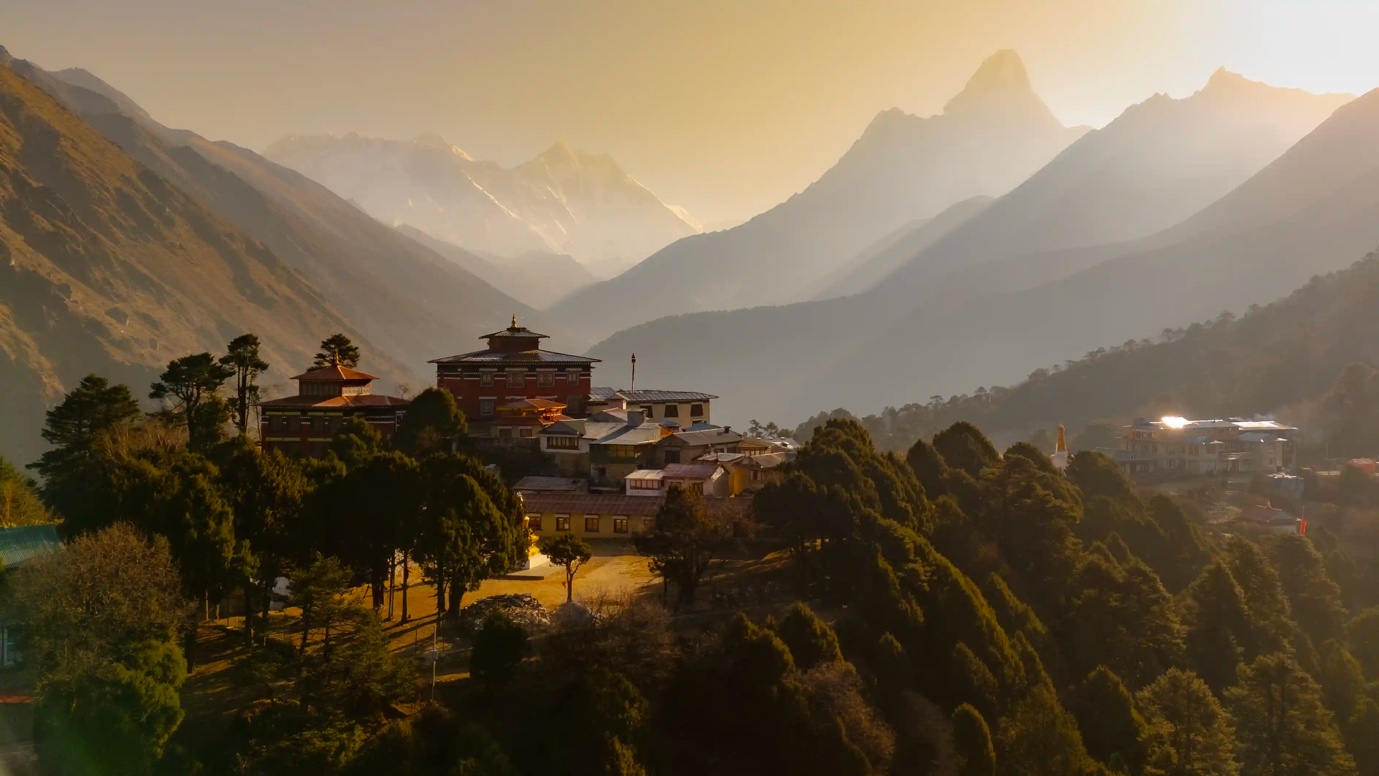
• Tengboche Monastery at late afternoon — the monastery framed by Ama Dablam and the Khumbu peaks. Arrive in the afternoon rather than racing to get there by midday and you'll catch completely different light.
• Everest View Hotel hike during Namche acclimatization — cloud-free views of Everest, Lhotse, Nuptse, and Ama Dablam simultaneously, in the early morning before clouds build. Get there before 9:00 AM.
• Lobuche to Gorakshep in late afternoon — the moraine approach to Base Camp with glacial terrain catching low-angle light. Underrated composition opportunity.
Camera and cold weather
Cold destroys batteries faster than almost anything else. At sub-zero temperatures, lithium batteries drain two to three times faster than normal — this applies to your phone, your camera, and your headlamp without exception. Keep spare batteries in an inside jacket pocket where your body heat maintains them. A power bank in your daypack is essential above Namche. If you shoot on a phone, keep it in your inside pocket between shots, not in an external bag pocket.
UV intensity roughly doubles at altitude, which creates specific problems: washed-out skies, lens flare, overexposed foregrounds. A circular polarizing filter is one of the most useful accessories you can bring, especially for the high sections. Protect your eyes the same way you protect your lens.
Drones are another thing to think about. Inside Sagarmatha National Park, you’ll need a permit. At Monjo, the entry checkpoint, they do check your luggage, and drones are something they specifically look for.
Foreignerscanbring drones, but it’s not as simple as just packing one. You’ll need permits and have to pay additional fees.
What to just experience
Not everything on EBC should be seen through a viewfinder. The evening puja at Tengboche Monastery is one of the most affecting moments on the trail, and participating fully without a camera creates a different kind of memory than photographing it. The first moment you stand at Base Camp — surrounded by expedition flags, Khumbu Glacier under your feet — is worth taking in without immediately reaching for your phone. Some experiences are better held than captured. You'll know which ones when you're there.
Staying Connected: WiFi, SIM Cards, and Family Check-ins
For many US trekkers — especially those leaving family behind — connectivity isn't just a convenience. It's a safety question and a genuine emotional need. The honest picture is more nuanced than 'there's WiFi at the teahouses.'
What WiFi on the trail actually looks like
• Lukla to Namche: reliable WiFi via Everest Link cards, ~$2–5/day. Fast enough for WhatsApp voice calls and basic browsing.
- Namche to Dingboche: available, but slower. NTC mobile data works. Texts and WhatsApp go through. Video calls are can be unreliable—assume they won’t work, and treat it as a bonus if they do.
• Dingboche to Gorakshep: WiFi exists but is intermittent. Use it for check-in messages. Budget $5–10 per session. Above this elevation, just assume the connection won't cooperate.
• At Base Camp itself: no reliable WiFi. Expedition teams use satellite comms. Most trekkers send their Base Camp message from Gorakshep the evening before or after.
SIM cards and satellite options
A Nepalese SIM from Ncell or NTC (available at the Kathmandu airport, takes about 10 minutes, around $5 for the SIM and a basic data pack) gives you reliable 4G up to Namche Bazaar. Above that, coverage gets patchy — you may get intermittent 3G/2G at Tengboche or Dingboche (NTC tends to hold up better at altitude, while Ncell fades faster). Beyond Dingboche toward Lobuche and EBC, mobile signal from either provider is unreliable or nonexistent. For the upper trek, AirLink Wi-Fi at lodges is your most reliable option, with Everest Link as another widely available choice. Some trekkers carry both SIMs for redundancy, though one (preferably NTC for trekking) is enough for most people.
If reliable connectivity is genuinely important — for medical reasons, family obligations, or peace of mind — a Garmin inReach device is the standard solution on EBC. Two-way satellite text messaging from virtually anywhere on the route, regardless of cellular or WiFi coverage. Rentable in Kathmandu if you don't want to buy one outright.
Setting expectations with family before you leave
The most practical thing you can do: have an explicit conversation with your family before departure about what communication will look like. Establish a simple check-in schedule — a message at each major waypoint, nothing more. The silence between check-ins is not emergency. The alarm that comes from a day of WiFi failure is entirely preventable with a five-minute conversation at home.
|
Suggested check-in schedule for family Day 2 (Namche arrival) → Day 4 (Namche acclimatization) → Day 6 (Dingboche) → Day 9 (Gorakshep / Base Camp day) → Day 10 (Kala Patthar / descent). Gaps of 2–3 days are normal and do not mean anything is wrong. |
Everest Base Camp Day-by-Day Itinerary and Elevation Profile
Before the day-by-day breakdown, the elevation profile. This is the most useful single reference for understanding what altitude does on this trek — when it rises steeply, when it plateaus for acclimatization, and when it comes back down fast.
EBC elevation profile — day by day
|
Day |
Stage |
Distance Travelled (km / mi) |
Altitude (ft) |
Altitude (m) |
Key altitude note |
|
1 |
Kathmandu |
|
4,593 |
1,400 |
Starting point — comfortable, no altitude effect |
|
2 |
Lukla → Phakding |
~8 km / 5 mi |
8,563 |
2,610 |
Gentle entry. Altitude begins, effects minimal. |
|
3 |
Phakding → Namche |
~12 km / 7.5 mi |
11,286 |
3,440 |
Big climb. First significant altitude gain (+2,723 ft in one day). |
|
4 |
Namche (acclimatization) |
~8 km / 5 mi |
11,286→12,795 |
3,440→3,900 |
Hike high to 3,900m, sleep low at 3,440m. Critical day. |
|
5 |
Namche → Tengboche |
~11 km / 6.8 mi |
12,664 |
3,860 |
Moderate gain. Altitude headaches become common. |
|
6 |
Tengboche → Dingboche |
~12 km / 7.5 mi |
14,470 |
4,410 |
Above treeline. Altitude asserting itself by evening. |
|
7 |
Dingboche (acclimatization) |
~6 km / 3.7 mi |
14,470 →16,404 |
4,410→5,000 |
Hike to 5,000m, sleep at 4,250m. Second critical acclimatization. |
|
8 |
Dingboche → Lobuche |
~9 km / 5.5 mi |
16,109 |
4,910 |
Air noticeably thin. Memorial chortens at Thukla. |
|
9 |
Lobuche → Gorak shep → Base Camp→ Gorak shep |
~11.5 km / 7 mi |
17,598 |
5,364 |
The goal. Khumbu Glacier. Prayer flags. |
|
10 |
Gorak shep →Kala Patthar → Pheriche |
~17 km / 10.5 mi |
18,192→13,780 |
5,545→4,200 |
Highest point of trek. Long descent — oxygen returns fast. |
|
11 |
Pheriche → Namche |
~15 km / 9.3 mi |
11,286 |
3,440 |
Knees and quads feel the descent. |
|
12 |
Namche → Lukla |
~20 km / 12.5 mi |
9,383 |
2,860 |
Final trail day. Bittersweet for almost everyone. |
|
13 |
Lukla → Kathmandu |
|
4,593 |
1,400 |
Fly out. Shower. Eat everything. |
|
14 |
Kathmandu departure |
|
4,593 |
1,400 |
Home. Changed. |
Acclimatization Days in Namche Bazaar and Dingboche
Two numbers to pay attention to in that table: the jump from Phakding (8,563 ft) to Namche (11,286 ft) on Day 3 is 2,723 feet of gain in one day — the biggest single-day altitude increase of the trek and the one most people underestimate. And the acclimatization days on Days 4 and 7 aren't rest days; they're hike-high-sleep-low days that are non-negotiable for completing the upper sections safely.
Day 1: Arrive Kathmandu (4,593 ft / 1,400m)
Land, transfer to Thamel, eat well, walk around. Thamel has gear shops, pharmacies, ATMs, and excellent dal bhat within 100 meters of every hotel. Sleep early. Everything gets more expensive the higher you go — this is the last affordable day.
Day 2: Lukla flight → Phakding (8,563 ft / 2,610m) | ~3 hrs
The Lukla flight is genuinely memorable. After landing we stop for tea, meet the porter team, and walk roughly three hours to Phakding. First suspension bridges, first yaks, first sight of real Himalayan peaks above the treeline. We keep it short intentionally. Altitude is already doing its work and Phakding is where we ease into it.
Day 3: Phakding → Namche Bazaar (11,286 ft / 3,440m) | ~6–7 hrs
The day the trek gets real. Seven hours including a steep final climb of roughly 2,000 feet. Bimal's instructions on this section: 'Bistari, bistari' — very slowly. Your first glimpse of Everest appears above the ridgeline somewhere on this climb. Namche itself is stunning — a horseshoe of lodges and bakeries carved into the mountain, full of energy and surprisingly good coffee.
Day 4: Acclimatization — Namche Bazaar
Alt text: “Namche Bazaar from above — the last major town before the high Khumbu, at 3,440m.”
Not a rest day. The most important day of the trek. We hike up to the Everest View Hotel (3,880m) where Everest, Lhotse, Nuptse, Ama Dablam, and Thamserku are all visible simultaneously. 'Once they reach there,' Bimal says, 'people get that confidence — I am going to EBC.' Golden hour photography from this viewpoint is exceptional. Do not skip this day. It is not optional.
Day 5: Namche → Tengboche (12,664 ft / 3,860m) | ~5–6 hrs
Alt text: “Tengboche Monastery on the EBC trail, with Ama Dablam rising behind it.”
Rhododendron forests, Himalayas filling the sky. Tengboche Monastery — the largest in the Khumbu — sits at the end of the walk. If timing allows, the evening puja is one of those experiences people mention years later. Leave the camera in your pocket and just be there.
Day 6: Tengboche → Dingboche (13,943 ft / 4,250m) | ~5–6 hrs
Above the treeline. The landscape opens completely. Altitude starts asserting itself — headaches by evening are common and entirely normal here. Hydrate, rest, skip the alcohol entirely above this point.
Day 7: Acclimatization — Dingboche
Hike up to Nakarjung viewpoint (~5,000m). Island Peak, Makalu, and Cho Oyu visible from here. This is the hike where Bimal learned his own lesson about running at altitude — the nosebleed story from earlier in this guide. Go steadily. Go slowly. Wide-angle photography from the ridge is spectacular.
Day 8: Dingboche → Lobuche (16,109 ft / 4,910m) | ~5 hrs
The air is noticeably thinner. The memorial chortens to fallen climbers and Sherpas on the moraine above Thukla Pass stop most people in their tracks. Photography here is powerful. Many trekkers set their cameras down and just stand.
Day 9: Lobuche → Gorak Shep → Everest Base Camp (17,598 ft / 5,364m)
Alt text: “At Everest Base Camp (5,364m) — the Khumbu Icefall behind the marker, the goal of 14 days of trekking.”
The day everything has been building toward. After lunch in Gorakshep (5,140m) we continue to Base Camp along the Khumbu Glacier until prayer flags above the moraine. Everest's summit isn't actually visible from Base Camp — Lhotse blocks it — but standing there you feel the full weight of everything it took to arrive. A lot of people cry. Some are surprised to find themselves doing it.
Day 10: Kala Patthar (18,192 ft / 5,545m) → Pheriche
Pre-dawn, headlamps, well below freezing. You climb to the highest point of the trek and Everest rises above you as the sun comes up. This is the photograph. This is the moment. The long descent to Pheriche feels hard on the knees but the oxygen comes back surprisingly fast.
Days 11–12: Descent to Namche, then Lukla | ~7–8 hrs each
Quads and knees will remind you the whole way. Trekking poles earn their cost on these days. The trail that felt impossibly hard two weeks ago feels like home. Day 12 is bittersweet for almost everyone.
Day 13: Fly Lukla → Kathmandu | Free afternoon
Celebrate. Shower properly for the first time in two weeks. Eat something that isn't dal bhat if you want, though honestly most people have come to love dal bhat by now.
Day 14: Departure
Home. Changed.
EBC Packing List: Essential Gear for 2026
Clothing and Layering System for EBC: What to Bring and What to Skip
The golden rule: if in doubt, leave it out. Everything you carry, you carry uphill. Every extra kilo is a decision you'll regret by Day 3 and be furious about by Day 8.
What to Buy in Kathmandu vs. Bring from Home
Bring from home
• Trekking boots — well broken-in, waterproof, ankle support. Never wear new boots on this trek. This is the gear rule that matters most.
• Merino wool base layers (top and bottom) — 2 sets
• Insulated down jacket — your most critical layer above Namche
• Waterproof outer shell jacket and pants
• Fleece mid-layer
• Rain jacket — weather changes without warning
• Headlamp + spare lithium batteries (lithium holds charge far better in cold than alkaline)
• Camera batteries and spares in inside jacket pocket
• Prescription medications and personal medical items
• Travel insurance documentation — carry-on only
On trekking poles: this is the one piece of gear people are most likely to skip and then regret. The descent on EBC is long, steep, and relentless on the knees. Telescoping poles with wrist straps convert a painful quad-burning descent into something manageable. They're also useful on the Thukla moraine and the rocky sections between Dingboche and Lobuche. Don't treat them as optional.
Quality gear costs the same in Thamel as at home. Bimal puts it plainly: 'You do EBC once in a life — buy good gear for $80–$100, and you can use that same gear for Kilimanjaro or any other destination after. Spending once on good quality is much better.'
• Sleeping bag (-10°C / 14°F rated minimum — Nepalese bags tend to be heavier; European lightweight bags save significant pack space)
• Sleeping bag liner — Happyland Treks provides this complimentary. Use it every night.
• Wool trekking socks — 4–5 pairs minimum; change daily
• Gloves: inner liner + outer shell (not just one pair)
• Sun hat and warm beanie
• Buff or face mask — critical for Khumbu Cough prevention above Namche
• Daypack 25–30L
• Water purification: SteriPen, LifeStraw, or tablets
• SPF 50+ sunscreen and UV-blocking sunglasses — UV intensity nearly doubles at altitude
• Power bank (fully charged before each day above Namche)
The Khumbu Cough — what it is and how to avoid it
Preventing the "Khumbu Cough" with Buffs
Cold, dry high-altitude air irritates the respiratory tract and causes a persistent, often painful cough that affects a significant portion of trekkers above Namche. It's not dangerous but it is miserable and can be largely prevented. Wear a buff or face mask over your mouth and nose during walking to prevent cold air going directly into your lungs. Drink hot liquids regularly. Eat garlic soup daily above Dingboche. 'It helps maintain oxygen levels and protects the lungs,' Bimal says. The trekkers who skip the buff because it's uncomfortable for the first hour are usually the ones asking about the cough by Day 8.
Food, Water, and Staying Healthy on the Trail
Dal bhat is the standard. Rice, lentils, vegetables, unlimited refills at most teahouses. Nutritious, warming, and proven across generations of Sherpa trekkers as the ideal fuel for this terrain. Above Namche, avoid meat — freshness becomes unreliable and food poisoning at altitude is significantly worse than food poisoning at sea level, both in symptoms and in how it affects acclimatization. Skip alcohol entirely above Namche. Stock up on chocolate, muesli bars, and electrolyte sachets in Kathmandu; they're available higher up but increasingly expensive.
Drink 3–4 liters daily minimum. Purify your own water — it's cheaper and it removes plastic bottles from the mountain. Cold air is deceptive about dehydration. You don't feel thirsty the way you would on a summer hike in California, but you are losing just as much water. Drink before you feel like you need it.
Guided vs Independent Trekking
Since April 2023, Nepal officially requires all foreign trekkers to hire a licensed guide through a registered agency. In practice, enforcement has been inconsistent — recent trekkers report passing checkpoints without being asked for proof of a guide, and some trekkers are still trekking without one. That said, the regulation exists, enforcement could tighten at any time, and on a route like EBC the practical case for a guide is strong regardless of the law. Bimal's position, after 15 years: 'For your safety and security, if you don't mind spending a couple of hundred dollars on a guide, your trip will be more than 90% successful.'
What a guide actually gives you
• Route management — no confusion at junctions, no wrong turns, no time lost
• AMS monitoring — a trained local watching for altitude symptoms before you feel them yourself
• Cultural context — mani walls, chortens, prayer wheels, monastery customs explained in real time
• Emergency judgment — the call to descend when everything in you wants to push on
• Local relationships — the teahouse owner who finds a room when the trail is full
Bimal on what doesn't appear in any guidebook: 'Why a mani wall faces a certain direction. Why Sherpas touch stones before crossing bridges. Those details don't appear on any map. They're gifts you only receive when you walk with someone who belongs there.' That's hard to put a dollar value on.
Porter welfare — what ethical hiring looks like
This matters and deserves a direct conversation with any operator you're considering. The trekking industry has a documented history of underpaying porters, overloading them, and leaving them without adequate equipment at altitude. Our porters at Happyland Treks are paid at or above the TAAN-set rate, carry a maximum of 20–25 kg (the International Porter Protection Group recommends 20 kg as the safe maximum on mountain routes; TAAN’s formal limit is 30 kg — we hold to the stricter standard), are provided with appropriate altitude gear, and are covered by our group insurance. If you're comparing operators and one can't answer questions about porter wages and weight limits clearly, that's telling you something important.
Our certifications and memberships
• TAAN (Trekking Agencies Association of Nepal) registered member — all guides carry TAAN-issued licenses
• Nepal Tourism Board (NTB) licensed operator
• All guides certified in Wilderness First Aid and high-altitude emergency protocols
• 3% of annual revenue donated to local communities — in 2025 this funded 215 meals for elderly residents, and school supplies for 214 children in government schools.
The 3% isn't a rounding error or a marketing claim — it's a fixed line in our accounts. We can share the community report with any client who asks.
Group trek vs private trek
Group treks cost less and provide a built-in social circle on a fixed itinerary. Private treks offer flexible pacing and personalised attention — strongly recommended for families, solo women, couples with different fitness levels, or anyone who stops frequently for photography. The cost difference is smaller than most people expect.
Best Time to Trek EBC
October–November (Peak season — recommended): clearest skies, sharpest mountain views, crisp air. For US trekkers on school-year schedules, late October or early November aligns with fall break. Book early — this is the most competitive season.
March–May (Spring): second peak season. Warmer overall, rhododendrons in bloom at lower elevations, expedition teams active on the mountain. The higher sections can be windier above 4,000m.
December–February (Winter): genuinely cold — minus 20–30°C near Base Camp. Many teahouses at higher elevations close. Almost no crowds. For experienced trekkers with proper cold-weather gear: peaceful in a way peak season never is.
June–September (Monsoon — not recommended): heavy rain, leeches on the lower trail, cloud cover obscuring the mountains most days. Landslide in some area. Not recommended. Early June and late September are transitional windows some experienced trekkers use, but with narrower margins.
|
Month |
Avg Day Temp (Namche) |
Avg Night Temp (Base Camp) |
Precipitation |
Verdict for Beginners |
|
January |
3–8°C / 37–46°F |
−20 to −25°C / −4 to −13°F |
Very low, clear skies |
Advanced only. Extreme cold. |
|
February |
4–10°C / 39–50°F |
−18 to −22°C / −1 to −8°F |
Minimal, clear |
Advanced only. Cold but improving. |
|
March |
8–14°C / 46–57°F |
−10 to −15°C / 5–14°F |
Occasional afternoon snow |
Good. Spring season begins. |
|
April |
10–16°C / 50–61°F |
−8 to −12°C / 10–18°F |
Light, mostly clear |
Excellent. Peak spring. |
|
May |
12–18°C / 54–64°F |
−5 to −10°C / 14–23°F |
Increasing cloud, pre-monsoon |
Good but book early. |
|
Jun–Sep |
14–20°C / 57–68°F |
0 to −5°C / 23–32°F |
Heavy. Daily rain/cloud. |
Avoid. Monsoon season. |
|
October |
12–18°C / 54–64°F |
−10 to −15°C / 5–14°F |
Very low, crystal clear |
BEST. Book 3–4 months ahead. |
|
November |
7–13°C / 45–55°F |
−14 to −20°C / −4 to 7°F |
Negligible, clear |
Excellent. Quieter crowds. |
|
December |
4–9°C / 39–48°F |
−18 to −25°C / −1 to −13°F |
Low, some upper snow |
Advanced only. Cold setting in. |
EBC vs Other Nepal Treks
EBC is not the only great trek in Nepal and for some travelers it's not the right first choice. Here's how the main options compare. The honest note at the bottom matters.
|
Trek |
Duration |
Max Altitude |
Difficulty |
Cost (pkg) |
Best For |
|
EBC (Happyland) |
14 days |
5,545m / 18,192ft |
M oderate |
From $1,397 |
First-timers, iconic bucket list |
|
Three Passes |
18–21 days |
5,535m |
Challenging |
$1,800+ |
Experienced trekkers who want more |
|
Annapurna Circuit |
12–16 days |
5,416m |
Moderate |
$800–1,200 |
Landscape variety, lower cost |
|
Langtang Valley |
7–10 days |
4,984m |
Moderate-easy |
$600–900 |
Limited time, fewer crowds |
|
Kilimanjaro |
6–8 days |
5,895m |
Moderate |
$2,500+ |
Africa bucket list — camping only |
A note on Annapurna: it's an excellent first Himalayan trek for trekkers who want to test their altitude response before committing to EBC. Many of our clients do Annapurna one year and come back for EBC the next. That sequencing has a very good success rate.
A note on the Three Passes: same mountains as EBC, twice the terrain, significantly more challenging. It's where many EBC completers come back. Bimal leads both and can speak to which suits you better in a direct conversation.
Trekking Responsibly in the Khumbu
You are walking through someone's home, culture, and fragile ecosystem. The way you move through it matters beyond your own experience.
• Reusable water bottle and purification — single-use plastic is the mountain's biggest waste problem by volume
• Pack out non-biodegradable waste — what goes up must come down with you
• Stay on marked trails
• Use designated toilets in villages
• Hire licensed guides and porters at fair wages — your money stays in Nepal and supports real families
• Buy from local shops, not airport gift stores
At Thukla Pass, standing among the memorials to climbers and Sherpas who never came back, you feel small. Not just physically — morally. The mountains teach humility, if you let them. That's not weakness. It's how you earn the mountain's respect.
Why Book with a Local Nepali Company
Large Western adventure operators charge $4,500–$6,500 for the trek package alone. They're professionally run, safe, and legitimate. The majority of that fee passes through multiple layers of Western overhead before reaching your Nepali guide — the person who is actually keeping you safe on the mountain.
Book directly with Happyland Treks and you pay $1,598 for the same 14-day guided experience. Your guide is from the Khumbu region. His family has lived in the shadow of Everest for generations. Our groups are small. Our guides handle disruptions in real time — not by calling a head office in Seattle.
We give 3% of annual revenue directly back to local communities. In 2025 that meant 847 meals for elderly residents, and school supplies for 214 children. That percentage is fixed in our accounts, not a marketing claim. Ask us for the community report when you inquire.
October 2026 departures: limited spots remaining in our small-group schedule. We run a maximum of 8 trekkers per group guide. Contact us to confirm availability for your dates.
What Past Trekkers Say
These reviews below are reproduced from Google and TripAdvisor with permission. Our full review profiles: Google Maps ('Happyland Treks Kathmandu') | TripAdvisor ('Happyland Treks').
4.9 / 5 average across 130+ verified reviews as of February 2026.
Before the full testimonials, three shorter snapshots from people who started exactly where you probably are:
Priya, 41, teacher from San Diego, March 2024: "I'd done zero hiking before I started training. Zero. My longest walk before week 5 was a 2-mile loop around my neighborhood. I made it to Kala Patthar. I still don't entirely believe it."
Tom, 58, software consultant from San Francisco, October 2023: "I was convinced altitude would be my problem. It wasn't. Bimal had me at the right pace from Day 1. The only thing that hurt was my knees on the way down — get the poles."
Kayla, 29, nurse from Los Angeles, November 2024: "Went solo. Was scared about that. Met two other solo women by Day 2 and we basically adopted each other. The guide managed the whole thing without making it weird. Best three weeks of my life."
Sarah M., San Francisco — October 2024
"38 years old, never done anything remotely like this. Terrified about altitude specifically. I actually cried twice — once out of exhaustion somewhere between Phakding and Namche, and once at Base Camp out of something I genuinely couldn't explain and still can't. Bimal was extraordinary. Not in an over-the-top guiding way, just — he knew when to push me and when to back off and he was somehow always right. I made it. I still find that hard to believe, honestly."
James & Priya T., Los Angeles — November 2023
"We went as a couple with very different fitness levels — I was faster, Priya needed more time. The private trek was the only format that could have worked for us. Different pace every day, no group dynamics to manage. We both reached Kala Patthar. Priya cried at the sunrise. I pretended I wasn't also crying. The porter who'd been carrying Priya's extra fleece all week high-fived her at the summit. That's my image of the whole trip."
Marcus H., Denver — March 2024
"Tried EBC two years earlier with a larger Western company. Turned back at Dingboche with AMS, which was the right call but felt terrible. Came back this spring with Happyland Treks specifically because I wanted a slower itinerary and a guide who'd actually watch me rather than manage a group. The guide adjusted my pace before I even knew I needed it adjusted — twice. I reached Base Camp on Day 9. Worth every second of the three years between attempts, including the failed one."
Ready to Plan Your EBC Trek?
You've read the honest version of what EBC asks of you and what it gives back. If you're still feeling that pull — the one that brought you to this page in the first place — trust it.
We'll build a custom itinerary for your dates, fitness level, and budget at no cost. Not an automated form response. A real conversation with people who have walked every meter of this trail.
What happens when you contact us
• We ask 7 questions about your dates, fitness level, group size, and budget — takes 5 minutes
• We propose 1–2 itinerary options within 24–48 hours, tailored to your profile
• No payment or commitment until you're happy with the plan
• Send us your insurance policy summary if you're unsure — we'll flag altitude or evacuation gaps before you commit
Customize your trek: happylandtreks.com/customize-trip
Call or WhatsApp: +977 984 941 7757
Free checklist download: happylandtreks.com/checklist
Frequently Asked Questions
A note on these: some deserve a direct answer, some deserve more than that. We've written them accordingly.
Is EBC suitable for beginners?
Yes — but 'beginner' needs unpacking. Beginner to Nepal, to international trekking, to high altitude? All of those are fine. Beginner to walking for 5–6 hours consecutively with weight on your back? That needs 12 weeks of preparation before you land. The trek itself is classified as moderate, requires no technical skills, and is completed by thousands of first-timers every season. What trips beginners up is consistently the same thing: they go too fast. Not fitness. Not inexperience. Speed.
How far in advance should I book?
For October–November (peak season): flights 9–12 months out, trek package 6–9 months out. For March–May: 4–6 months for both. The booking timeline table earlier in this guide has the full breakdown with reasoning for each step.
What travel insurance do I actually need?
In plain language: something that explicitly names helicopter evacuation and explicitly covers altitude up to at least 6,000 meters — stated in the policy document, not the marketing summary. Most US travelers assume they're covered when they're not, because they're relying on credit card travel insurance (designed for flight delays, not Himalayan evacuations), or a generic 'adventure travel' policy that caps coverage at 4,500m. A helicopter from the EBC region costs $3,000–$7,000. That bill is yours if the wording is ambiguous. World Nomads Explorer Plan and Ripcord Rescue are the most commonly used by our American clients. Read the actual policy. The full insurance section earlier goes through the specific traps.
Is EBC safe for solo women?
Yes, genuinely. The trail is busy and social, the Sherpa community has a strong professional hospitality culture, and incidents of harassment are rare and widely reported when they occur. Having a guide creates a clear professional context for a solo woman's presence on the trail. The full section on solo female trekking covers this in detail — we'd recommend reading it before making a decision either way.
Can I do EBC with kids?
Yes, with caveats worth taking seriously. Practical lower threshold is around 10–12 years for the full itinerary, with 14+ being more comfortable. Below 10, consider stopping at Namche or Tengboche rather than pushing to Base Camp — that version of the trek is still extraordinary and doesn't require a child to spend hours feeling symptomatic at altitude. Private custom trek, extended itinerary, and private teahouse rooms throughout. Talk to us before booking.
How fit do I actually need to be?
Fitter than you are right now, probably — but not in the way you think. The standard fitness benchmarks (hike 6–8 miles with a daypack, climb 10–12 flights of stairs without stopping) are useful starting points. The thing most guides don't say: the people who are most fit in a conventional sense — gym regulars, runners, people who are genuinely athletic — often struggle more than moderately fit people who have done long-distance hiking. The reason is psychological as much as physical. Athletes are trained to push through discomfort. EBC rewards the opposite: the ability to hold back when you feel fine, to go slowly when your body says you could go faster. Train for duration and for the habit of sustained moderate effort over many hours. Not for peak output.
What's the best time to go from the US?
October–November for clearest views and best overall conditions. Late October or early November works well with US fall break schedules. March–May if October doesn't work — warmer, rhododendrons in bloom, different energy on the trail.
Can I do EBC without a guide?
Since 2023, Nepali regulation requires all Everest region trekkers to have a licensed guide — so not legally, no. Beyond the legal requirement: a guide provides AMS monitoring, emergency judgment, cultural context, and local relationships that genuinely affect your success rate. Bimal's figure: with a guide, 90%+ completion rate. This is consistent with industry estimates of 80–95% for prepared, guided trekkers, though no official government statistics are published. Without a guide: significantly lower, and that was before the 2023 regulation made guides mandatory.
How do I prevent altitude sickness?
The standard advice is correct: go slow, don’t skip acclimatization days, drink 3–4 litres of water daily, avoid alcohol, eat garlic soup and ginger, listen to your guide. Bimal’s preferred approach leans on natural remedies — garlic soup, electrolyte water, ginger, cloves in hot drinks — combined with proper pacing. This is a sound foundation. Diamox (acetazolamide) is also clinically validated: multiple systematic reviews show it reduces AMS incidence by roughly 48% compared to placebo, and the Wilderness Medical Society recommends it for moderate-to-high-risk ascents. Talk to your doctor about Diamox before you travel — it’s a complementary tool, not a shortcut, and it works best alongside everything above rather than instead of it.
How do I stay connected with family from the trail?
WiFi via Everest Link cards ($2–10/day depending on elevation) at most teahouses from Lukla to Gorakshep. Mobile data to around Namche via a Ncell SIM ($5 at Kathmandu airport). For full-route reliability: Garmin inReach satellite communicator, rentable in Kathmandu. Set a specific check-in schedule with family before you leave — 2–3 day gaps between messages are completely normal and don't mean anything is wrong.
What are teahouses actually like?
Simple mountain lodges — cozy and functional rather than luxurious. Private or shared rooms depending on what you book and how high you are. Lower elevation teahouses (Phakding, Namche) can be quite comfortable. Higher up they're more basic but all have hot food, dining rooms, and that particular warmth that comes from strangers sharing a common experience in a cold place. Hot showers are available for a fee. WiFi is available but increasingly unreliable above Namche.
How much spending money do I need on the trail?
Budget $200–$400 USD in cash. This covers WiFi, hot showers, snacks, device charging, and tips. There's an ATM in Namche but it's unreliable and you don't want to be troubleshooting a bank card issue at 11,000 feet. Bring USD and exchange in Kathmandu before the trek starts.
Why book with a local Nepali company instead of a Western brand?
Three reasons, in order of importance. First, cost: our 14-day fully guided package starts at $1,598. The equivalent through REI Adventures or similar Western operators starts at $4,500 for the package alone. That gap is almost entirely overhead — marketing, Western salaries, middlemen. The guide on your trek is the same person either way; the mountain is the same mountain. Second, expertise: our guides aren't assigned from a roster. They're from the Khumbu region. Bimal has 15+ years on this specific trail. When something goes sideways at 9 PM at Dingboche, he solves it because he knows the people, the terrain, and the options — not because he has an emergency hotline. Third, impact: 3% of our revenue goes directly back to local communities — meals for elderly residents, clean water, school supplies. When you book local, more of your money stays where it belongs.
|
Still have a question not covered here? WhatsApp or call us directly — we answer within 24 hours. +977 984 941 7757 | happylandtreks.com/customize-trip |
About the Author
|
Bimal Dahal — Founder & Lead Guide, Happyland Treks TAAN Licensed Guide | Nepal Tourism Board Registered Operator | 15+ Years on the EBC Trail Bimal Dahal was born in Kathmandu and has been guiding trekkers in the Everest region since 2009. He has completed the EBC route over 200 times and has guided trekkers from 34 countries, with a particular focus on first-time US and European clients. He founded Happyland Treks with the specific goal of connecting international trekkers directly with local Khumbu guides — cutting the Western middleman and keeping the economic benefit in Nepal. His approach to altitude acclimatization — emphasising natural remedies, strict pacing, and the Sherpa philosophy of 'bistari bistari' (slowly, slowly) — has produced a completion rate above 90% across all his guided groups. Certifications: TAAN Licensed Trekking Guide | Wilderness First Responder (WFR) | Nepal Tourism Board Registered Operator # 167517/73/074 | KEEP (Kathmandu Environmental Education Project) certified guide Reviews: Google ('Happyland Treks Kathmandu') · TripAdvisor ('Happyland Treks') · happylandtreks.com |
Happyland Treks | Thamel, Kathmandu, Nepal | 100% Locally Owned & Operated | happylandtreks.com