Overview
While in the Annapurna region, imagine waking up each morning to the soothing sounds of nature, surrounded by lush bamboo and sturdy oak trees.
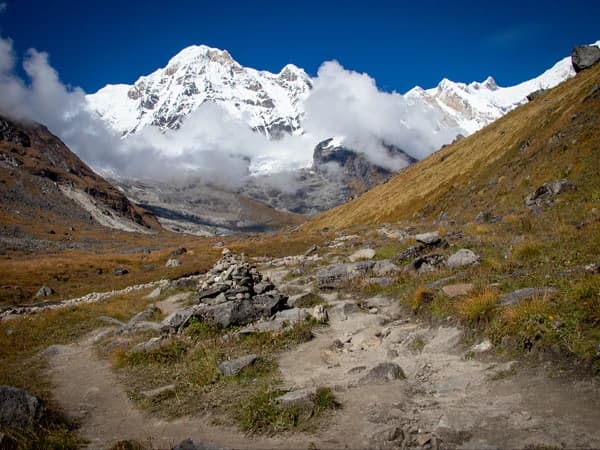
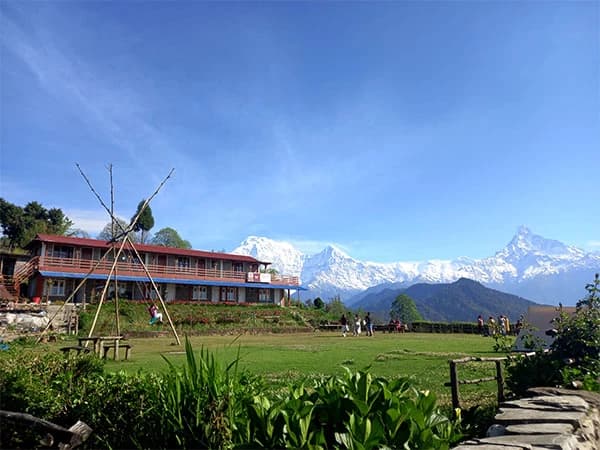
Step outside and be immediately captivated by the breathtaking, panoramic views of snow-blanketed giants: the majestic Annapurna I, Dhaulagiri, the distinctive Machapuchare (Fishtail), Hiunchuli, Nilgiri, Gangapurna, and Annapurnas II, III, IV, and V.
Your experience is complemented by the charm of local villages, the serenity of the mountain valleys, and the life-giving flow of numerous rivers, waterfalls, and streams. This is the unforgettable beauty that awaits you in Nepal.
Not only does nature shine bright here, but culture runs deep as well. Moving through Gurung settlements, then into Magar areas, followed by Thakali and Manangi zones.
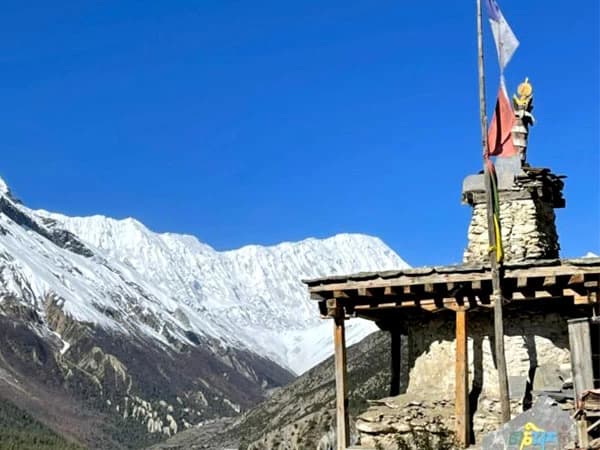
In spritual context, you will be walking along the path with prayer flags fluttering high, stone chortens standing quiet, monasteries echoing chants. Both Buddhist presence and Hindu roots mark these places clearly.
Unlike Everest, which is all about the mega-expedition vibe, Annapurna was one of the adventure regions open for short hikes to long, high adventure trekking. and over the decades, it shaped what we now affectionately call “tea house trekking,” cozy nights in mountain lodges, steaming local dal bhat on cold mornings, and friendly laughter with guides who feel more like old friends.
Now let’s talk about the journeys. You have got everything here:
- Quick and sweet experiences like the Ghorepani Poon Hill trek (3 to 9 days), which is perfect for families and first-timers.
- Classic mid-length adventures like Annapurna Base Camp trek (ABC) (7 to 13 days), where you get up close to the sanctuary of peaks.
- Legendary long hauls like the Annapurna Circuit trek (10 to 17+ days), crossing Thorong La Pass (5,416 meters), and diving into the deepest gorge in the world, the Kali Gandaki.
All in all, this region hosts adventure for everyone: absolute beginners, seasoned hikers looking for a challenge, culture lovers, nature nerds, sunrise junkies, and people who just like a good story.
And that’s where we come in: we at Happyland Treks help you tailor your itinerary, from chill short treks to epic multi-week journeys, blending culture, scenery, and local insight so you get almost-too-good-to-be-true memories without the guesswork.
So, if you are thinking, “I want the best of Nepal in one package,” Annapurna trekking in Nepal pretty much holds up the flag with the perfect blend of landscapes, culture, challenge, comfort, and downright unforgettable moments.
The Timeless Gurung & Magar Villages of Annapurna Trekking Routes
Locals living high up near Ghorepani, Ghandruk, Shikha, and Landruk. Most of them are from the Gurung, Magar, and Thakali communities. mostly Gurung, and Thakalipeople in the same place or even more villages like Tal, Chame, Pisang, Manang, Muktinath, Tatopani, Ghale Gau, and Chhomrong.
Picture quiet trails opening into stone homes where smoke curls from rooftops at dawn. Their presence turns paths through the Annapurnas into something deeper.
Culture here breathes slowly, steady, and lives day by day. The people known as Gurung or Tamu carry stories woven into soil and slopes, shaped by seasons of growing food high in the hills. Their way of living is built on years spent tending land under sharp winds and wide skies.
These communities stand for skill with crops, and for how openly they welcome others. Courage runs through them differently, and they have earned respect far beyond their mountains. Being part of the Gurkha legacy, they are worldwide famous as the most courageous soldiers.
Before sunrise, people head out to care for crops like millet, maize, or buckwheat on stepped hillside plots. They also tend goats and sheep and, in the evenings, they celebrate with songs near wooden Rodhi huts. Their beliefs grow from Buddhism, Hinduism, and older earth-rooted practices woven together.
Now picture the Magar people, who are woven deep into Annapurna’s cultural weave. Sitting high in the hills alongside Gurungs, they move to different rhythms, such as Maruni and Kauda. Each season brings its own gathering, its own reason to mark time together.
As for the festive energy, if you are traveling to Annapurna around late December or early January, you will get to witness Tamu Lhosar, with colorful clothing and steady drumbeats. At other times, you will also catch glimpses of Dashain, Tihar, Maghe Sankranti, and even age-old mad honey hunts.
Annapurna Conservation Area (ACAP): Nepal’s Largest Protected Trekking Region
Home to towering peaks and deep valleys, the Annapurna Conservation Area stands as Nepal’s oldest safeguarded wilderness. Stretching across 7,629 square kilometers, it spans five mountainous districts, Kaski, Lamjung, Manang, Mustang, and Myagdi, in the central Himalayas.
Initiated in 1986, its official recognition came six years later when the conservation area was declared as a protected zone in 1992. Since then, it has shaped how local communities guide environmental care far beyond these mountains.
Here’s what stands out about Annapurna Conservation Area. It climbs from green, misty lowlands near 790 meters straight to the icy peak of Annapurna I, towering at 8,091 meters. Because of this wild climb in height, the area packs in layer after layer of nature that looks too sharp to be real.
Thick salwoods give way to tall pines, then explode into bright rhododendrons, especially near Ghorepani, where color floods the hillsides. Higher up, grassy slopes host rare plants like Yarsagumba and vivid blue poppies. The top stretches are bare, rugged, brushed by glaciers and wind-carved stone.
Picture this: a journey across terrain humming with life, with occasional sightings of snow leopards, red pandas, musk deer, Himalayan tahr, pheasants, and Himalayan monal. In warmer folds along rivers, you may see frogs, snakes, butterflies, and so on.
Out in this protected area, you will find Gurung folks settled beside Magars, with Thakalis nearby, plus Manangis and Lobas scattered through the hills. Life moves slowly but steadily, planting crops, tending fields, marking festivals with song.
Winding through Annapurna, it has earned its fame over decades. Following close behind, the path to Annapurna Base Camp leads into a realm carved by ice and time. Up near Ghorepani, the trail climbs toward Poon Hill through forests humming with birdlife. Lesser-known tracks branch off quietly, waiting just beyond the usual stops.
Waterfalls appear suddenly, tumbling down mossy cliffs after rain. The Kali Gandaki Gorge slices deep between peaks, a rift shaped by ancient flow. Views open wide where mountain ranges layer into the distance like strokes of paint. Light at dawn sets ridgelines glowing in gold and rose. Evening does much the same, wrapping the high slopes in soft shadow.
So, Annapurna Conservation Area is like Nepal’s ultimate all-you-can-explore buffet, and you get to hike it.
Machapuchare: The Sacred, Unclimbed Peak of the Annapurna Region ABC Trail
Picture a peak so sharp it slices the sky. Machapuchare, tucked into Nepal’s Gandaki Province is a part of the Annapurna range. Standing at nearly 6,993 meters, it carries a form like a fish’s tail, which is unique among mountains.
People know it for how it looks and also because nobody climbs it. Revered by locals, it remains untouched by footsteps despite drawing eyes from far away.
So, what makes Machhapuchhre really special? First, unlike its taller neighbours, it has never been officially climbed, and probably never will be. A British team got within about 50 to 150 meters of the top in 1957 but turned back out of respect for local beliefs, and since then; the Nepalese government has banned all expeditions to preserve its sacred status.
High above the villages, the peak watches quietly. To Gurung and Magar people, its presence speaks of sacred ground. Home to Shiva, it stands apart from ordinary climbs.
Wandering near it, on paths such as the one to Annapurna Base Camp ABC or up Mardi Himal, feels close to stepping inside a vast space shaped by nature. Though quiet, the air carries weight, each turn revealing rock and sky pressed together without effort.
You will find yourself constantly circling back to its jaw-dropping profile at different altitudes. And here’s the coolest twist: because Machhapuchhre can’t be climbed, it remains one of the rarest “pristine” peaks left in the Himalayas.
The Iconic High Mountain Trekking Crossing of Thorong La Pass (5,416 Meters)
Frozen air bites at 5,416 meters, where Thorong La Pass cuts across central Nepal’s Damodar Himal, which is a peak of the Annapurna trail.
You will feel the air biting at your lungs up there, where time stretches thin under wide skies. Moving across Thorong La means learning how stillness can speak louder than sound. Eastward of this pass lies Manang.
Whereas, the west side opens into pale stone plains that whisper of ancient winds and distant mountains. This pass lets landscapes unfold one after another, each more unlikely than the last.
One moment you are walking beneath thickets of rhododendrons, and the next thing, you will see open fields climb into sky-colored grasslands. Trees thin out until stone shoulders break through, bare and cracked by wind. Up there, just tough little plants survive alongside quiet herds.
You will climb this pass before the sun starts rising above the hills. Up top, you will see colorful strips of prayer flags while peaks rise all around: Annapurna I, Dhaulagiri, Gangapurna, with the dry expanse of Mustang tucked beneath.
One of the World’s Deepest Valleys: The Kali Gandaki Gorge
Picture a river cutting deep through rock, shaped by time. The Kali Gandaki flows hard between giants. On one side, Dhaulagiri rises tall at 8,167 meters. Opposite stands Annapurna I, just shy at 8,091. This split in the land, known as the Kali Gandaki Gorge, is likely the planet’s deepest.
Starting high up near icy summits, the land plunges down, some say five and a half kilometers, others closer to six. Walking parts of the Annapurna trail here means seeing views so wild they make movies look dull.
Starting far north by Lo Manthang, the canyon stretches down toward the south, threading past Jomsom, then Kagbeni, moving on through Marpha, Tukuche, Lete, Dana, and ending at Tatopani. It is where early sections feel barren, nearly like a desert, and the later parts grow thick with pine and rhododendron woods.
To the left here, you will see Annapurna and Nilgiri. Across the way stands Dhaulagiri, and down below, a wild river crashes through the gorge.
Deep in the heart of tradition flows the Kali Gandaki River. Not far from mountain trails, along its stony banks, lie rare black stones. These are Shaligrams, which are the remnants of sea creatures long gone. For Hindu devotees, each stone carries the presence of Lord Vishnu.
Imagine walking across a place stacked tall with rice paddies carved into hillsides, old stone houses shaped by Thakali ways, icy rivers roaring below rope bridges, and peaks that seem too high to believe. Here, towns also come into view as Jomsom hums with windblown streets, and Marpha offers fruit trees.
Natural Hot Springs of Annapurna Trekking
In the Annapurna trekking region, you will find plenty of geothermal gems (especially Jhinu Danda and Beni Tatopani), which are the reward spots where tired legs meet warm, steamy bliss.
Tatopani literally means “hot water” in Nepali, and it lives up to the name with mineral‑rich pools beside the roaring Kali Gandaki River, where you can soak away days of uphill struggles while swapping stories with fellow hikers and locals alike.
Now here’s the fun part: Jhinu Danda Hot Springs is like the secret garden of the Annapurna Base Camp trail, which is a short, scenic walk downhill through lush rhododendron and bamboo forest that brings you to natural stone-lined pools on the banks of the Modi Khola river. The water’s temperature and the rhythmic river sounds create this almost movie‑scene serenity, perfect for loosening up sore muscles after long days on the trail.
Here, you should expect to strip down (modestly!), step into warm water that some locals swear has therapeutic benefits for aches and joint pain, and just let the mountain air and steam do their thing.
The vibe ranges from quiet relaxation in cool mountain air to social soak sessions swapping trek tales with new friends, basically nature’s own jacuzzi with a Himalayan soundtrack.
We hope you will have a holiday to explore the Annapurna trekking in Nepal with a local tour operator by local guide.