Annapurna Base Camp Group Trek with Hot Springs & Cultural Experience
Top Highlights of the Annapurna Base Camp Group Trek with Hot Springs & Cultural Experience
- Explore Pokhara, the chill lakeside city that basically sets the vibe for your whole Annapurna Base Camp group trek.
- Drive from Pokhara to Ghandruk and step straight into a classic Gurung village where stone houses, mountain views, and local culture hit you right away.
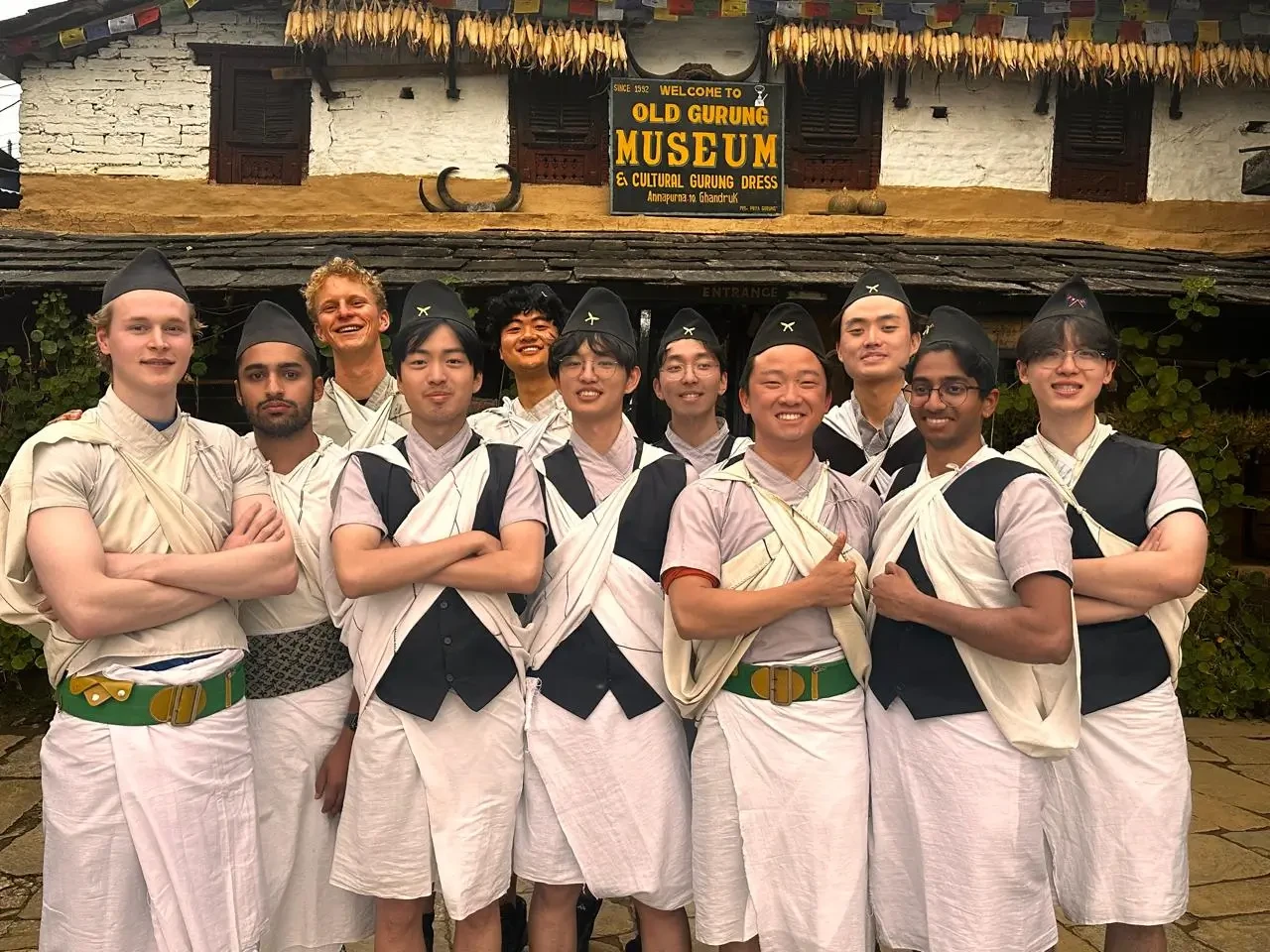
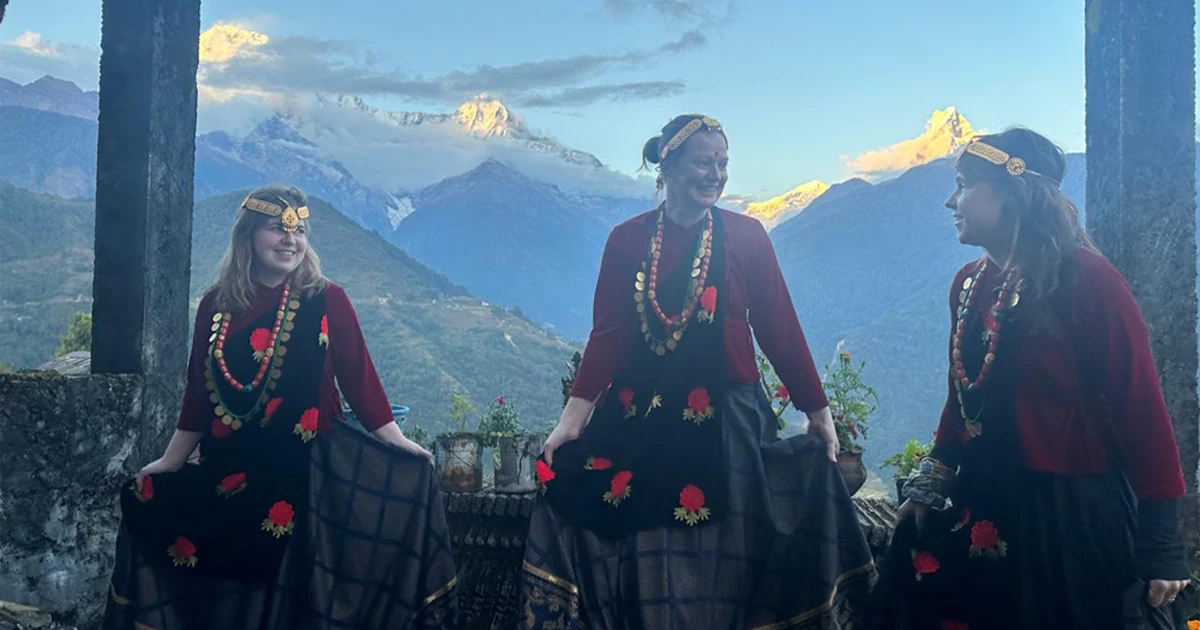
- Get an opportunity to wear traditional Gurung clothes.
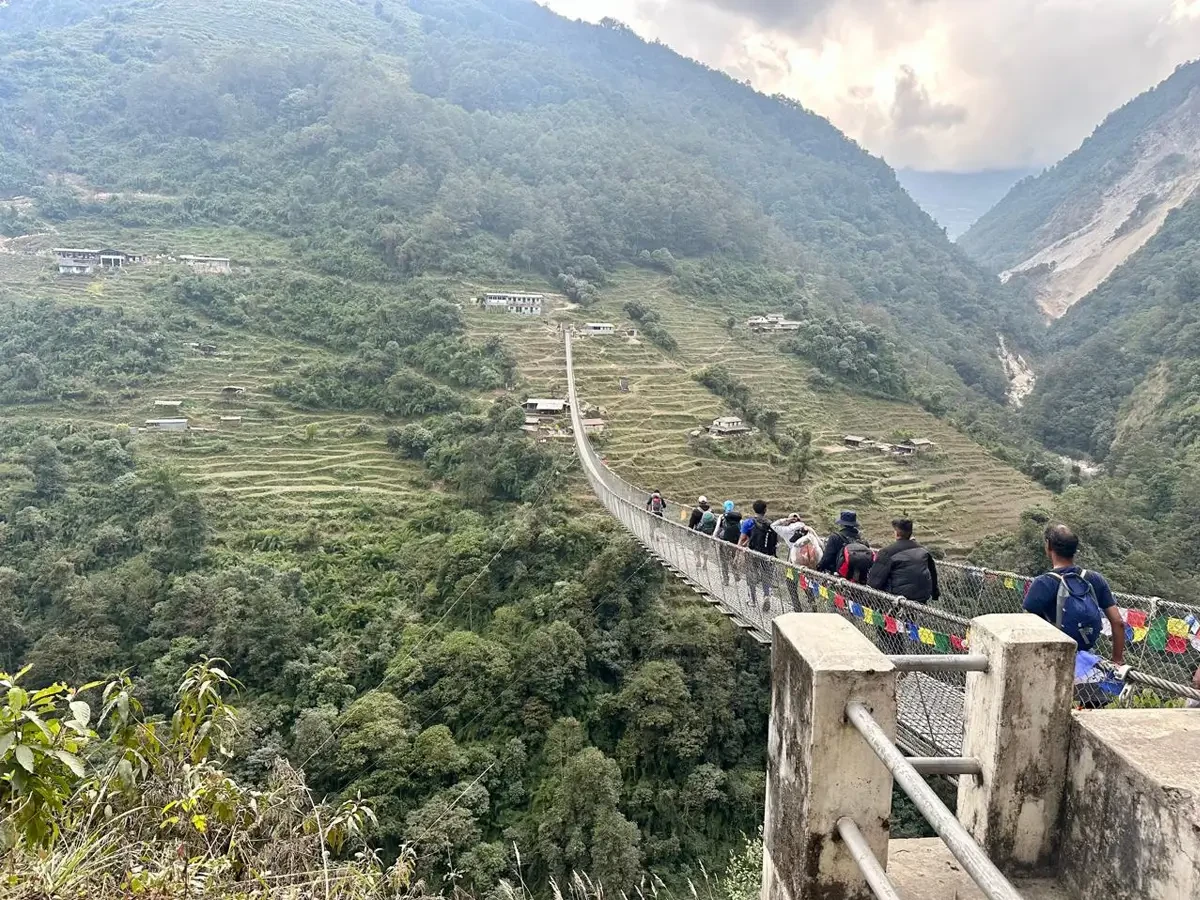
- Trek through Ghandruk to Chhomrong, passing terraced fields, forests, and those iconic suspension bridges.
- Walk deep into the Annapurna Sanctuary trail from Chhomrong to Dovan.
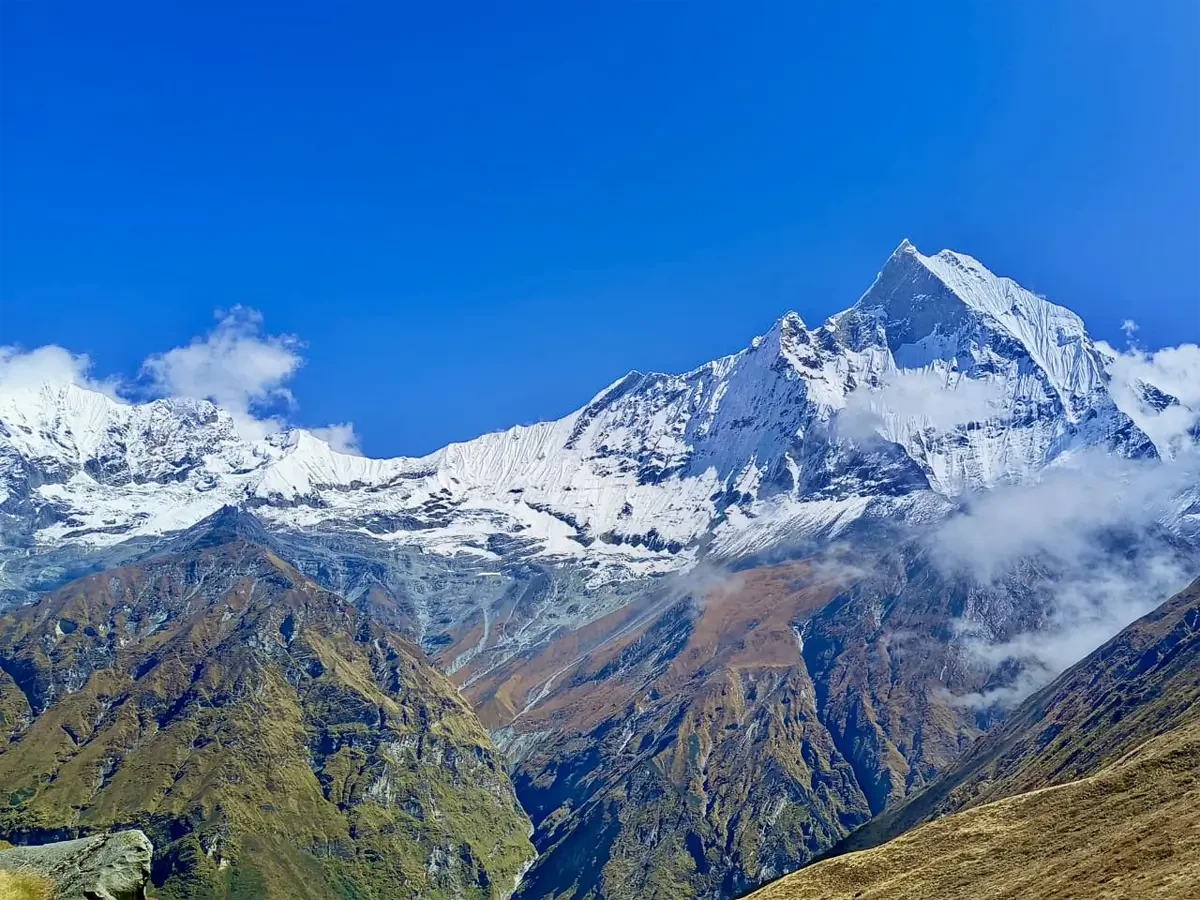
- Reach Machhapuchhare Base Camp (MBC) and get unreal close-up views of the sacred fishtail peak.
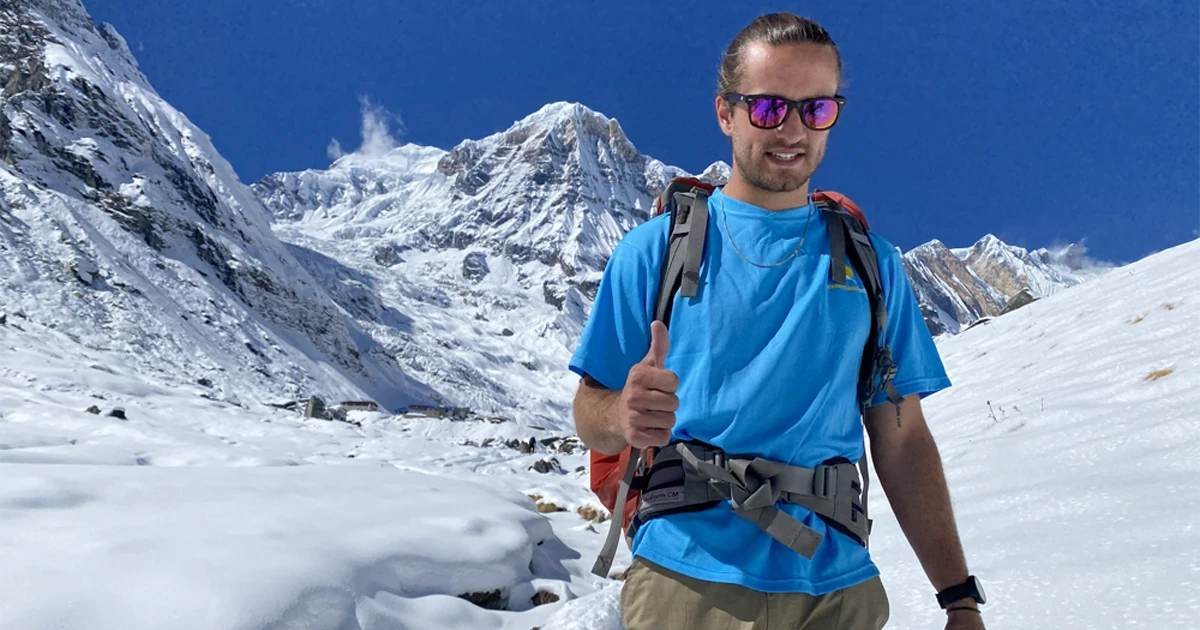
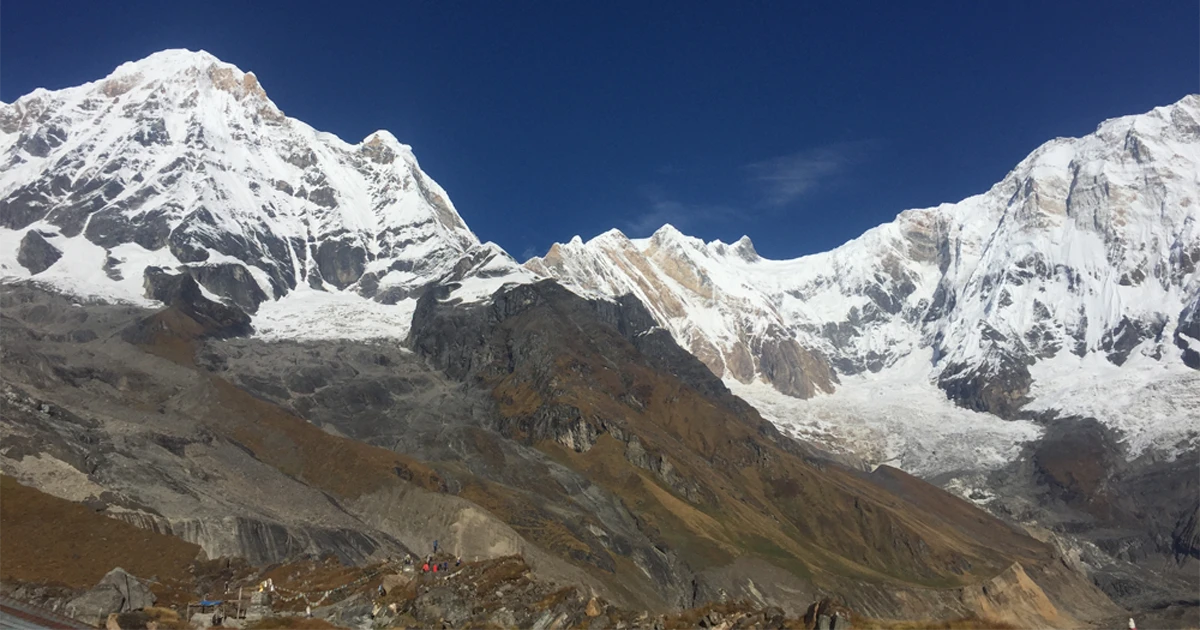
- Stand at Annapurna Base Camp (4,130 meters) surrounded by a full 360° amphitheatre of massive Himalayan peaks like Annapurna I, Hiunchuli, and Gangapurna.
- Catch sunrise and sunset at ABC, where the mountains literally glow.
- Experience the full Annapurna Sanctuary landscape, going from lush green forests to high alpine terrain in just a few days.Hit Jhinu Danda natural hot springs and soak your tired legs in natural mineral water right by the river modi river.
- Enjoy the perfect mix of adventure and chill with your group.
- Stay in cozy tea houses throughout the trek.
- Experience authentic Gurung culture, local food, and everyday mountain life instead of just walking past it like a tourist.
What Exactly is The Annapurna Base Camp Group Trek with Hot Springs & Cultural Experience?
If your idea of a “group activity” is usually just brunch… this Annapurna Base Camp group trek with hot springs and cultural experience is basically that level-up you didn’t know you needed.
does that mean? Picture this: a walking trip through Nepal, starting near Kathmandu before shifting west to Pokhara. From there, paths wind into the core of the Annapurna range. You climb toward Annapurna Base Camp sitting at 4,130 meters. Onward past forests and streams, you reach Jhinu Danda, where warm spring water offers quiet relief. Villages appear, built by Gurung people generations ago.
Truth is, getting to base camp isn’t the whole point. The real magic is everything in between.
Out of Kathmandu, the road unwinds slowly toward Pokhara, gentle at first. Then comes the climb, footsteps shifting higher into Ghandruk. Walls built from rock rise beside paths carved into slopes. Peaks such as Machhapuchhare and Annapurna South rest massively.
Down in Chhomrong, then past Dovan, heading up to Machhapuchhare Base Camp - MBC, the ground shifts quickly. Trees and wooden bridges fill one morning. By afternoon, the stones stretch wide, and the air feels different with each step.
Here it is at last, Annapurna Base Camp. Surrounded by towering peaks, you find yourself in a ring of stone giants: Annapurna I, Hiunchuli, Annapurna South, and Machhapuchhare - Fishtail. It’s not even “scenic” at that point; it’s just unreal in every direction.
And just when your legs are done, you head down to Jhinu Danda hot springs, sitting in warm, natural water by the river, like, “okay… this was worth it.”
Culturally, the trek is just as special as the mountains. You pass through Gurung villages, interact with locals, stay in tea houses, and see real mountain life, which is simple, warm, and deeply rooted in tradition. The Annapurna region has been home to Gurung communities for generations, and trekking here has begun developing a thing since Nepal opened up to trekkers in the 1960s. but the first climb to Annapurna I in June 3rd 1950s by Nepalese sherpas and French people.
The trail itself is well-marked and mixed with stone steps, forest paths, rivers, and gradual climbs. It’s challenging enough to feel like an adventure, but still very doable with a steady pace and good support.
yeah, it’s not just a trek to base camp. It’s a full-on mountain experience with nature, culture, hot springs, and that “I actually did this” feeling at the end.
Who is This ABC Group Trekking Experience Actually For?
you are wondering “is this Annapurna Base Camp group trek with hot springs and cultural experience actually for me?” Short answer: probably yes… but let’s break it down real quick.
This ABC group trekking experience is perfect for beginners as well as advance trekkers who want to try a Himalayan trek without going full survival mode. You don’t need to be super fit or some hardcore mountaineer, if you can walk for a 5 - 7 hours a day and don’t mind a bit of uphill struggle (okay, a lot of stairs), you are good to go.
It’s also ideal for solo travelers who don’t actually want to feel solo. Walking together through tough stretches feels lighter when someone’s there to share the eye rolls. A local crew steps in before problems grow.
Picture mornings where mist curls around stone huts and voices rise in Gurung songs. Staying in villages such as Ghandruk pulls you into daily rhythms far beyond postcard scenes. Meals come slow, shared on wooden stools, flavors rooted in generations. Faces light up with curiosity when strangers sit awhile. Every step carries weight because it moves at the pace of people, not schedules.
This journey works well for pairs, small crews, or buddies after both excitement and quiet time.
And if you are that person who’s been saying “I wanna do a trek in Nepal someday” but keeps pushing it, this is literally your sign. The itinerary is well-paced, the trail is clear, and the experience is designed to be doable, enjoyable, and memorable without being overwhelming.
So yeah, if you want a trek that’s beginner-friendly, socially fun, culturally rich, and comes with a hot spring reward at the end… this Annapurna Base Camp group trek is 100% your kind of thing.
What The Annapurna Sanctuary Trail Feels Like?
Walking the Annapurna Sanctuary trail honestly feels like you are moving through different worlds every single day, like the mountain slowly reveals itself layer by layer, and you are just there trying to keep up.
Down farther, spots like Bamboo and Dovan feel different. Flowing beside the Modi Khola stream, steps fall on ground covered by thick woods with bamboo, oaks, and rhododendrons. Footing changes often: soft soil gives way to jagged stones, thin routes twist under tree cover, wet spots surprise when rain has passed.
This stretch reveals what nature can do when left alone. More than a thousand kinds of plants grow here, spread across the Annapurna Conservation Area, ranging from orchids to trees draped in moss and dense stands of bamboo. If you stay still long enough, move without noise, then perhaps you will see langurs, high-altitude birds, or fresh traces of red pandas.
Upward beyond Deurali, the land shifts underfoot. Trees pull back slowly, leaving space for wind and sky instead. Cold settles into your clothes the higher you go. With each step, sightlines stretch further. Valleys are carved deep by ancient glaciers and there it stands ahead: Machhapuchhare.
Now the trail leads upward toward Annapurna Base Camp. Strange how quiet it gets here. Snow-covered ridges rise all around, closing in like walls of a frozen bowl. Trees vanish behind you, along with any trace of noise or movement beyond your boots on stone. The path stays clear, no steep drops or tricky steps. Breathing changes. Minutes stretch longer.
Most of the time, the path stays manageable, though calling it simple would be misleading. Upward stretches come one after another, then sudden drops challenge your legs without warning. Some days drag on past what you expected.
And that’s kinda the best part. One day you are sweating in a forest, next day you are layering up in the cold, and before you know it, you are standing in the middle of the Annapurna Sanctuary surrounded by some of the highest mountains on earth.
Why is this ABC Hot Springs & Cultural Group Trek Kind of a Big Deal? (Yes, Even for Beginners)
Mountain Views from Machhapuchhare Base Camp to Annapurna Base Camp That Hit Different
Right from morning one of the group hikes to Annapurna, the peaks aren’t just sitting far off somewhere. They trail behind, close, almost walking with you, as if they belong right there on the path.
Down near Ghandruk and Chhomrong, along the early stretches of path, peaks such as Machhapuchhare, Annapurna South, and Hiunchuli come into clear sight, though far off at first.
Up high near Sinuwa and Bamboo, glimpses of scenery slip through thick stands of rhododendron and bamboo. Yet once in a while, the woods thin out and suddenly, there’s Machhapuchhare, clear as ever.
Past Dovan and Deurali, the land shifts without warning. Trees pull back, giving way to a tight stretch of valley walled by steep rock faces, the Modi Khola threading beneath. Now Annapurna South and Hiunchuli loom nearer than before, while Machhapuchhare towers above.
Only then does MBC appear. Beneath the holy Fishtail summit your feet meet stone and silence. Surrounding heights include Annapurna South, Hiunchuli, Gangapurna, and Tent Peak. This moment stands full on its own.
Out beyond MBC, the land spreads wide. A broad icy basin takes shape beneath your feet. Mountains rise all around with Annapurna I, Annapurna South, Hiunchuli, Machhapuchhre, and Gangapurna. Vision stretches everywhere at once.
What sticks isn’t just the peaks, but how light reshapes them hour by hour. Sun climbs, shadows shift, colors deepen, and each moment feels like a different place entirely.
Before dawn breaks, just as sunlight touches ABC, Annapurna I begins glowing gold, though nearby peaks remain shadowed in deep blue. As hours pass, edges grow clearer. Ridges appear where none seemed before.
When the sun slips down, near MBC or ABC, Machhapuchhare and Annapurna South take over. Soft orange comes first, followed by hints of pink, while long shadows creep through the icy valleys.
Gurung Villages, Local Culture, & Tea House Interactions You’ll Lowkey Miss Later
Should you believe the peaks define the Annapurna area... pause when evening comes, settle into a small tea house beside villagers, then notice, slowly, the warmth between them outshines any summit. People were a quiet wonder all along.
High up on the trail to Annapurna Base Camp, small clusters of homes appear in Ghandruk, Chhomrong, and others tucked into the slopes, where the Gurung people, sometimes known as Tamu, make their way through seasons of change. Generations back, their ancestors settled here.
Belief moves quietly through daily routines with prayers at Buddhist shrines and how stories pass from grandparent to child during cold evenings. Mountains surround them, yes, but so do customs that hold tighter than altitude ever could.
Out here, village energy hits right away. Clusters of stone homes cling to steep slopes, while ribbons of cloth flutter overhead in the breeze. Step into Ghandruk and culture surrounds you.
Right away, the friendliness of Gurung folks wraps around you like sunlight once you enter a mountain tea house. This place turns into where everyone meets along the path. Evenings find travelers near a small fire, fingers thawing out as talk drifts through stories as weather shifts, trail updates, daily happenings back home, or sudden bursts of laughter sparked by something silly earlier.
Traditions run deep here, shaping how people live through seasons and stories passed down. Tamu Lhosar kicks off the Gurung calendar year with color, rhythm, because whole communities step out in embroidered robes. Villages come alive when drumbeats rise. Also, while Dashain draws families into prayer and feasting, Tihar lights up nights with oil lamps glowing on doorsteps.
You might spot how speech shapes things here. Not just Nepali, many people use Gurung, known locally as Tamu Kyi, often switching between them. In spots where trekkers pass, you may hear a few English phrases pop up too.
Here’s what happens at the tea house. You are treated like family, not someone passing through. Sitting together changes things. A few words turn into real talk, maybe even laughter. 20 minutes might reveal pieces of their world no guidebook ever could.
Jhinu Danda Hot Springs Moment
After days of walking through stone steps, forests, and mountain trails, you descend toward Jhinu Danda. It is a peaceful little riverside stop sitting around 1,780 meters in the Annapurna region. It’s actually one of the most loved recovery points on the entire ABC route because of its natural hot springs sitting right beside the Modi Khola River.
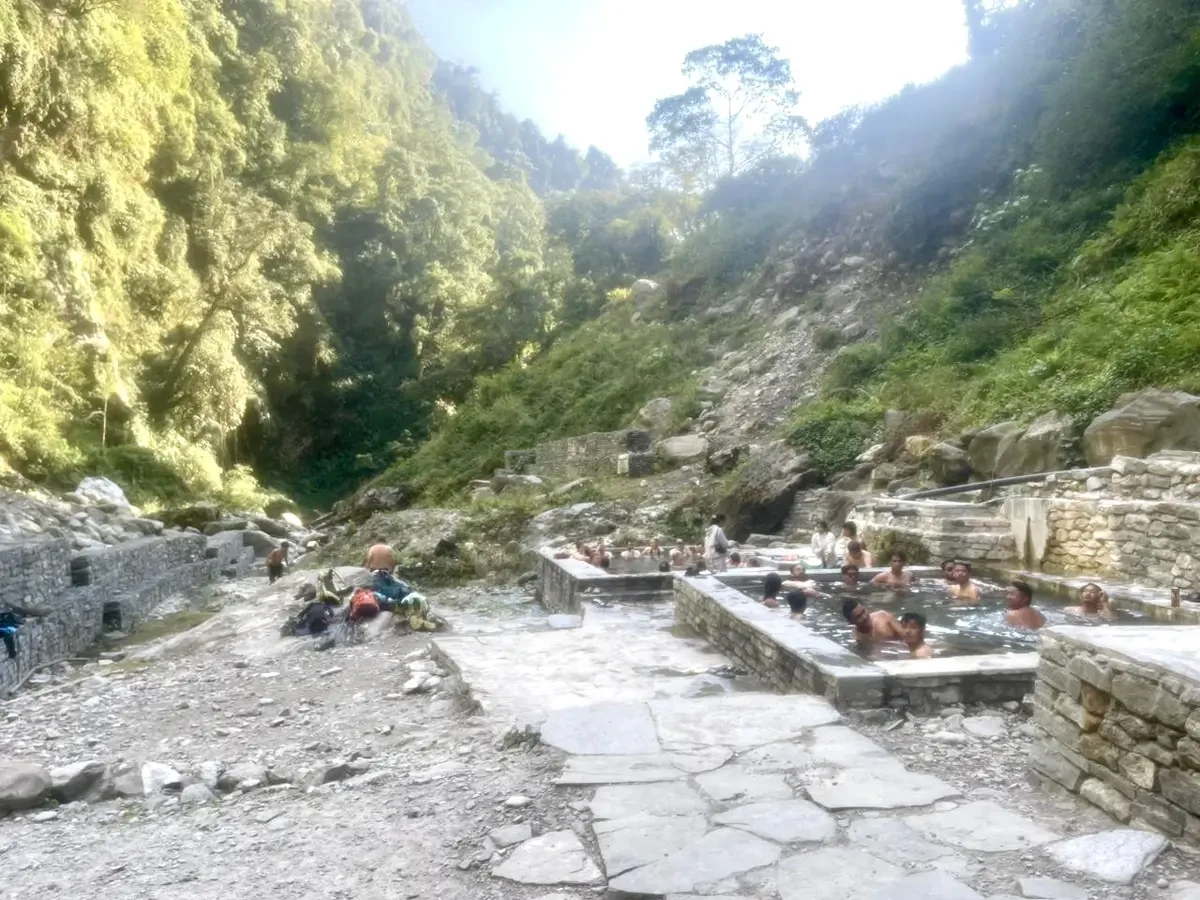
To reach the hot springs, you first arrive at Jhinu Danda village after the long descent from places like Chhomrong. From Jhinu Danda, it’s a short but slightly steep 20 to 30 minute walk downhill through forest paths until you hear the river properly. And then suddenly, you see it: natural stone pools by the river, warm steam rising, surrounded by greenery and mountain silence.
And honestly… the vibe hits instantly.
You drop your backpack energy, sit into that warm water, and it just starts working on your tired legs like magic. The water is naturally heated and believed to help relax sore muscles and improve circulation, which is exactly why trekkers treat this like a reward ritual after ABC.
What makes it even better is the setting. You are literally soaking in hot water while the Modi Khola River rushes next to you, cool mountain air around, forest all over, and sometimes even distant views of Annapurna range peaks depending on the weather. It’s one of those rare places where hot, cold, nature, and silence all mix together in a weirdly perfect way.
There’s also a bit of local history behind it, these springs weren’t “discovered for tourism.” Locals from nearby villages like Chhomrong and Sinuwa have used them for generations to relax after farming and long physical work, so it’s always had that healing reputation long before trekkers showed up.
And the feeling? It’s not just physical recovery. It’s mental too. You’re sitting there with your group, everyone half laughing, half silent, all of you just realizing the trek is slowly coming to an end. It’s warm, calm, and slightly emotional in a lowkey way.
Annapurna Base Camp Group Trek Cost
The cost of the Group ABC trek with hot springs and cultural experience is basically what you pay for a full Himalayan package. This journey will cost you around USD 948.
Picture this. Group treks to Annapurna Base Camp don’t stick to one price; group size, service level, and what’s tucked into the package. Traveling with others usually means lighter costs compared to heading out alone; shared guides, lodging, transport, and porters divide the load. That sharing slashes individual payments on most Himalayan routes.
house nights come with most ABC routes, along with daily meals on the trail. Permits? They’re covered. A guide shows up, too. Porters help carry things. Transport between Kathmandu and Pokhara is part of the deal. Everything needed tends to be tucked into the package. Once walking begins, these core costs stay covered without extra effort.
Here’s something often overlooked: joining a group trek might cost depending on the services company provides, particularly if it is your first time hiking in Nepal. Safety stays strong. Planning remains solid. The journey keeps its shape without emptying your wallet.
For the cost, weather shifts matter too. When more people hike during spring or fall, spots fill faster, and the package trip cost will be according to the services.
Can I Arrive Early in Kathmandu Before My Trek Start Date?
True, arriving ahead of time in Kathmandu before your group trek to Annapurna Base Camp begins makes sense, and quite a few people do it. For real, showing up early isn’t just common; it works out well.
Showing up one or two days early helps ease into things. Tired from flying? That extra time lets your body catch up. Wander around Kathmandu, maybe see a temple/stupa or grab tea at a small shop. Instead of rushing straight to the trailhead, you move at your own pace. Missed connection on arrival? No problem, those added days cover surprises like cancelled flights.
Should you get here ahead of schedule, our team at Happyland Treks handles overnight stays, transport from the airport, along with hands-on guidance around Kathmandu. Instead, unwind freely, wander through Thamel, taste street-side dishes, or squeeze in some sightseeing prior to the official trek chat.
How To Get There, Permits & Guide Support for the ABC Group Trek
Kathmandu to Pokhara to Trailhead: Flights, Buses, Jeeps; What’s Best?
The Kathmandu to Pokhara to trailhead journey is basically the “warm-up phase,” and it actually matters more than most people think, because how you travel sets the whole vibe for the trek.
So, here’s the simple breakdown: you first move from Kathmandu to Pokhara (about 200 km west), and then from Pokhara you continue toward the trekking starting points likeGhandruk or Nayapul depending on the group route. Each option, flight, tourist bus, or jeep, gives a totally different experience of Nepal before you even start walking.
If you go by flight, it’s the fastest and honestly the most “wow” option. In around 25 to 30 minutes, you are flying over hills and sometimes even catching early Himalayan views before landing in Pokhara.
Most people trekking in groups hop on the tourist bus, as this route covers the entire road stretch. Roughly 6 or 7 hours pass before arrival, shaped by how busy the roads are and their current state. Travel follows the Prithvi Highway, slipping past the Trishuli River, tiny markets tucked beside pavements, rolling slopes thick with trees.
Even amid the usual highway rush of Nepal, you catch glimpses of beauty without trying. Longer than shortcuts? For sure. Yet somehow, each mile shifts the skyline.
Some people pick the private jeep when they want something between bare-bones and luxury. Roughly 6 or 7 hours pass by while riding through changing landscapes. Stopping happens whenever someone needs it, no fixed schedule hold things up. Breaks turn into moments: stepping out to move stiff legs, grabbing food at roadside spots, watching water twist below cliffs.
Out past Pokhara, the rhythm changes, feet start moving more than wheels. The next stretch pulls travelers toward starting points like Ghandruk or sometimes Nayapul Birethanthi, based on the plan laid out earlier. Rides kick in then: shared jeeps or whatever runs that day, winding roads upward, climbing into quieter terrain within just a few hours.
Annapurna Base Camp Permits Without the Headache
Getting Annapurna Base Camp permits sounds like a headache… but honestly, it’s way simpler than people think when it’s done right. And once you understand it, you will realize it’s just a basic entry system to keep the Himalayas safe, organized, and properly managed.
For the ABC group trek with hot springs and cultural experience, you mainly need two permits. But TIMS CARD sometimes required and sometimes not required.
- TIMS Card (Trekkers’ Information Management System): It usually costs around NRs 3,000 (about USD 23). This is issued by the Nepal Tourism Board or registered trekking agencies, and it works like your official trekking identification in Nepal.
- ACAP permit (Annapurna Conservation Area Permit): It costs around NRs 3,000 (about USD 23). This is your entry ticket into the Annapurna Conservation Area, one of the most protected and beautiful trekking regions in Nepal. Without this permit, you legally cannot enter the trail.
So, what happens if you don’t have them? You won’t be allowed to start the trek from checkpoints along the route. There are multiple permit check posts, and your documents are checked properly. If you are missing permits, you can be stopped or even sent back, which is the last thing you want after reaching the mountains.
To get these permits, you typically need a passport copy, passport-sized photos, and basic personal details like your trekking route and dates. But here’s the good news, you don’t really need to stress about this part at all.
If you are trekking with Happyland Treks, we handle the entire permit process for you. That means your TIMS and ACAP are already arranged before your trek even starts.
Guides & Porters in Group Trekking: Who Does What and Why it Matters
In the Annapurna Base Camp group trek with hot springs and culture, guides and porters are basically the real MVPs of your entire journey. Once you are on the trail, you will quickly realize this is a total game-changer.
Your guide becomes your eyes, ears, and steady hand through mountain trails. They understand sudden storms, hidden paths that save hours by midday. Walking together means moving as one.
Because villages speak different dialects, having someone to bridge words helps more than maps ever could. Each night’s stay? Already sorted before sunset. Even small things like meal preferences or sore knees get noticed without asking. Fewer choices mean fewer worries; fewer worries open space for real attention.
A porter, on the other hand, is the silent hero carrying your heavy backpack so you don’t have to suffer through steep climbs with 10 to 13 kg on your shoulders. You will only carry a small daypack, while porters handle the main load between stops. That means more energy for you, better endurance, and honestly a much more enjoyable trek.
Here's what it actually costs: Daily pay for Annapurna Base Camp guides in Nepal runs between 35 and 65 U.S. dollars. Porters tend to go for 20 to 35 bucks a day. That amount covers meals, lodging, wages, plus minimal insurance through the hike.
Most overlook this detail: gratuities stand apart, yet they’re part of the routine. When the journey wraps up, travelers usually offer extra to guides and those who carry gear. Not required by any rulebook, mind you, still woven into Nepal's walking traditions. A gesture like that speaks louder than rules.
Where to Exchange Money: Kathmandu or Pokhara?
If you are planning the group trek to ABC with hot springs and cultural experience, you will definitely need some Nepali cash, and the good news is, you can exchange money in both Kathmandu and Pokhara city without any stress.
But here’s the simple truth: Kathmandu is the best and easiest place to exchange money. You will find plenty of licensed money exchange counters around Thamel with better rates, more options, and faster service. It’s also more reliable since you are still in the main travel hub before heading into the mountains. If you don’t have enough time you can also ask your trekking operator to change the money and ask for a better exchange rate.
Pokhara also has money exchange services, especially around Lakeside, and they are totally fine to use if you forgot or need extra cash later.
So, the smart move? Exchange most of your money in Kathmandu before your trek starts, and keep Pokhara as your backup option if needed.
One more quick tip, don’t rely on cards once you leave city areas. On the trekking route, everything runs on cash, so carrying enough Nepali rupees from the start saves you a lot of hassle.
How Difficult is the Group Trek to ABC with Hot Springs?
The Annapurna Base Camp group trek with hot springs and cultural experience is generally considered a moderate trek, but let’s be real, it’s the kind of “moderate” that still makes your legs talk to you every single day.
Most days involve several hours of movement, often 5 to 7, though it might stretch longer if the group moves slowly or pauses for pictures. Walking happens back to back across consecutive days without needing climbing gear or steep rock faces.
Paths shift unexpectedly: stone steps give way to muddy tracks, then shaky bridges strung over gullies. Uphill stretches press hardest, particularly when heading from Chhomrong through Bamboo toward Deurali.
Most people stumble because they quit too soon, not because they lack strength. This journey doesn’t test you in sudden bursts, it unfolds through long stretches of motion. Muscles learn the rhythm, yet still protest, particularly when facing row upon row of unyielding rock stairs carved into Annapurna’s early trails.
Starting out near sea level isn’t the case here; Kathmandu sits at roughly 1,300 meters. Moving forward, travellers pass through Pokhara before heading higher. The path climbs slowly toward Annapurna Base Camp, which rests at 4,130 meters. This steady rise works well since it allows time for acclimatization. Once past 3,000 meters, breathing may require more effort. Such changes happen to most people.
Really, just how tough is it? When you’re somewhat active and able to cover ground on foot each day, tackling this route makes sense.