Altitude in Meters and foot of the Annapurna Base Camp Route with Poon Hill
Places and altitude of the Annapurna base camp trek day by day
| Location/Route |
Altitude Meters and Feet |
| Kathmandu |
1,400m/4,593ft |
| Pokhara |
8,22m/2,696ft |
| Ulleri |
2,010m/6,594ft |
| Ghorepani |
2,874m/9,429ft |
| Poon Hill |
3,210m/10,531ft |
| Tadapani |
2,630m/8,628ft. |
| Sinuwa |
2,340m/7,677ft |
| Deurali |
3,200m/10,498ft |
| ABC |
4,130m/13,549ft |
| Bamboo |
2,310m/7,578ft |
| Jhinu Danda |
1,780m/5,839ft |
What is Annapurna Base Camp Altitude and Mountain Sickness and why it Happens when you go Higher in the Himalayas?
High up near Annapurna Base Camp, the air carries less oxygen. When you climb fast without giving your body time to adjust, trouble might start. Think of it as your system reacting strongly to a thinner atmosphere. Instead of normal breathing patterns down below, each breath here feels incomplete.
Your cells notice the drop in oxygen long before your mind does. Some people feel headaches or dizziness once they reach certain heights. This response has a name: mountain sickness, also known as acute mountain sickness or AMS. It pops up when the altitude increases more quickly than your body can cope. Though common, it's not something to brush off lightly.
Up there in the high Himalayas, air stays present, yet oxygen spreads out more. Each breath pulls in fewer of those vital molecules. Lungs keep moving, blood keeps flowing, yet effort grows heavy.
High up, less air reaches your lungs. When ascent outpaces adjustment, trouble begins. The struggle shows as headaches or fatigue at first. Moving quickly without pauses invites imbalance. Dizziness creeps in, then nausea tags along. Simple tasks drain energy fast. This cluster of reactions earns the name altitude illness.
The key reason it happens is simple: your body is used to a certain oxygen level, and the Himalayas don’t follow that setting. So when you go higher, your system has to adapt by increasing breathing rate, heart rate, and red blood cell activity. But this adjustment doesn’t happen instantly; it takes time. And when the climb is faster than the adaptation, mountain sickness shows up.
In short, altitude sickness isn’t about being unfit or weak. It is about physics, oxygen, and how quickly your body can adjust to a completely different environment. And once you understand that, the whole experience becomes less scary and more about managing your pace.
What Low Oxygen Actually Does to your Body at ABC: Symptoms you Might Feel (and Start Overthinking)
When you reach the higher sections of the Annapurna Base Camp trek, the first thing your body notices is not the view; it is the air. Low oxygen at Annapurna Base Camp quietly changes how your body feels, works, and reacts, even before you fully realize what is going on.
At a higher altitude, your body is getting less oxygen with every breath. So it starts compensating in its own slightly dramatic way. Your breathing becomes faster, your heart rate goes up, and suddenly even small efforts feel like you just sprinted for a bus you weren’t ready to catch.
Now the funny (and slightly annoying) part is that the symptoms don’t always show up loudly. They start subtly, which is why you often begin overthinking everything.
You might feel a light headache and think, “Okay, maybe I didn’t drink enough water.” Then a bit of dizziness shows up, and suddenly you are like, “Wait… is this altitude sickness or am I just tired?” Then your appetite drops, and you start questioning life choices.
These are common early symptoms of altitude sickness at ABC: headache, fatigue, mild nausea, shortness of breath, and sometimes difficulty sleeping. Nothing dramatic at first, but noticeable enough that your brain starts running unnecessary diagnostics.
What’s actually happening inside your body is simple. With less oxygen available, your system shifts into survival mode. Your heart pumps faster to deliver oxygen, your breathing rate increases to pull in more air, and your body prioritizes essential functions over comfort. That “heavy tired but I didn’t even do much” feeling? That’s your body working overtime in a low-oxygen environment.
At the Annapurna Base Camp altitude, this is completely normal to some extent. But the tricky part is learning the difference between normal adjustment and early mountain sickness. That’s why paying attention to these small signals matters more.
So if your body starts acting a bit dramatic up there, don’t panic.
Risks of Altitude Sickness: Is it Dangerous or Just Uncomfortable?
When it comes to altitude and mountain sickness in Annapurna Base Camp, most people first wonder: “Is this actually dangerous, or am I just going to feel a bit miserable and dramatic for a few days?” And honestly, the answer is, it depends on how early you pay attention to your body.
At its mild level, altitude sickness at ABC is mostly uncomfortable. Headache lingers, nausea sits in the background, energy dips lower than usual, and even small things, like bending to tie shoes, suddenly seem too much. Movement slows, steps grow heavier, and trails stretch longer than promised. Still, it stays within reach when treated with rest, steady sips of water, and patience on steep climbs.
Now things take a turn; ignoring early signs will lead to worse altitude sickness. When that happens, your body shows clear trouble handling less oxygen up high. Things get harder: balance slips, movement feels clumsy, even basic steps require effort.
Most people walking to Annapurna Base Camp don’t get seriously ill, especially when they move slowly. It isn’t the height that causes trouble; it’s ignoring warning signs along the way. Trouble begins once someone keeps going despite feeling unwell.
What matters most is knowing that altitude sickness acts differently on each person. One might just feel off, whereas another could struggle harder when the air thins. Moving slow lyhelps some, yet drinking enough water supports others better. How well you slept last night sometimes weighs more heavily than expected.
Most cases bring discomfort rather than danger when climbing high. Yet ignoring symptoms might lead to trouble down the trail. Staying alert makes all the difference here. Pay attention to how you feel, then adjust pace or rest. If you push blindly through symptoms, you will run into trouble.
Thus, altitude sickness at ABC is less about fear and more about respecting the altitude, respecting your body, and not trying to “out-hike” something that literally comes down to oxygen levels.
Who is more likely to get Affected at ABC?
When it comes to AMS, one of the biggest myths is: “Only unfit people get it.” Spoiler alert: that is not how altitude works. At Annapurna Base Camp, altitude sickness doesn’t care how many gym sessions you have done or how fast you can run on flat ground. It is more about how your body reacts to thin air, not how strong your legs are.
That said, some of you are definitely more likely to feel the effects earlier than others.
First up are beginners or first-time high-altitude trekkers. If your body has never been above high Himalayan elevations before, it hasn’t “learned” how to adjust to lower oxygen levels yet. So the reaction can feel more noticeable in the first few days with headaches, fatigue, or that slow-motion feeling.
Then there are trekkers who go too fast. This is a big one. If you rush the ascent without giving your body time to acclimatize, your system doesn’t get the chance to adjust properly. It is like dragging your body into a high-altitude environment and saying, “Good luck, figure it out.” And your body usually responds with altitude symptoms very quickly in return.
If you are the one who skips hydration and proper rest, you will tend to struggle more. At altitude, your body loses fluids faster without you even realizing it, and dehydration can make symptoms feel worse. Combine that with poor sleep, and suddenly even mild altitude effects can feel stronger than they actually are.
Another group includes those with a previous history of altitude sickness. If your body has reacted before at high elevations, there is a higher chance it may react again at the Annapurna Base Camp altitude. It doesn’t always happen, but your body does tend to remember.
And finally, even very fit trekkers can get affected. Yes, the same person who runs marathons or lifts heavy weights can still feel altitude sickness. Fitness helps your endurance, but it doesn’t increase oxygen levels in the air. So, at ABC, even super-fit legs sometimes get humbled by thin Himalayan air. Annapurna base camp trek is very less chance to get altitude for the trekkers as just a few percentages of people get AMS.
How to Deal with Altitude Sickness Mid-Trek without Panicking?
If mountain sickness decides to show up mid-trek, the golden rule is simple: don’t panic, don’t sprint, and definitely don’t start Googling your symptoms at 3,000+ meters. Panic makes everything feel worse than it actually is, especially at altitude, where even normal breathing already feels a bit “extra effort.”
Listen closely, your body speaks early. Headache, dizziness, tiredness, or moving slower than usual might show up during a trek at height. These signals whisper: it’s time to ease off. Instead of pressing on, rest for a while.
Resting right where you are helps when the signs stay light. Rushing too fast? That won’t help. Take a seat. Sip water. Let breath find its own way back. You may feel stronger just by resting a bit.
Also, water matters more up there. Higher elevations speed up fluid loss, while low hydration may worsen altitude discomfort. Sipping often helps keep things steady. Eating has its place too, yet large portions bring strain. When hunger dips, small bites that is easier to digest gently work best.
Here is the key thing to remember: stop climbing if how you feel starts going downhill. That mistake? People keep going up anyway. When your body can’t handle where you are right now, moving higher only drags things into deeper trouble. Hold position or drop a little lower instead.
Frustration may creep in when those beautiful peaks sit untouched, yet height plays by its own rules.
What really matters? Staying relaxed in your thoughts. Much of the worry shows up when things feel unclear. When it clicks that high-altitude discomfort is just your body adapting, and handling it feels simpler, no need to analyse each little feeling.
Rest right where you are when halfway through the trek. Take a seat, drink water, stay put - no need to rise further just yet. Let your body adjust at its own pace. Mountains won’t vanish while you pause. They wait. Always.
Prevention Tips for Annapurna Base Camp (So you Don’t Become that Story in the Tea House)
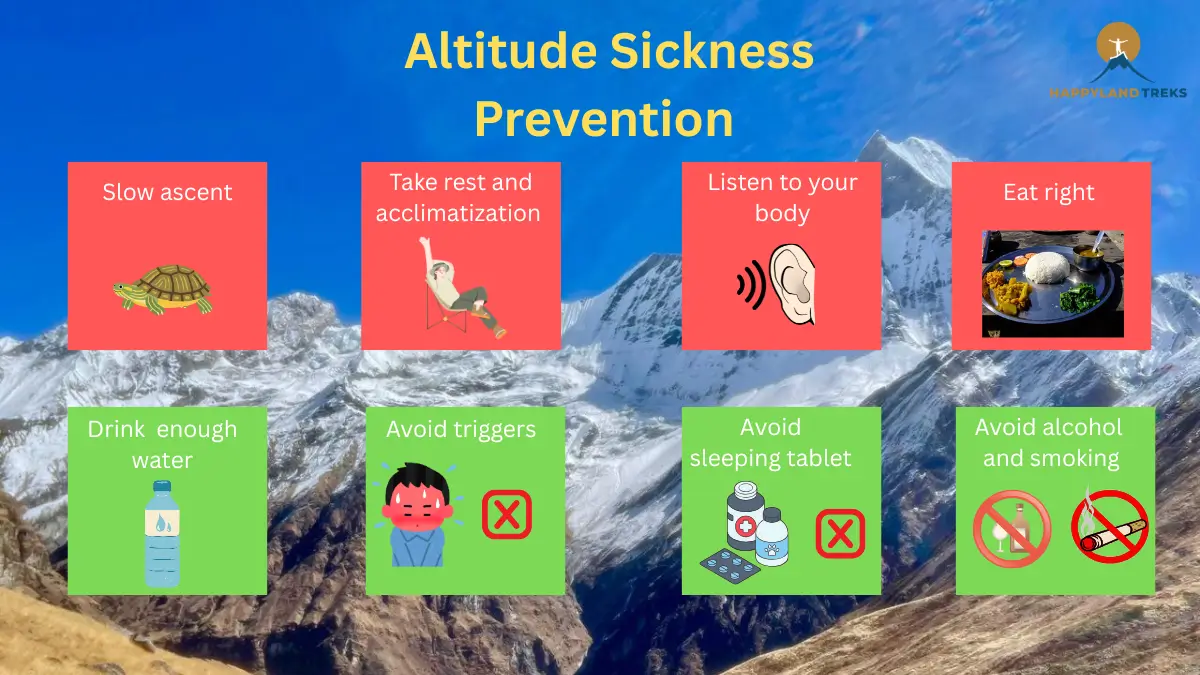
Here are simple, practical ways to reduce the risk of Annapurna Base Camp Altitude and Mountain Sickness while trekking:
- Go slow on purpose and don’t rush the ascent, as a steady pace gives your body time to adjust to lower oxygen levels.
- Follow the principle of acclimatization. Give your body time to adapt to altitude changes by ascending gradually, taking rest periods, and allowing your system to adjust before going higher.
- Drink water regularly throughout the day. Small, frequent sips work better than drinking all at once.
- Limit alcohol and excessive caffeine, as they can make dehydration worse at high altitude.
- Choose easy-to-digest food that gives steady energy without overloading your stomach.
- Even if your appetite drops, keep eating small portions to maintain energy levels.
- Get enough rest, with sleep and breaks.
- Walk at a comfortable pace instead of pushing your limits on climbs.
- Listen to early symptoms such as headache, dizziness, or fatigue.
- If symptoms appear, stay at the same altitude or descend if needed.
- Dress properly for changing weather.
- Avoid rushing your breath; controlled breathing helps with oxygen intake.
- Everyone acclimatizes differently; do not compare yourself to others.
- Stay mentally relaxed, as stress and panic can make altitude symptoms feel worse than they are.
- Respect the altitude, not your ego.
Quick Reality Check: Should you be Worried about Mountain Sickness in Annapurna?
When people hear Annapurna base camp altitude and mountain sickness, the first reaction is usually something like, “Okay… am I about to suffer in the mountains?” And honestly, that fear is understandable, but also slightly overdramatic in most cases.
Here is the real deal: yes, altitude sickness can happen at Annapurna Base Camp, but for most of you, it’s mild, manageable, and temporary when the trek is done properly. It’s not something that randomly “hits everyone hard,” and it’s definitely not a guaranteed horror story waiting for you in the Himalayas.
Most times, it is just your system getting used to change. As elevation increases, the air thins, and your breath adjusts slowly. Headaches creep in. A sluggish step follows. Tiredness shows up. Yet none of this means trouble waiting ahead.
Starting gently makes all the difference. Hydration matters just as much as pace when climbing higher. If you skip rest days, push too fast, sudden headaches or nausea might show up. Listening to your body often prevents bigger problems later. Rushing upward ignores warning signs that others pause for. Slower steps mean fewer surprises once the air thins out.
So, should you be worried? Not really. But should you be aware and respectful of altitude? Absolutely yes.
The Annapurna Base Camp trek is still very doable for beginners and experienced trekkers alike. Millions of people complete it safely every year. The mountains are not trying to stop you; they are just asking you to slow down a bit and breathe like you actually mean it.
FAQs
What is altitude sickness at Annapurna Base Camp?
It’s your body reacting to lower oxygen levels at ABC, causing symptoms like headache, fatigue, or mild nausea while it adjusts.
How high is Annapurna Base Camp?
Annapurna Base Camp sits at around 4,130 meters, which is high enough for altitude effects to show up in many trekkers.
Do all trekkers get mountain sickness at ABC?
No, not everyone gets it. Very less chance to altitude though. Some feel mild symptoms, while others may feel nothing, depending on how well they acclimatize.
When does altitude sickness usually start on the ABC trek?
It often starts above 2,500 to 3,000 meters when oxygen levels begin to drop noticeably.
What are the first symptoms of altitude sickness?
Common early signs include headache, tiredness, dizziness, and loss of appetite that feels “off” for no clear reason.
Is altitude sickness at Annapurna Base Camp dangerous?
Usually, it is mild and manageable, but ignoring symptoms and pushing higher can make it more serious.
How can I prevent altitude sickness at ABC?
Go slow, hydrate well, eat light meals, and follow proper acclimatization instead of rushing the ascent.
Can fit people still get altitude sickness?
Yes, fitness doesn’t guarantee immunity. So listen to your body.
What should I do if symptoms start mid-trek?
Stop ascending, rest at the same altitude, hydrate, and only continue if symptoms improve.
Do I need medication for altitude sickness at ABC?
Not always. You can manage it naturally, but you can also carry medication as Diamox after consulting a doctor as a precaution.