What are the Acclimatization Days on the Everest Base Camp Trek, And Why are there Two of those?
If you have been staring at an EBC itinerary, wondering, "Why are there two random days where we don't seem to be going anywhere?" don't worry, you are not the only one. It can look a little odd at first. After all, if the goal is to reach Everest Base Camp, why stop halfway?
Well, because your body isn't a Formula 1 car. It can't go from sea level (or even Kathmandu) to over 5,000 meters at full speed and expect everything to work perfectly.
The acclimatization days on the Everest trek are planned rest days that give your body time to adjust to the decreasing oxygen levels as you climb higher. And before you get too excited, "rest day" is a bit of a misleading name. Climbing high, sleeping low. You won’t be relaxing today. You will be hiking a short way up and then back down to sleep in the same village. This is called the famous “climb high, sleep low” technique.
So, why do we have 2 acclimatization days? Why not just one?
The altitude you will be climbing on the Everest Trek is not suitable for your body to adjust to on an overnight basis. Your first acclimatization day in Namche Bazaar is designed to allow you to ease into trekking at high altitude after spending a few days climbing Everest.
From there, you will be heading to Dingboche, where you will notice a large increase in altitude, and therefore, it will be even harder to trek. As a result, you will need an acclimatization day in Dingboche as well.
What Happens if you Skip an Acclimatization Day?
Short answer? Nothing good.
It may be tempting to cut a day and get to EBC (Everest Base Camp) a day early. After all, if you feel good in Namche Bazaar or Dingboche, then you should just keep going.
Wrong. The problem with high altitude is that it takes a toll on your body, regardless of your fitness level.
While it is true that working out regularly and staying in shape will help you acclimatise better, you cannot power through altitude with sheer willpower. Unfortunately, skipping even one of the acclimatization days dramatically increases the risk of developing acute mountain sickness (AMS).
AMS is characterized by headaches, dizziness, nausea, loss of appetite, insomnia, and fatigue. In severe cases, it may require immediate descent to a lower altitude to avoid further complications.
So, in effect, skipping the rest days increases the likelihood of AMS dramatically. It also short-changes your Everest experience, since you won’t get to enjoy the magnificent view from “Everest Base Camp.”
First Acclimatization Day: Namche Bazaar (3,440 Meters)
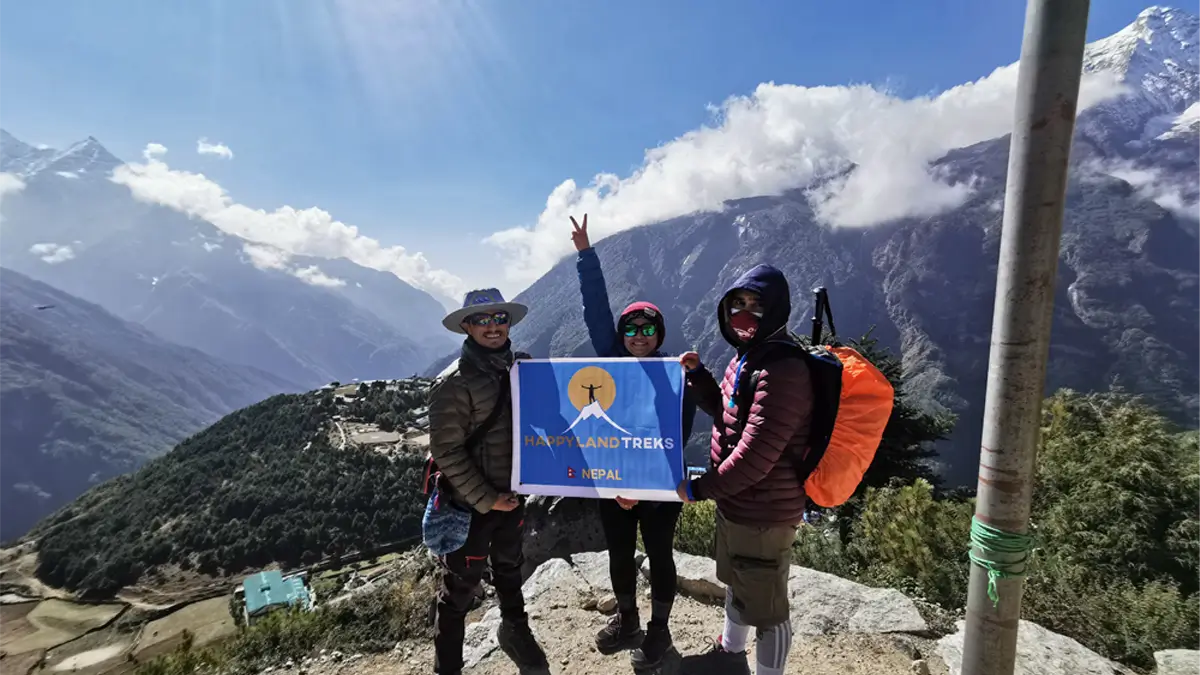
After visiting charming sherpas’ villages, crossing notorious wobbly suspension bridges (with a good reason to doubt every other decision you have ever made in last 30 seconds) and climbing up the long, steep trail from Monjo, you finally see Namche Bazaar. It means you have deserved a well-deserved rest.
It is the first acclimatization day, which allows you to adjust to a higher altitude. You may experience some effects of oxygen deprivation on steep ascents and your baggage may suddenly become impossibly heavy. It should help you understand how your body reacts to the elevation.
You can also explore Namche’s local shops, cafes, and get familiar with the vibe of the biggest sherpas’ village in Khumbu.
Acclimatization Hike to Hotel Everest View, Syangboche, and Khumjung Village
Remember when we said an acclimatization day isn't actually a rest day? Yep, here's the proof.
Instead of relaxing by taking your feet off, you start hiking a beautiful trail above the Namche Bazaar. This trail often leads you to the Hotel Everest View (3,880 meters), from where you can continue the hike towards the Syangboche Airstrip. It is common to also visit the peaceful Khumjung Village on the way back to Namche for an overnight stay.
The first leg of the hike to the Hotel Everest View is short. However, on a clear day, you can see some amazing views of Mount Everest, Lhotse, Nuptse, Ama Dablam, Thamserku, and other Himalayan peaks that seem so near you could almost reach out and touch them.
On your way to Syangboche, you pass by one of the world’s highest airports. From there, you can continue your hike to the Khumjung Village. This is a Sherpa village.
Your body is already adjusting to the altitude because you are climbing higher every day. By sleeping lower at the Namche Bazaar, you follow the ”climb high, sleep low” rule.
Second Acclimatization Day: Dingboche (4,410 Meters)
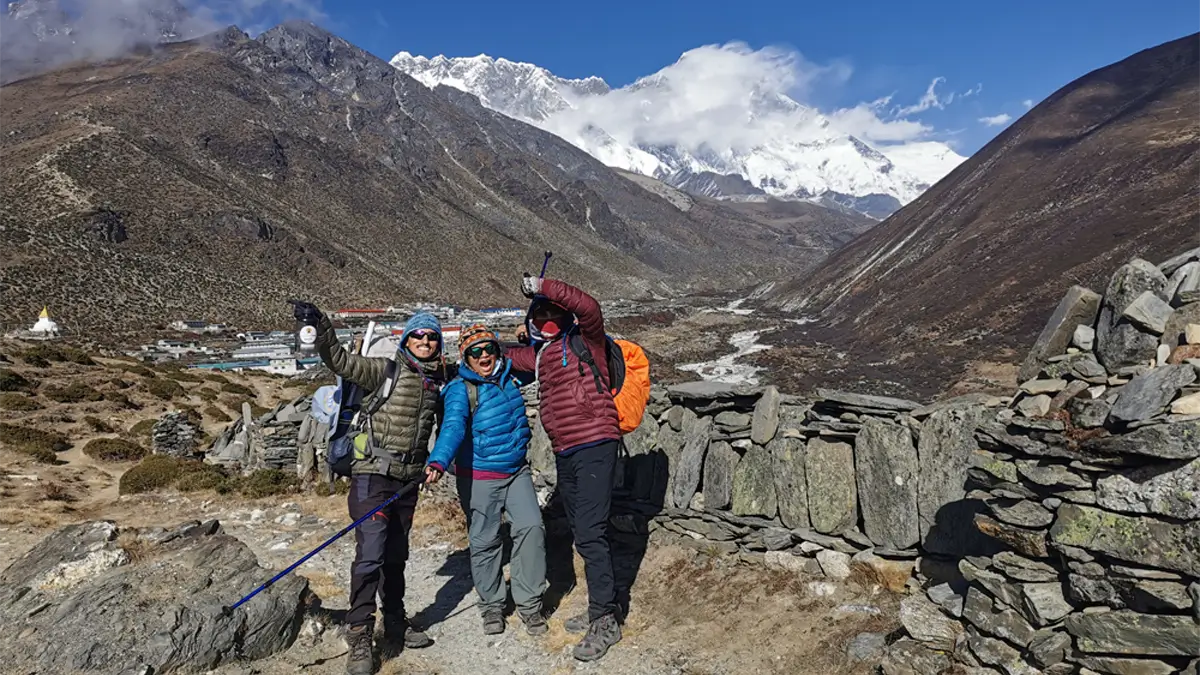
By the time you get to Dingboche, you have seen beautiful Sherpa villages, trekked over glaciers, and witnessed trees falling away on the mountain. The trail also becomes a little rougher, and your breathing is not as easy.
Dingboche acclimatization day at least a few hundred meters hiking uphill and some of the trekkers full of energy hiking 690 meters to Nangkartshang peak.
In Dingboche, you have one day of acclimatizing to higher altitudes before you go to Lobuche, Gorak Shep, Everest Base Camp, and the rock face of Kala Patthar. So Dingboche is also important for acclimatizing further climb to Everest base camp.
It may feel like you have been on the trail for a week, but unfortunately, there is no acclimatizing that can be done on your day off. Sorry to those who packed sleeping bags and extra warm clothing for those late afternoon naps.
Acclimatization Hike to Nangkartshang Peak from Dingboche
Now it is the time for your next acclimatization hike, which is considered by many to be the harshest on the Everest Base Camp Trek.
You will leave from Dingboche to the Nangkartshang peak, located at an elevation of 5100 meters. Do not get confused by the name of the peak, because it is not your destination.
Your guide is going to lead you to the highest point of this stage, which is much harder than it seemed on the previous day. As you head to the mountain, the incline of the trail becomes really intense and only gets steeper until a specific point.
However, all your efforts will reward you with a spectacular view over Ama Dablam, Makalu, Lhotse, Island peak, and many others snow-capped mountains.
Climbing to over 5,000 meters and then descending back to Dingboche (4,410 meters) is another perfect example of the "climb high, sleep low" principle. You will probably feel pleasantly exhausted, your legs might be negotiating for an easier tomorrow, and your appetite will have magically doubled. That's all part of the experience.
Tips to Make the Most of your Acclimatization Days
Treat acclimatization days well, and they will treat you well on the way up to 5000+. Here is how to get the most out of that two-day break in between treks.
- Slow and steady walk slowly on your peace and even if you’re walking downhill please be slow while you have to go uphill after or next day.
- Do not waste acclimatization days being a bedridden invalid. Instead, do some hiking on the day to gain altitude and then come back down to sleep in your tent.
- Do not hike too hard. If you are walking at the speed of an Olympian, then you are hiking too fast; you should not feel rushed at all, but instead should be taking things easy.
- Drink more water than you think you need to. Being at a high altitude can cause people to become dehydrated, so make sure that you are drinking enough.
- Even if you do not feel like eating, eat! Since your body will be doing so much work to adjust to the altitude, it is important that you give it enough energy to function properly.
- Limit your alcohol consumption. We understand the temptation to go bar-hopping in Namche Bazaar, but drinking and altitude are a dangerous mix.
- Listen to your body. It is normal to feel a little tired after hiking all day, but severe headaches, dizziness, and vomiting are not.
- Have some fun on your acclimatization days. They are the most beautiful days of the trek, so do yourself a favor and take in the scenery. Talk to the locals and trekking companions, and really enjoy the experience and breathtaking views.
- Get adequate sleep. You can not hike at your best if you sleep poorly. Sleeping in a warm bag and going to bed early can make all the difference in the world and can help rid you of those terrible altitude headaches.
- Dress in layers. This helps you stay warm or cool depending on the weather, and it is also important for acclimatization.
Have an enjoyable hike! The acclimatization days are the most beautiful days of the trek. Take in the scenery and have fun, you deserve it!
FAQs: Acclimatization Days about Everest Base Camp
Can I skip the acclimatization days on the Everest Base Camp Trek?
It is not recommended to skip an acclimatization day on the Everest base camp trek. Skipping a day for acclimatization increases the risk of altitude sickness. You may be forced to cut the trek short if you can’t properly adapt to the reduced oxygen levels
Why are we acclimatizing in Namche Bazaar and Dingboche for Everest base camp trek?
These two Everest mountain villages are strategically located at ideal altitudes for gradual and safe acclimatization to higher altitudes.
How long do we acclimatize on the EBC trail?
An acclimatization day is usually one full day, which involves a short hike up and back to the same village where you will spend the night.
What do we do on an acclimatization day in the Everest region?
On an acclimatization day, you do a short hike/trek up to higher ground to allow your body to adjust to the lower oxygen levels. Then you turn back and go back to the tea house in the village to spend the night.
Can I get altitude sickness despite acclimatizing on the Everest Base Camp Trek?
Yes, it is possible, although it is rare. However, it is not common on this trek. Acclimatization reduces the risks but cannot eliminate them entirely. This is why it is so important to pay attention to your body during the trek.
Is it possible to reach Everest Base Camp without taking a day for acclimatization?
It is possible to follow an intensive Everest Base Camp trekking itinerary, but it is not recommended without acclimatization. Most of the Everest base camp trekking packages have only two acclimatization days in the itineraries.
What is the rule of thumb for acclimatizing on the EBC trail?
The rule of thumb for acclimatization on the EBC trail is to climb higher every day and descend to sleep at night.
What is the importance of acclimatizing days, the one in Namche Bazaar vs the one in Dingboche?
The acclimatization day in Dingboche is more important than the one in Namche Bazaar because it prepares your body for higher altitudes above 5,000 meters.
What altitude do we reach while acclimatizing on the Everest Base Camp Trek?
Most hikers reach an altitude of 3,880 meters above sea level at Hotel Everest View from Namche Bazaar. On the other hand, the Nangkartshang peak hike from Dingboche reaches an altitude of 5,080 to 5,100 meters above sea level.
Are the acclimatization days included in most of the Everest Base Camp itineraries?
A typical Everest Base Camp trekking itinerary that lasts 12 to 14 days includes two acclimatization days in the Namche Bazaar and Dingboche for proper altitude acclimatization.
Should I take altitude sickness drugs during the acclimatization days?
If you are considering taking drugs for altitude sickness, you should first consult your doctor in your home country before flight to Nepal or ask your guide also. The drugs for altitude sickness, like Diamox, should only be used when necessary and under professional supervision.
How do I find a local sherpa guide to do the Everest base camp trek?
Easily you can find a sherpa guide to do the Everest base camp trek. many local and international trekking operators provide the sherpa guide and porter to do the Everest base camp trek.
Everest base camp trek acclimatization for everyone?
Yes, acclimatization day for Everest base camp is necessary for every single trekker from all around the world.