So, Are There Actually Different Routes To Annapurna Base Camp?
Yes, there totally are. Annapurna Base Camp Trek isn’t just one straight “follow the crowd” trail. The classic route is popular, but there are several alternative routes that mix things up with different villages, viewpoints, and trekking styles. Some go via Poon Hill for sunrise madness, others through quieter forest trails or shorter approaches from Jhinu Danda. Same base camp at the end, but the journey? Completely different mood each time.
Annapurna Base Camp Via Ghorepani Poon Hill: Why This Route Is Such a Crowd-Pleaser?
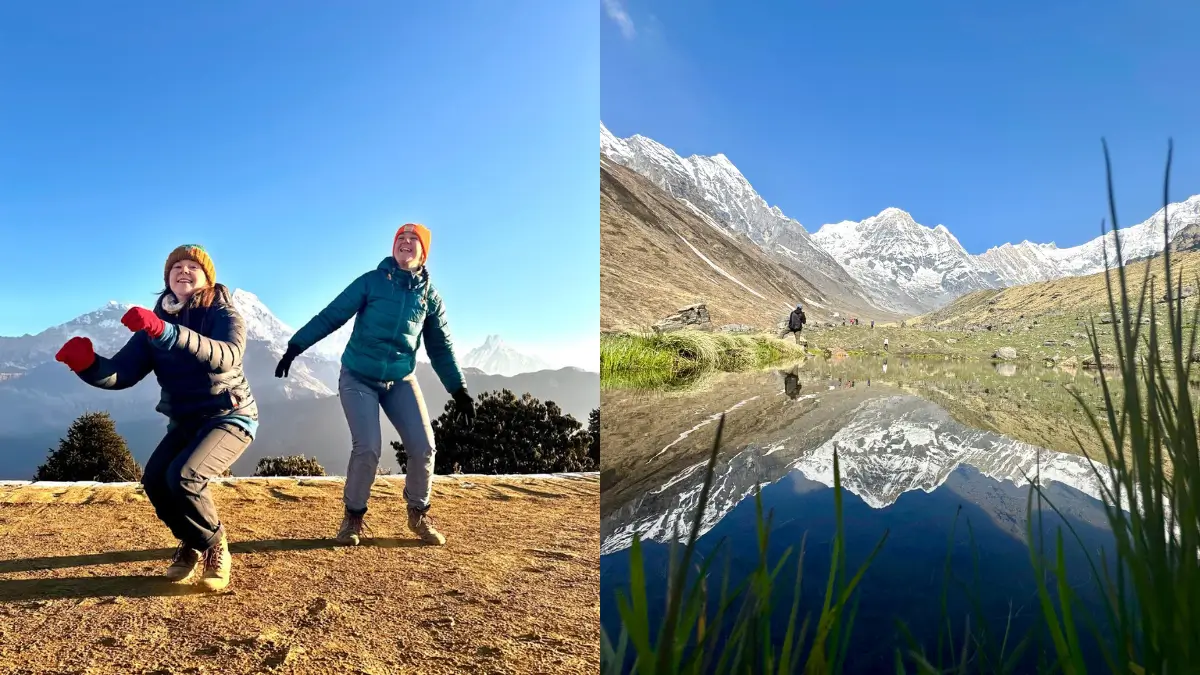
Over there, beyond Ghorepani, the way ahead climbs toward Annapurna Base Camp through thickets of rhododendron. Stone paths wind upward beneath slates of sky where rooftops cling to hillsides below snowy backs of peaks. You might spot a yak cropping grass near a trail, then suddenly find yourself moving through fog that slips around tall pines. When dawn arrives, light spills fast across the slope. Step after step reveals something unplanned, small lodges built into earth walls, strips of prayer flags snapping over rock piles, then again the sudden face of towering ice ranges up close.
You wind down the road toward Pokhara, and climb the Ulleri's long run of stones. Villages slip by as Ghorepani, Tadapani, with paths merging into the old ABC route past Sinuwa’s trees and Deurali’s open slopes. Higher now, the ground leads forward until peaks appear above 4,130 meters.
Briefly put, people favor this path since it turns the trip into something closer to a high-altitude adventure, tossing in more scenery along the way.
Let’s break down the full journey so you know exactly what to expect:
Day 1: Arrival in Kathmandu (1,400 meters), transfer to the hotel.
Day 2: Drive from Kathmandu to Pokhara (820 meters) - 6 to 7 hours.
Day 3: Drive from Pokhara to Nayapul and trek to Ulleri (2,010 meters) - 6 to 7 hours.
Day 4: Trek from Ulleri to Ghorepani (2,874 meters) - 3 to 4 hours.
Day 5: Trek from Ghorepani to Poon Hill (3,210 meters) and then to Tadapani (2,630 meters) - 6 to 7 hours.
Day 6: Trek from Tadapani to Sinuwa (2,340 meters) - 6 to 7 hours.
Day 7: Trek from Sinuwa to Deurali (3,200 meters) - 6 to 7 hours.
Day 8: Trek from Deurali to ABC (4,130 meters) - 5 to 6 hours.
Day 9: Trek from ABC to Bamboo (2,310 meters) - 7 hours.
Day 10: Trek from Bamboo to Jhinu Danda (1,780 meters) - 5 hours.
Day 11: Jhinu Danda to Nayapul to Pokhara Drive - 2 to 3 hours.
Day 12: Drive from Pokhara to Kathmandu.
Day 13: Departure day.
Annapurna Base Camp Via Ghandruk: Why Do Most Trekkers Still Choose This Classic Route?
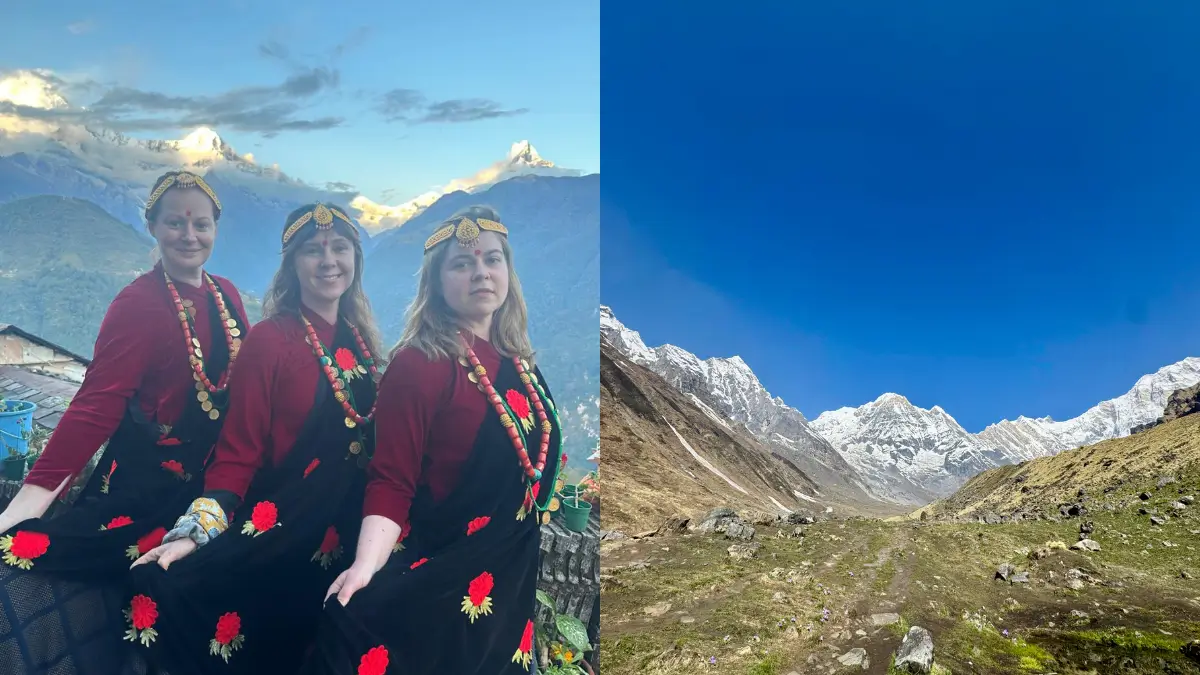
This Annapurna base camp via Ghandruk route is basically the “no drama, full experience” version of the ABC trek. Smooth trails start right out of Pokhara, pulling you past bright Gurung homes. A steady rise cuts deep into the Annapurna Sanctuary, catching every key view along the way. This route stays popular for clear reasons.
Out here, you first move towards Ghandruk, a village stitched into the hills with stone homes and sky-high vistas that quietly shape what's ahead. Moving on, paths rise past Chhomrong, then Dovan, each step pulling deeper into wilder terrain until Machhapuchhre Base Camp appears. Up top, the breath thins near 4,130 meters where Annapurna Base Camp waits, ringed by towering summits.
So why do most trekkers still pick this Ghandruk route? Simple, it’s the most balanced mix of culture, scenery, and steady trekking progression. Nothing too rushed, nothing too extreme.
Now, here is how the whole trek goes down, day by day:
Day 1: Arrive in Kathmandu, airport pickup, transfer to hotel, and later on visit the office to learn more about the trip.
Day 2: Drive from Kathmandu to Pokhara by tourist bus - 6 to 7 hours drive, and stay overnight in a Pokhara hotel.
Day 3: Drive from Pokhara to Ghandruk (2,012 meters) and wander around.
Day 4: Trek from Ghandruk to Chhomrong (2,200 meters)
Day 5: Trek from Chhomrong to Dovan (2,505 meters)
Day 6: Trek from Dovan to Machhapuchhare Base Camp (3,700 meters)
Day 7: Trek from MBC to Annapurna Base Camp (4,130 meters) - 3 to 4 hours.
Day 8: Trek from ABC to Bamboo (2,310 meters) - 7 hours.
Day 9: Trek from Bamboo to Jhinu Danda Hot Spring (1,780 meters) - 5 hours.
Day 10: A short walk from Jhinu Danda and take a transport to Pokhara.
Day 11: Drive from Pokhara to Kathmandu by tourist bus - 7 hours.
Day 12: Departure day.
Annapurna Base Camp Via Jhinu Danda: Is The Short Route Still Worth It?
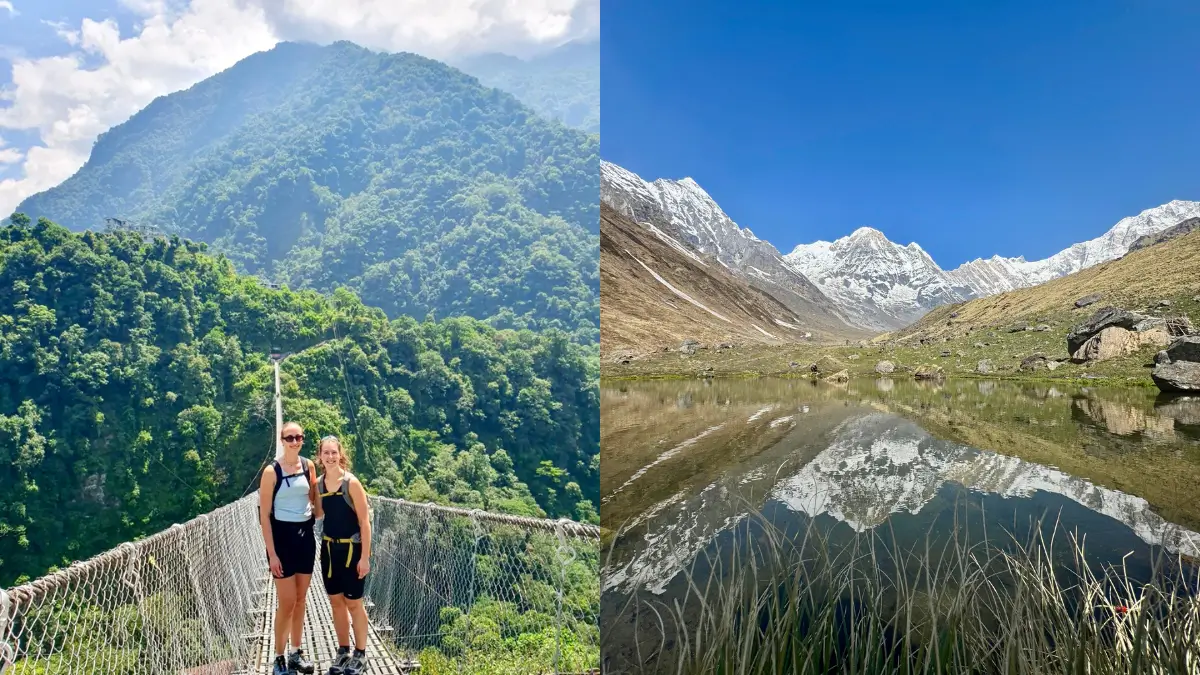
Imagine reaching the core of the Annapurna Sanctuary without weeks on foot. Annapurna base camp via Jhinu Danda this shorter path starting at Jhinu Danda gets you moving fast. Instead of long stretches across distant trails, you leap into steep climbs right away. Through Sinuwa and past Himalaya, each turn lifts you higher. The mountain drama unfolds quicker than most expect. But fewer days walking does not mean less wonder.
Though brief, the journey still feels complete. Deep inside, forest paths wind under thick canopies. Bridges stretch across rushing streams, swaying slightly with each step. Tiny villages cling to steep slopes. Then, after hours of climbing, the peak appears.
Worth it? Without a doubt. When time runs thin, this path delivers everything ABC offers, no long grind needed. The mountains still hit hard, even when days are few.
Now, here is how this short-and-sweet adventure goes, day by day:
Day 1: Arrival in Kathmandu, transfer to the hotel
Day 2: Drive from Kathmandu to Pokhara by tourist bus. (Optional flight)
Day 3: Drive from Pokhara to Jhinu Danda - 2 hours 30 mins drive, and trek to Sinuwa (2,220 meters) - 3 to 4 hours walk
Day 4: Trek from Sinuwa to Himalaya (2,900 meters) - 6 to 7 hours
Day 5: Trek from Himalaya to Annapurna Base Camp (4,130 meters) - 5 to 6 hours
Day 6: Trek from Annapurna Base Camp to Bamboo (2,310 meters) - 7 to 8 hours
Day 7: Trek from Bamboo to Jhinu Danda (1,780 meters) - 5 to 6 hours
Day 8: Walk from Jhinu Danda and drive to Pokhara – 2 to 3 hours.
Day 9: Drive from Pokhara to Kathmandu by tourist bus or optional flight.
Day 10: Departure to the international airport or stay longer.
Annapurna Base Camp Via Australian Camp: Why Are Trekkers Discovering This Route?
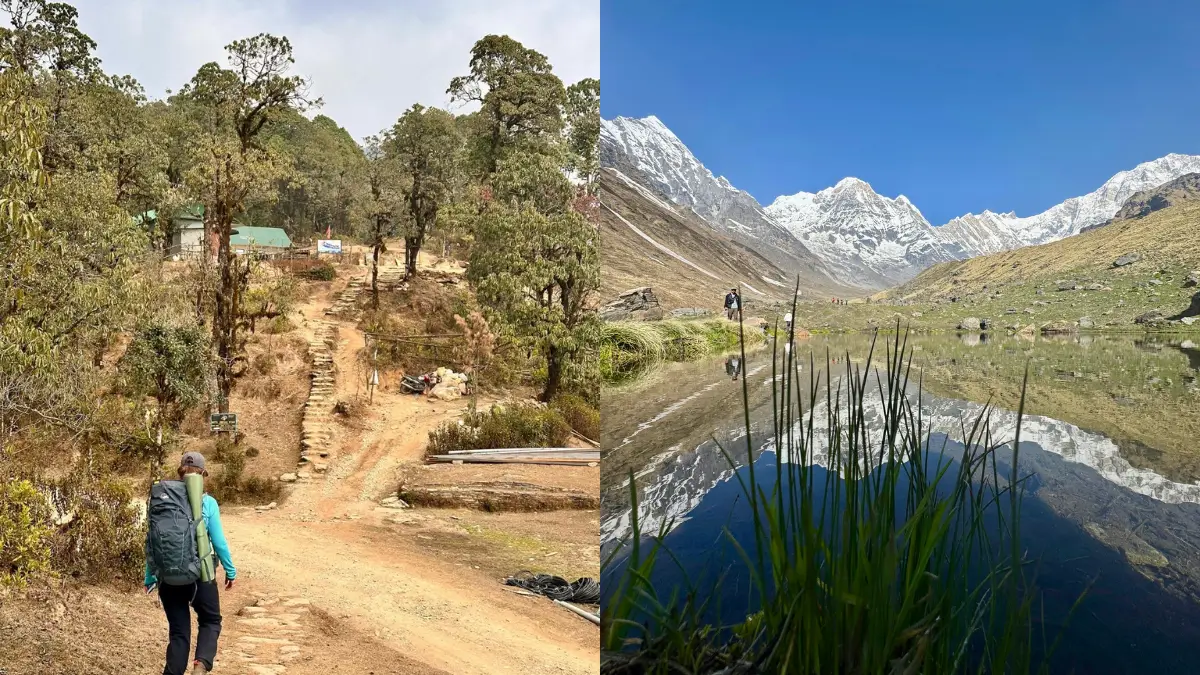
Early on, this path near Australian Camp opens wide vistas, slipping in bonus landscapes right away. Instead of rushing into valley depths, it lingers along high ridges as Pritam Deurali lights up with morning sun. You will still hit every key ABC landmark, yet begin with sweeping peaks spread out ahead. Landruk village and Chhomrong comes into view much the same as always. The core journey stays intact, just shaped by a quieter environment.
It stands out because of how the mood changes along the way. Open views come first, stretching far across rolling hills where quiet paths follow ridges. From there, the route links naturally to the well-known ABC trek, moving past Jhinu Danda and Sinuwa, climbing steadily toward Annapurna Base Camp.
So yeah, more trekkers are discovering it because it feels like a “best of both worlds” route with views upfront, adventure in the middle, and a proper Himalayan climax at the end.
Now, here is how this offbeat-but-awesome journey goes, day by day:
Day 1: Arrival in Kathmandu, transfer to the hotel.
Day 2: Drive from Kathmandu to Pokhara by tourist bus.
Day 3: Trek from Pokhara via Australian Camp to Pritam Deurali.
Day 4: Trek towards Landruk with village exploration.
Day 5: Trek from Landruk to Chhomrong.
Day 6: Trek from Chhomrong to Sinuwa.
Day 7: Trek from Sinuwa to Himalaya.
Day 8: Trek from Himalaya to Annapurna Base Camp (4,130 meters).
Day 9: Trek down from ABC to Bamboo.
Day 10: Trek from Bamboo to Jhinu Danda and drive to Pokhara.
Day 11: Drive from Pokhara to Kathmandu.
Day 12: Departure or extra stay.
Quick Comparison of All Annapurna Base Camp Alternative Routes (At A Glance)
| Route |
Starting Point |
Duration |
Difficulty Level |
Experience Type |
Key Highlghts |
| Annapurna Base Camp via Ghorepani Poon Hill |
Nayapul/Ulleri |
13 Days |
Moderate |
Scenic and popular |
Poon Hill sunrise, Ghorepani forest trails, Chhomrong ABC |
| Annapurna Base Camp via Ghandruk (Classic Route) |
Ghandruk |
12 Days |
Moderate |
Cultural and classic |
Traditional Gurung villages, Machhapuchhre Base Camp approach |
| Annapurna Base Camp via Jhinu Danda (Short Route) |
Jhinu Danda |
10 Days |
Moderate to Challenging |
Short and direst |
Direct ascent to ABC, hot springs descent via Jhinu |
| Annapurna Base camp via Australian Camp |
Australian Camp/Pritam Deurali |
12 Days |
Moderate |
Scenic and offbeat start |
Ridge views, scenic approach into Landruk and classic ABC trail |
How the Views and Experiences Differ Across Annapurna Base Camp Routes?
All these Annapurna Base Camp alternative routes end at the same iconic point, ABC at 4,130 meters, but the real magic is in how different the journey feels before you get there. Each route basically changes the “mood” of the trek, from sunrise ridges to deep forests to classic village trails.
The Ghorepani Poon Hill route is the most dramatic in terms of early views. You start with one of the best sunrise panoramas in Nepal from Poon Hill, where Annapurna and Dhaulagiri show up in full cinematic mode. After that, it drops you into rhododendron forests and traditional villages before joining the main ABC trail. It’s a mix of big viewpoints and classic trekking energy.
The Ghandruk route feels more grounded and cultural. Instead of starting with high viewpoints, you ease into Gurung villages, stone-paved trails, and terraced hillsides. The views build gradually, just steady Himalayan reveals until you reach the alpine zone near Machhapuchhre Base Camp.
As for the Jhinu Danda short route, it is more direct and physically focused. You skip some of the longer cultural buildup and enter the main trail quickly. The scenery shifts fast from river valleys and dense forest to steep ascents toward ABC.
Now, the Australian base camp camproute is the most “scenic surprise” version. Open ridges greet you at first, stretching toward Annapurna's peaks visible even in morning light. All around green hill, one moment you are above the clouds, next you are walking beside waterfalls tucked between hills.
Which Annapurna Base Camp Route is the Easiest or Hardest?
Walking to Annapurna Base Camp isn’t something anyone could call a stroll, even on alternate paths, reaching 4,130 meters means effort, no matter what. Yet some trails feel lighter than others. The strain shifts based on daily distances covered, the sharpness of uphill climbs, also how fast elevation builds beneath your boots.
Up in the middle range, you will find the Ghorepani Poon Hill trail. Longer? Yes. Yet each step rises slow, the days planned just right so tiredness never takes full hold. Just when your muscles begin to grumble, dawn shows up, golden light spilling over peaks, and suddenly it feels worth every footfall.
The Ghandruk classic route is also moderate, but slightly more straightforward in terms of flow. It has a steady climb through villages and forests, so it feels balanced: not too rushed, not too extreme, just consistent trekking days.
Starting nearer the main path, the Jhinu Danda shortcut pushes pace fast. Elevation climbs sooner, leaving little room for slow adaptation. This stretch often feels tougher than expected, especially uphill near Chhomrong, Himalaya and ABC. Steep patches test balance, breath, strength without warning.
The Australian Camp route stays in the moderate category overall, but it adds a scenic ridge start before joining the main trail. The difficulty is similar to the classic route. But starting early few days is bit easier.
So yeah, none of these routes are a walk in the park, but none are extreme mountaineering either. It all comes down to how much time you want to take and how your body handles altitude gain.
So, Which Annapurna Base Camp Route Actually Fits You Best?
Choosing the right Annapurna Base Camp alternative route is less about “which one is the best” and more about “what kind of trek vibe you want.” Because honestly, they all end at the same epic base camp.
If you are all about iconic views and don’t mind a longer, scenic build-up, the Ghorepani Poon Hill route is your go-to. It’s the full cinematic package with sunrise at Poon Hill, forest trails, and classic ABC vibes with altitude acclimatization.
If you prefer a balanced, cultural trekking experience, the Ghandruk route cultural It’s steady, traditional, and gives you that proper village-to-mountain transition without too many surprises.
If your main goal is “get me to ABC but don’t waste too many days,” the Jhinu Danda short route fits best. It’s quicker, more direct, and perfect if your calendar is tighter.
And if you want something a bit different at the start, with ridge views and a less standard entry into the trail, the Australian Camp route is your pick. It mixes scenic viewpoints with the classic ABC base camp journey in a refreshing way.
So, the real question is: do you want a slow scenic story, a cultural walk, a fast adventure, or a bit of everything?
Final Thoughts On Annapurna Base Camp Trek Alternative Routes
At the end of the day, these Annapurna Base Camp alternative routes are just different ways of reaching the same jaw-dropping destination, Annapurna Base Camp at 4,130 meters. Whether you go via Poon Hill, Ghandruk, Jhinu Danda, or Australian Camp, the mountains don’t really change… but your experience definitely does.
Some routes give you sunrise drama, some keep it cultural and slow, and some just fast-track you straight into the Himalayas. There is no “perfect” route, just the one that matches your time, energy, and how much walking you are mentally ready for.
So pick your trail, lace up your boots, and enjoy the ride. Because in the end, it’s about how fun the journey gets along the way.
FAQs
Are there really different alternative routes to the Annapurna Base Camp Trek?
Yes, there are a few route variations that change how you reach ABC, but the destination stays the same.
Which is the most popular alternative route to Annapurna Base Camp?
The Ghorepani Poon Hill route is the most popular because of its sunrise views and classic trekking vibe with acclimatization.
How many days does it take to complete different Annapurna Base Camp routes?
Usually, anywhere between 9 and 13 days, depending on the route and your pace.
Is the Ghorepani Poon Hill route better than the classic ABC route?
Not better, just different. It adds Poon Hill sunrise views and mount Dhaulagiri 7th highest mountain view from Poon Hill and Thapla Danda.
Can I skip Ghandruk and still reach Annapurna Base Camp?
Yes, some routes bypass Ghandruk, but it’s a common and scenic stop on the classic trail.
Which Annapurna Base Camp route is the shortest and easiest?
The Jhinu Danda short route is the fastest, but it can feel more intense due to quicker altitude gain.
Do all alternative routes to the ABC trek connect to the same base camp?
Yes, all routes eventually lead to Annapurna Base Camp at 4,130 meters.
Is the Australian Camp route commonly used for the Annapurna Base Camp Trek?
It’s becoming more popular now, but still less common than the classic Ghandruk or Poon Hill routes.
Which route to Annapurna Base Camp offers the best mountain views?
Poon Hill route wins for sunrise panoramas, but all routes give solid Annapurna views later on.
Can beginners try different routes to the Annapurna Base Camp Trek?
Yes, beginners can do it with proper pacing and preparation, no technical climbing involved.
Which Annapurna Base Camp route is less crowded and more scenic?
Australian Camp and some offbeat variations feel quieter compared to the classic busy trail.