What’s With the ABC Poon Hill Trek, And What Makes This Route So Extra Compared to the Normal ABC Trek?
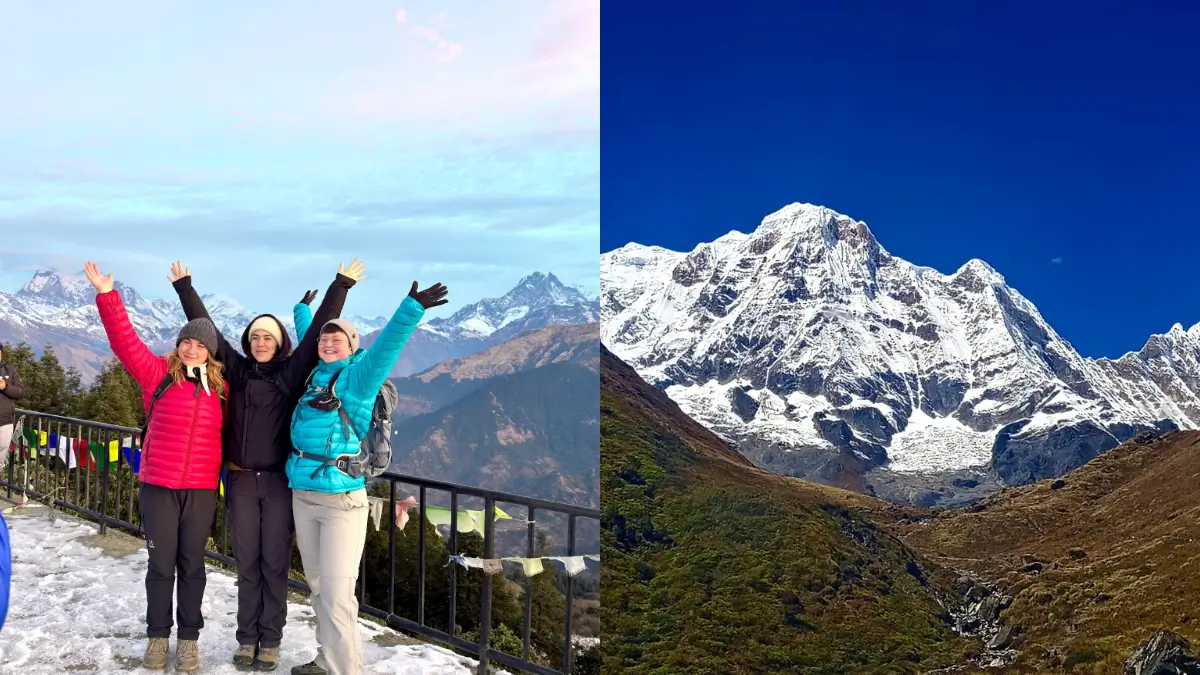
The Annapurna base camp trek via Poon Hill is basically the “upgraded version” of the classic ABC trek with the same destination, but with way more drama, sunrise magic, and brag-worthy viewpoints along the way.
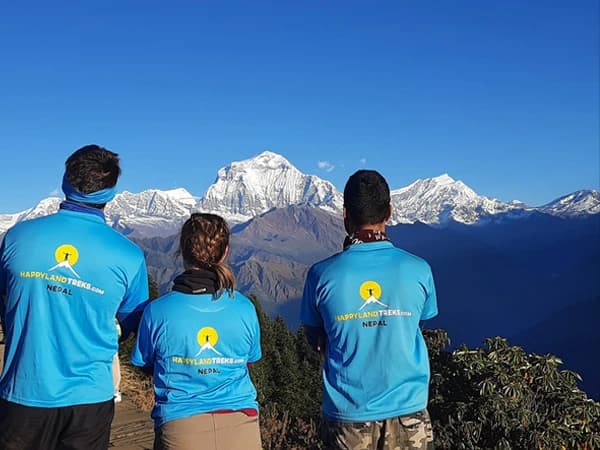
What makes it so “extra” is simple: you are not just heading straight to Annapurna Base Camp. First, you take a scenic detour to Poon Hill, one of Nepal’s most famous sunrise viewpoints, where the whole Annapurna and Dhaulagiri ranges light up like someone turned on a golden filter in real life. It’s the kind of moment where everyone goes quiet, takes few hundreds photos, and still can’t capture how it actually looks.
After that, instead of rushing straight into the ABC trail, you slowly weave through a mix of landscapes, rhododendron forests, stone villages, deep river valleys, and long jungle sections that make the journey feel way more varied than the standard route. It is a full “best of Annapurna region” compilation.
Poon Hill Sunrise Before Annapurna Base Camp: Why Everyone Talks About It?
The Poon Hill sunrise before the ABC is one of those moments that honestly lives up to the hype, which is rare in the trekking world, where “best view ever” is said every other day.
Wake up early in the morning in Ghorepani walking uphill about 50 minutes to the Poon Hill with torchlight, water bottle and warm gear. While reaching Poon Hill we can buy any hot drinks like tea, coffee, hot chocolate and enjoy the sunrise and mountain view while sipping hot drinks.
And we’re able to see 15 different Annapurna mountain peaks including Mount Dhaulagiri from Poon Hill. And Annapurna Poon Hill elevation of 3,210m. You will meet other trekkers also climbing to the Poon Hill before the sunrise.
The sun slowly rises over Tukuche, Dhaulagiri, Annapurna, Machhapuchhre, and the whole Himalayan range, just lights up in golden shades. No filters, no Photoshop, just pure mountain drama happening live in front of you.
This is why everyone talks about it. Because it is a moment where even tired legs forget they are tired for a few minutes.
End of the ABC Base Camp Trek Jhinu Danda Hot Spring Stop (Because Your Legs Deserve Closure After All That Walking)
After days on the trail, where your legs have basically been through stone stairs, jungle climbs, and “why is this still uphill?” moments, Jhinu Danda shows up like a reward.
This little stop is famous for one simple reason, which is natural hot springs right next to the Modi river. And honestly, nothing hits harder than soaking your tired legs in warm water while staring at the mountains and silently forgiving every decision that led you here.
The vibe is simple: you sit down and slide into the hot spring. It is peaceful, slightly magical, and very much a shared moment of silence between strangers who all just survived the same trail.
How Tough is this ABC Trek via Poon Hill, Really?
The Annapurna Base Camp and Poon Hill Trek is not the kind of trek where you just stroll around, take selfies, and call it a day, but it is also not a “why did I even come here” level survival mission either. It sits right in that interesting middle zone: challenging enough to make you respect it, but beautiful enough to make you forget you are suffering… sometimes.
Most of the difficulty comes from the long walking days, endless stone steps (especially Ulleri), and steady altitude gain. Your legs will definitely have opinions, especially when you think the trail is “almost flat” and then it suddenly isn’t. But the good news? There are no technical climbs, no ropes, and no mountaineering skills needed.
The Poon Hill section adds an early wake-up call and a steep climb in the dark, which sounds worse than it actually is, mainly because the sunrise at the top distracts you from complaining. After that, the trek gradually builds into higher-altitude terrain as you move toward Annapurna base camp, where walking gets slower and breathing gets a bit louder.
So, how tough is it really? Let’s just say this: you will question your choices a few times, laugh at yourself a few times, and still keep walking because the views are doing some serious emotional manipulation. It’s a moderate-to-challenging trek, but with the right pace and mindset, it’s absolutely doable and very, very worth it.
Best Time to do Annapurna Base Camp via Poon Hill
Clear skies or soggy boots, your luck on the ABC trek via Poon Hill hinges completely on when you trek. Go at the wrong time, and mist swallows every mountain peak whole. Miss it, and the trail becomes little more than damp steps in fog. Timing shifts everything: vision versus veil depends only on the season.
For a calm take on this journey, aim for March through May or September to November. Rhododendrons burst into color along the path when spring arrives. Each footfall meets blossoms during those months. Autumn, on the other hand, is that perfect “everything is clear, mountains are showing off, and the weather is just behaving” season.
These are the times when Poon Hill sunrise actually delivers its full magic, and the walk to Annapurna base camp feels more like a cinematic journey than a survival mission.
Now, if you go in monsoon (June to August), expect rain, and views playing hide-and-seek behind clouds. It can be beautiful in a dramatic, jungle-heavy way, but let’s just say your shoes will not be happy. As for winter (December to February), the mountains look insanely good, but snow and cold can make the trail a bit more serious than fun, especially in higher sections near ABC and MBC.
Do You Need a Guide or Porter for Annapurna Trek? Can You Do It Without One?
The ABC Poon Hill is technically possible to do without a guide in some cases, but the real question is, should you? And the honest answer is: it depends on how much you enjoy stressing over directions while also climbing 3,000 stone steps.
Let’s break it down simply.
A guide is basically your mountain GPS with personality. On a route like this, where trails split, villages appear out of nowhere, and altitude slowly starts messing with your brain, having someone who actually knows the way makes life a lot easier. Plus, they handle permits and tea house stops.
A porter, on the other hand, is your back’s best friend. If you have ever tried walking uphill with a heavy bag in the Himalayas, you already know it stops being a trek and starts becoming a personal punishment arc. Hiring a porter means you can actually enjoy the views instead of negotiating with your backpack every 10 minutes.
Now, can you do the Annapurna base camp trek via Poon Hill without them? In theory, yes, especially if you are experienced, well-prepared, and confident navigating mountain trails. But for most trekkers, having at least a guide (and ideally a porter) turns the experience from “survival mode” into “actually enjoying the Himalayas” mode.
So, you can go solo… but you will probably have a way better time when someone else is handling the logistics.
Things You Should Know Before You Start Walking in Annapurna Routes
Permits & Paperwork for Annapurna Trek (Yes, Nepal Still Wants Documents from You)
Before you start the journey Annapurna trekking route, there is a small but very real plot twist: paperwork. Because yes, even in the middle of the Himalayas, Nepal still wants your details filed properly before you go off chasing mountain views.
For this trek, you will mainly need the ACAP permit (Annapurna Conservation Area Permit) and a TIMS card (Trekkers’ Information Management System). But Tims card sometimes required and sometimes not.
The process is not complicated. Most trekkers just get these arranged through a local trekking agency in Kathmandu, which honestly saves you from unnecessary counter-hopping and confusion.
The good news? Once the paperwork is done, you are free to actually enjoy the Annapurna base camp trek via Poon Hill without anyone stopping your mid-trail asking for documents.
Tea House And Overnight Stays on the Annapurna Base Camp Trek
On this trekking trail, forget luxury hotels and fancy room service; your nights are all about tea houses. And honestly, that is part of the fun in Nepal trek.
Up in the hills, small guesthouses open their doors, and local families manage them. There is a mattress, one quilt, and often just a single cushion along with it. Still, laughter moves through the halls, voices tangled together late into the night. People passing through share pieces of their path while sipping steaming cups.
Picture bare basics instead of luxury, don't expect heated tiles, streaming shows, or hushed hallways. Wooden mess rooms show up here, along with group dinners. Hot dal bhat hits the table, somehow tasting like the finest dish anywhere.
Up high on the Annapurna trek through Poon Hill, life slows down. Chilly rooms replace warm ones, thick covers matter far more than before. Mornings turn sharp - leaving that sleeping bag? Almost an event. But the trade-off? You are literally sleeping in the middle of the Himalayas with views most people only see on postcards.
Nepal Trekking Fitness Reality Check
Let’s be honest: this adventure is not something you “wing” after a few treadmill walks and weekend gym selfies. This Annapurna base camp trek will humble you in the most polite Himalayan way possible.
You don’t need to be an athlete, but you do need decent stamina. Because this route is basically a long conversation between you and the mountains, and the mountains don’t really care if you are tired.
If you are reasonably active, like you can walk for 5 to 7 hours with breaks, you are already in a good zone for this trek. Add a bit of prep (some cardio, hiking practice, maybe ignoring elevators once in a while), and you will handle it just fine.
Itinerary-Route Breakdown Annapurna Base Camp Trek via Poon Hill
The 13 days Nepal trip includes your Nepal arrival and departure date
Day 1: Arrival in Kathmandu (1,400 meters) and transfer to the hotel.
Day 2: Drive from Kathmandu to Pokhara (820 meters) - 6 to 7 hours.
Day 3: Drive from Pokhara to Nayapul, and trek to Ulleri (2,010 meters) - 6 to 7 hours.
Day 4: Trek from Ulleri to Ghorepani (2,874 meters) - 3 to 4 hours.
Day 5: Trek from Ghorepani to Poon Hill (3,210 meters), and then to Tadapani (2,630 meters) - 6 to 7 hours.
Day 6: Trek from Tadapani to Sinuwa (2,340 meters) - 6 to 7 hours.
Day 7: Trek from Sinuwa to Deurali (3,200 meters) - 6 to 7 hours.
Day 8: Trek from Deurali to ABC (4,130 meters) - 5 to 6 hours.
Day 9: Trek from ABC to Bamboo (2,310 meters) - 7 hours.
Day 10: Trek from Bamboo to Jhinu Danda (1,780 meters) - 5 hours.
Day 11: Jhinu Danda to Nayapul to Pokhara Drive - 2 to 3 hours.
Day 12: Drive from Pokhara to Kathmandu.
Day 13: Departure day
Is Poon Hill Really Worth the Extra Climb During the Annapurna Base Camp Trek?
Short answer: yes. Absolutely. No debate.
The extra climb to Poon Hill on the Annapurna base camp trek via Poon Hill usually happens when your body is still half asleep, it’s dark outside, and your brain is asking, “Who even suggested waking up this early?” The trail is steep, the air is cold, and the motivation level is questionable at best.
But then you reach the top. And suddenly, everything makes sense. And even hiking to Poon Hill prepares you for the Annapurna base camp elevation.
The Himalayas light up one by one with Dhaulagiri, Annapurna, Machhapuchhre(Fishtail), glowing in shades of gold and pink. People who were complaining 10 minutes ago just go silent, because there is honestly nothing left to say.
That’s why Poon Hill is one of the defining highlights of the entire trek. It gives you that unforgettable sunrise moment before the deeper, more intense ABC trail even begins.
So yes, it is an extra climb. Yes, it is early. Yes, it burns your legs a bit. But it also gives you one of the best sunrise views in the Himalayas, and honestly, that is a pretty fair trade.
FAQs
How many days does the Annapurna base camp trek via Poon Hill take?
Annapurna base camp with poon Hill trek usually around 11 to 13 days, depending on your pace.
Is the Poon Hill climb really necessary?
Not mandatory, but skipping it is like skipping dessert; technically fine, but you will definitely regret it later.
How difficult is this ABC base camp trek?
ABC Moderate level, tough on the legs, easy on the technical skills.
Do I need a guide for Annapurna Sanctuary trek?
You can go solo in some cases, but a guide makes life easier and stress free trek to ABC.
What is the highest point of the Annapurna base camp trek?
Annapurna Base Camp is at around 4,130 meters/13,549 feet.
Is Poon Hill included in the ABC trek by default?
Not always, it is an add-on route, but honestly, it should come pre-included because it’s that good.
What type of accommodation is available on the Poon Hill and ABC trek?
While Poon Hill and ABC trek routes simple tea houses accommodation with basic beds, warm meals, and the kind of cozy chaos where everyone is slightly tired but happy.
Can beginners do the ABC via the Poon Hill trek?
Yes, beginners can do it easily if you’re mentally prepared, and first doing Poon Hill is prepared for the altitude of Annapurna Base Camp.
What is the best season for Poon Hill and Annapurna base camp trek?
Spring and autumn, as they bring clear skies, stable weather, and mountains showing off. Let’s say March to May and the end of September to December first week is the best season and ideal time for Poon Hill and Annapurna base camp trek.
What is the hardest part of the poon Hill and ABC trek?
The stone steps at Ulleri, and the moment your legs realize there is still more uphill ahead.
What’s the Annapurna base camp trekking route trail look like?
Trekking route trail to Poon Hill and Annapurna base camp is lots of stairs uphill and downhill but at the end you will climb many stairs walking uphill, Like trekking path ascent, descent, short easy trail, walking on the suspension bridge, rocky trail, wilderness, in the forest and riverside, etc.
What is famous for Poon Hill?
Poon Hill is famous for the Annapurna Himalayas mountain range and sunrise.
What shall I do if I get sick at the Annapurna Base Camp?
You can use the medication but immediately you will walk back down lower elevation like Machhapuchhare base camp 3,700m, or Deurali 3,200m.
Annapurna base camp trek is a beautiful view?
Yes, Annapurna base camp trek is beautiful with mountain views and valleys and towering Himalayan peaks.
What can I see from Annapurna base camp?
From Annapurna base camp Sanctuary, we will see a breathtaking Himalayas Mountain view towering between 6300 meters to 8091 meters.
How far from Machhapuchhre Base Camp to Annapurna base camp?
Machhapuchhere base camp (MBC) to Annapurna base camp (ABC) is about 2 hrs to 3 hrs walk.
What’s the trekking trail like from Machhapuchhre Base Camp to Annapurna Base Camp?
The trekking trail between Machhapuchhre base camp to Annapurna base camp is a gradual and steady uphill walk. The trekking trail is not hard but because of the altitude there has to be slow peace.
Can I skip to sleep at Annapurna base camp for night and just go to sleep at a lower altitude at Machhapuchhre base camp?
Yes, you can skip to sleep at Annapurna base camp and go to sleep at the Machhapurhhre base camp at 3700m which is 430m lower than ABC.
Can I hike Annapurna base camp in the morning from Machhapuchhre base camp?
Yes, you can hike to Annapurna base camp in the morning from Machhapuchhre base camp with warm gear, torch light, water bottle etc.
Can I visit Annapurna base camp without sleeping at ABC?
Yes, you can visit Annapurna base camp without sleeping night there at ABC and sleep at lower altitude at Machhapuchhre base camp (MBC) 3700m which is approx. 2 to 2:30 hrs distance.
Annapurna base camp trekking tea house or camping?
Nowadays Annapurna base camp trekking is available as a full tea house trek.
Where can I sleep during my Annapurna base camp trek?
You will sleep in a tea house lodge while trekking to Annapurna base camp in Nepal.