Poon Hill and Ghandruk Trek Highlights
- Stay overnight in the tourist hub of Nepal, Pokhara beside beautiful fewa tal (lake), just a day before poon hill trek.
- Wake up with the background views of the Annapurna mountains and enjoy your hot tea in the cold morning air.
- Sleeping at maximum altitude of 2,874 meters at the village of Ghorepani.
- Trek starting from 1,070 meters reaches maximum altitude at Poon hill with 3,210 meters.
- Walk through small Gurung villages passing by prayer flags and traditional houses and.
- Experience an easy Himalayan trek that is also adventurous.
- Witness changing scenery from green farms, forest trails, and open ridges with mountain views.
- Rich culture, cultural dresses, history and tradition in Gurung and Magar villages especially Ghandruk.
- Transports reach till Nangethanti just 3 to 3.5 km away from Ghorepani but for better experience and to prevent the risks of getting altitude sickness, trek from Nayapul.
What makes Poon Hill and Ghandruk Trek in Nepal Unique?
Experiencing the Famous Poon Hill Sunrise
To experience the famous Poon Hill Sunrise, you get up early while it’s still dark and cold then start the 45-60-minute hike from Ghorepani (2,874 m) up to Poon Hill (3,210 m). The hike is not particularly long, with an elevation gain of around 336 m but it feels exciting because you know what’s waiting at the top.
The trail passes through forests full of rhododendron and oak trees. You walk on stone steps and narrow paths. The quiet morning atmosphere makes it feel like you’re slowly walking into something special.
Then you reach Poon Hill.
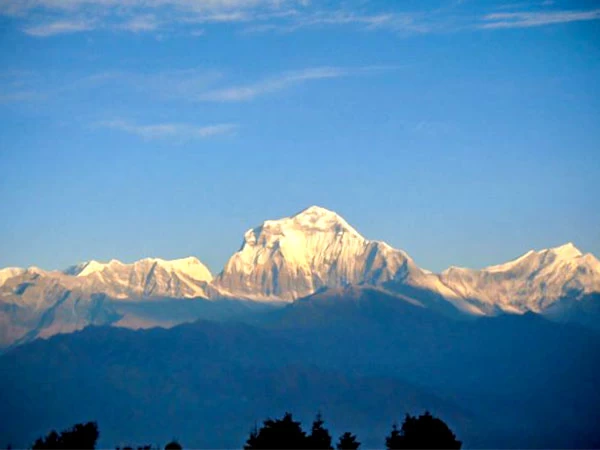
At first, only the silhouettes of mountains are visible against the pre-dawn sky. Gradually, the sky begins to change the color. The first sunlight hits the peaks. And suddenly Annapurna, Dhaulagiri Machhapuchhre and Nilgiri start glowing one after another.
As the sun rises more the whole Annapurna range lights up. Seeing the wide range of Annapurna Himalayas really is the most memorable moments of the trek.
Above all, you are standing so close to the most iconic Himalayas while in Poon Hill including Annapurna ranges.
Explore Ghandruk Village and rich Gurung Culture
Ghandruk Village offers more than mountain views; it provides an opportunity to experience traditional Gurung culture and village life.
Located along the Annapurna trekking route, Ghandruk is one of Nepal's most well-known Gurung villages, known for its rich cultural heritage, traditional architecture, and peaceful mountain setting.
Historically, Ghorepani was a key trading spot between the hills and lowlands. Today, the village continues to preserve its culture, traditions, and community lifestyle.
The Gurung people you meet are a part of the trek. They're known for being soldiers, farmers and traders and many have served in Gurkha regiments. Their cultural heritage is reflected in daily life throughout the village.
You will also have an opportunity to try on traditional Gurung dresses. Traditional attire includes Kachhad and Bhangra for men, and Gunyo Cholo, Ghalek, and Patuki for women. The clothes are bright, simple and meaningful.
Festivals are very important here. Festivals such as Lhosar, Buddha Jayanti, and Maghe Sankranti bring the community together through music, dance, and traditional foods including dhido, gundruk, and kinema.
Buddhist influences can be seen throughout the village in the form of prayer flags, mani walls, and religious monuments that reflect local spiritual traditions.
Narrow stone pathways connect different parts of the village.
Houses made of stones, slate roofs and wooden windows line the village streets, while cheerful locals smiling at you, and views of Annapurna and other Himalayan peaks provide a stunning backdrop.
The village itself offers a glimpse into traditional mountain life.
Annapurna Views That Just Keep Getting Better
Almost the whole way, the mountains are with you and that is one of the best things about the Ghorepani Poon Hill and Ghandruk Trek in Nepal.
And as you move, Annapurna mountains views just keep getting better.
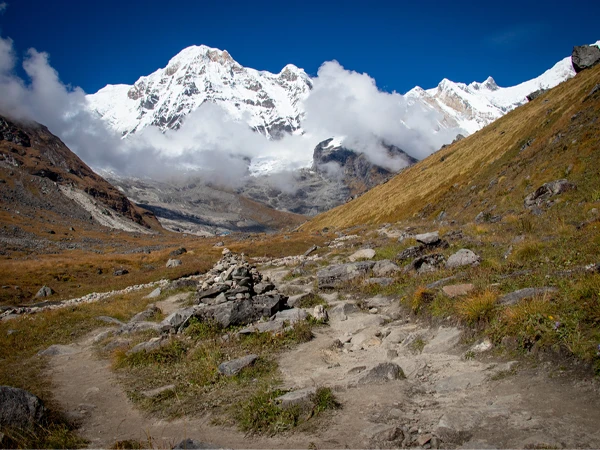
From the beginning of the trek, occasional views of the Annapurna Himalayas appear in the distance. As you gain elevation, the mountains become larger, clearer, and more impressive.
Although the peaks initially appear distant, their scale and beauty often encourage you to pause and admire the scenery.
But for the clearest and wide panoramic view of the Annapurna Himalayas, there is Poon Hill Viewpoint.
From Poon Hill viewpoint, you can see more than a dozens of peaks with the list being:
- Annapurna South
- Annapurna I (10th highest mountain in the world)
- Gurja Peak
- Dhaulagiri, (7th highest mountain in the world)
- Dhaulagiri IV
- Dhaulagiri V
- Dhaulagiri III
- Dhaulagiri II
- Tukuche Peak
- Dhampus Pass
- Dhampus Peak
- Nilgiri
- Hiunchuli
- Gangapurna, and
- Machhapuchhre
After you enjoy the view from the Poon Hill, you start your trek to Tadapani (your next stop).
The journey to Tadapani offers another excellent viewpoint along the route.
Thapla Danda, it is the second best viewpoint in the Annapurna Poon Hill trek.
Here, you can enjoy views of rolling hills, forested ridges,hills and surrounding peaks including Machhapuchhre, Annapurna, and Gangapurna.
And in the distance, there you can see Poon Hill tower that you hiked up that morning.
Wildlife and Vegetation in The Annapurna Region during Poon Hill and Ghandruk trek
There are varieties of wildlife and vegetation during your Poon hill and Ghandruk trek. The trek passes through a variety of ecological zones, ranging from subtropical vegetation in lower areas such as Nayapul and Ulleri to temperate forests around Ghorepani, Poon Hill, and Ghandruk.
The lower areas have a warm and humid climate with dense green forest including trees like Sal, Schima, and Castanopsis.
Whereas in higher areas, the climate is cooler with misty forest including trees like oak, rhododendron and pine.
Rhododendron, Nepal's national flower, is one of the most iconic plants found along the trekking route. It mostly blooms during the months of March to April.
In lower areas, it is easier to spot Rhesus macaque, Langur, Kingfisher and Bulbul whereas in higher areas, Himalayan black bear, leopard, barking deer are found but they are rare to see.
Birdwatchers may also spot the Danphe (Himalayan monal), various pheasant species, and soaring eagles along the route.
The trek has rich biodiversity due to altitude variation.
Required Permits and Fees for the Poon Hill and Ghandruk Trek
You need two permits to embark on Ghorepani Poon Hill and Ghandruk trek in Nepal. The permits typically required for this trek include:
- Annapurna Conservation Area Permit (ACAP): The permit fee contributes to conservation efforts, trail management, cultural heritage preservation, and support for local communities in the Annapurna region.
It costs around USD 23 per person for foreign nationals and USD 8 for SAARC Nationals.
It helps track trekkers for safety and management. It is a record to monitor trekking traffic, and assist in emergencies.
It costs approx. USD 23.
However, a TIMS card is currently not required on this route. But regulation may change by the time you read this article, so it’s best to check before trekking.
It is illegal to trek without a permit and not having a permit can result in a fine or being stopped.
To get those permits, you just need a passport and passport-sized photos with a small fee.
And if you’re trekking with locally owned trekking operator like Happyland Treks, these permits and guided tour are arranged by us to make your journey hassle-free.
Think of it as your ticket into the Annapurna region. Once the paperwork is done, you’re free to focus on the fun part.
Cost of Ghorepani Poon Hill Ghandruk Trek
The cost of Ghorepani Poon Hill Ghandruk trek in Nepal really depends on how you travel and what kind of services you include in your trek package.
On average: It usually costs around USD 497 to 900.
Standard trek packages: USD 770 per person.
A standard trek package is an option if you want a hassle-free trek experience. Instead of worrying about permits, accommodation, food, or route planning, healthy snacks everything is organized by the trekking agency.
Here’s what you usually get with a trek package:
- An experienced guide who keeps you safe and also shares stories and knowledge about the trek.
- A porter to carry your bag so your trek feels much easier. (Porter is added only if you want).
- All logistics like permits, transport and accommodation for the trek handled in advance.
- Arranged meals, and trusted teahouse stays along the trek trail.
- Less stress overall especially if it’s your first time trekking in Nepal.
In short, you’re not just paying for the trek itself. You’re paying for a smoother, safer and way more enjoyable Himalayan experience where you can actually focus on the views instead of the logistics.
Ghorepani Poon Hill Trekking Trail and Difficulty Level
How is the trail and how difficult is Poon Hill Ghandruk Trek? You may wonder.
Think of walking through green hills, quiet forests and traditional villages, with smiling locals welcoming you along the way. You will drive through beautiful terraced farms, cross suspension bridges over rushing rivers and enjoy stunning views of surrounding landscapes.
The whole trip is soothing and invigorating and far from the hustle of city life. The trail itself is well marked and safe and is a great option even for the first time trekkers.
You’ll find a bit of everything as you walk. Some trails take you through dense rhododendron forests, others take you along stone-paved paths, gentle uphill trails and occasional downhill stretches.
Through breaks in the trees, you'll often get a glimpse of snow-capped peaks in the distance, a reminder that you're in the heart of the Annapurna region.
Well, now onto the difficulty.
Ghorepani Poon Hill and Ghandruk trek in Nepal is generally considered moderate trek. It isn’t super difficult, but it does require a reasonable level of fitness. Most days involve 5 to 7 hours of walking and some sections can be tiring, especially the long stone stairways around Ulleri.
The good news is there are plenty of teahouses on the way where you can take a rest, enjoy meal and recharge whenever needed. The trail is non-technical and requires no previous trekking experience to be completed successfully.
If you do some regular walking, jogging or stair climbing before the trek, you'll find the journey much more comfortable. Make sure to stay hydrated and pack a few snacks or energy bars to keep your energy levels up throughout the day.
The altitude is another reason this trek is beginner-friendly. Poon Hill is at 3,210 meters, quite low relative to many other Himalayan treks.
As for the Acute Mountain Sickness (AMS) - there is a very small chance of this, however some mild symptoms such as headaches or dizziness may affect some trekkers.
Usually, walking steadily, drinking plenty of water and resting properly is enough to prevent any problems.
All in all, Ghorepani Poon Hill and Ghandruk trek in Nepal is ideal mix of adventure and comfort. It is hard enough to be rewarding but easy enough for beginners to experience the beauty of the Himalayas without going on an extremely demanding trek.
How to physically prepare yourself for the Poon Hill trek?
You may want to prepare yourself for the Poon Hill trek. But how?
The trek is not that hard but some exercise may help you to make your trek even more comfortable.
You can just walk around the park, house or do running, and cycling daily to improve your cardio. Just doing these for few weeks before the trek can make noticeable difference.
You can also add squats, lunges, and calf raises as it helps you strengthen your legs.
You can also try simple yoga and stretching. If you want, you can also do a day hike with a backpack to build endurance.
The Ghorepani Poon Hill trek is not super tough but doing these little exercises will help you a lot for the trek.
Best Time for Poon Hill & Ghandruk Trek in Nepal
The best time? Which month is the best for trek in Nepal?
No worries, Ghorepani Poon Hill and Ghandruk Trek in Nepal can be done all year round, but the season will make a huge difference to the trekking experience.
Whether you choose to visit the destination to enjoy the best mountain views, see the blooming forests, experience solitude or explore the green surroundings, you can always choose the season that fits you the most.
Best Trekking Season in Nepal (Spring & Fall)
Spring (March - May): Spring is among the most gorgeous times to visit the destinations. You get to see the rhododendron forests blooming around, and the weather is very pleasant. The views of the mountains are often very clear and magnificent at this time.
Fall (September to November): Fall is considered the peak season for trekking in Nepal. After the monsoon season passes, the skies become so clear that you get to see some of the best views of the Himalayas in the whole year.
Nepal Winter & Rainy Season (Off-Season Trekking)
Winter (Dec.–Feb.): Winter features tranquil hiking routes, snow-covered mountains, and low number of tourists. Scenery is fantastic; however, it gets colder than other seasons during this period, particularly early morning and late evening.
Despite the cold weather, winter is an ideal time for trekking for those who do not mind the weather.
Monsoon (June–August): This season transforms the region into heaven on earth. It is the best season when the hills and forests become vibrant and colorful.
However, frequent rainfall can make the route muddy. In addition, heavy cloud cover can obscure mountain scenery and make leeches common in the woods. Nevertheless, it is a great opportunity for people who enjoy nature regardless of adverse weather conditions.
Food and Accommodation on the Poon Hill Ghandruk Trek
The Ghorepani Poon Hill and Ghandruk Trek in Nepal is a surprise when it comes to comfort on the trail. After hours of trekking, food and accommodation services feels very satisfying.
After walking for hours there's nothing better than sitting in a cozy teahouse with a hot meal and mountain views just outside.
Food is available throughout the trek with teahouses serving breakfast, lunch and dinner. You can enjoy both traditional Nepali dishes and Western-style meals.
Most meals are cooked fresh when you order them, using ingredients from villages and local markets.
The best part of the menu is definitely Dal Bhat. It's Nepal’s combination of rice, lentil soup, vegetables and curry. It sounds simple but after trekking all day, it’s exactly what you need. Every teahouse offers refills, which's one of the reason why trekkers love it so much.
If you want something different don't worry. Most menus also have noodles, fried rice, pasta, momos, soups and even pizza. It's always fun to see pizza on a menu while surrounded by peaks.
In the morning, breakfast is usually simple and filling. You can have eggs, porridge, pancakes, toast with jam or peanut butter and a hot cup of tea or coffee. Many trekkers like lemon-honey-ginger tea on chilly mornings.
In the evening after a day on the trail a warm bowl of soup, a plate of momos or a hearty dal bhat is really satisfying. If you still have room left, you can have desserts like apple pie or rice pudding before bed.
If you want to try something local, look out for dishes like gundruk, kinema or yak cheese. They're part of life in the mountains and give you a taste of the region.
Now, when it comes to accommodation you'll stay in teahouses along the route. These are family-run mountain lodges that have been welcoming trekkers for years. They're not luxury hotels and that’s a part of their charm.
The rooms are usually simple with a bed, pillow and blanket. Most trekkers find them comfortable and also carrying a sleeping bag can give you extra warmth during colder months.
Many teahouses offer sharing rooms while a few have private rooms for an extra cost. The dining hall is the heart of the teahouse, where trekkers gather in the evenings sharing stories and relaxing.
Showers and toilets are available at teahouses. Hot showers usually cost an extra fee but it’s worth it after a cold day, in the mountains. Bathrooms are commonly shared. But some teahouses have attached bathroom too.
The facilities are basic but that’s part of the experience. You trade luxury for mountain views, hospitality and the simple pleasure of ending the day in a cozy lodge surrounded by the Himalayas.
Safe Drinking Water on the Annapurna Poon Hill trek
Drinking water is available in every teahouse along the way. But is it safe?
Direct tap water is not safe to drink and it can cause illness like diarrhea, vomiting or stomach infections. The safest drinking water is boiled water which is easily available in teahouses.
If you don’t want boiled water, you can use purification tablets to drink chilled water safely.
It is one of the safest options. It’s the best way of having safe drinking water. Being hydrated is the most important thing during the trek so purification tablets are very important.
Bottled water is easy to get but the price is high as you go up and it’s also not environment friendly.
Mobile Network & Charging Facilities while tea house trek in Annapurna region
You won’t be totally cut off from the world on this trek, but yeah… don’t expect strong signals everywhere.
Most villages on the trail have mobile network coverage but it is intermittent depending on where you are. The two most commonly used SIM cards are Nepal Telecom (NTC) and NCELL. It’s best to pick one up in Kathmandu or Pokhara before you begin the trek so you’re all set.
Even when it works it can be a little slow or patchy, especially as you go higher up.
Also, many teahouses have Wi-Fi. There’s a small charge most of the time but sometimes it’s free. Just remember – it’s mountain internet so don’t expect speedy scrolling or smooth video calls. It works but you cannot fully rely on it.
You could also charge your devices. Most teahouses have charging points, usually in the communal dining area. Some places may charge for a room, but this is less common.
Charging is usually for a small fee – about Rs. 200-300 (about USD 2-3) per device. And the higher you go, the more you can pay a little more.
Honestly, a power bank is your best friend on this trek. You don’t have to worry about battery life and you can enjoy the journey without constantly thinking about where to find the next charging spot.
Transportation Options for the Annapurna Poon Hill short trek
There are lots of transportation option to do your Annapurna poon hill trek. The journey for Poon Hill and Ghandruk Trek in Nepal actually starts from Kathmandu. When you arrive at the international airport, the first stop is your hotel and then to Pokhara the other day because that is basically the gateway to the whole trek.
There are two main ways of getting there – by road or by air.
Pokhara is around 205 km from Kathmandu. Usually it takes 7-8 hours by tourist bus. The road can be a bit bumpy and slow at times (that’s just Nepal), but honestly it’s also part of the experience. You will drive through green hills, rivers, small towns, waterfalls and sometimes distant mountain views on a clear day.
If you don’t want the long ride just fly. Plus if the weather is clear you get amazing aerial views of the hills and the Himalayas.
When you finally reach Pokhara, most people just relax for the day. You can rest, explore Lakeside and get ready for the trek that kicks off the following morning.
You then drive from Pokhara to the start of the trek, usually Nayapul or Ulleri, depending on your route. This takes 1.5 to 3 hours and you can go by local bus, private jeep or shared jeep (jeep is obviously more comfortable).
After the trek you usually descend to Ghandruk or Nayapul and drive back to Pokhara. Distance is about 45 km from Nayapul or 55-60 km from Ghandruk.
And yeah, that ride home feels a bit different. You are basically leaving the mountains behind, driving through twisting roads, forests, terraced fields, thinking about everything you just experienced in the Himalayas.
You have again the choice between the bus (7-8 hours) or a short flight (25 minutes) back from Pokhara to Kathmandu, depending on your time and budget.
So basically the whole route looks like this:
Kathmandu - Pokhara - Trek Start Point (Nayapul) – Poon Hill/Ghandruk - Pokhara - Kathmandu
A nice loop, city chaos to peaceful mountains and back again. A lot of memories in between.
Hiring a Guide and Porter for Annapurna region Poon Hill- is it worth it?
If you are doing this trek for the first time, or just want a stress-free experience, hiring a guide and porter for poon hill Annapurna trek is one of the best decisions you can make.
A guide is basically your know-it-all hiking buddy. They will guide you so you don't have to worry about getting lost, and they also help if you have any problems like weather changes or small emergencies.
But it’s not just for safety, they also make the trek more interesting by telling you about the mountains and villages, local culture, and even plants and animals along the way.
They also help you manage teahouses, find rooms, order food and sort out the small details so you don’t have to think too much. Just walk and eat and rest and enjoy.
Then you have the porter and honestly this is where your experience gets much more comfortable. Instead of lugging a heavy backpack up and down the hills, the porter takes care of it for you.
Usually one porter carries about 15-20 kg (33-44 lbs.). You just carry small daypack with your essentials like water, phone, wallet, power bank and maybe camera.
When you’re actually walking without a heavy load, the whole trek feels totally different – you enjoy the views instead of just surviving the climb.
A guide normally costs between USD 30 and 65 per day, a porter between USD 20 and 30 per day. Tipping is not mandatory but it is an accepted and common practice in the trekking culture. It’s just a way to say thanks for all their efforts, because they are the ones making your journey smoother behind the scenes.
And yeah, you can hike without them, but having a guide and a porter makes a big difference to the whole experience - more comfort, more safety and a lot less stress.
Before your journey, you can easily arrange from the local trekking agencies like Happyland Treks or any trusted company in Nepal.
Do you need a trekking insurance for Poon Hill Annapurna?
Trekking Insurance is highly recommended for trekkers. Although the trek is considered low to moderate in altitude, it still takes you to remote mountain areas where medical facilities are limited.
Medical help is far from trekking routes. If a case of emergency evacuation occurs, the cost is very expensive. It’s very hard to predict when the problem occurs and the weather is also unpredictable.
Although the trek is safe, the case of needing medical help can arise. So, trekking insurance is very important.
Your insurance must cover emergency medical expenses, helicopter rescue, trekking coverage up to 3300m, altitude sickness, and lost or stolen baggage.
You should read the fine print before purchasing the insurance to make sure.
Prevention is better than cure. If you’re insured before, it gives you peace of mind during the trek as you don’t have to stress over financial burdens.
Poon Hill and Ghandruk Trek Itinerary
Day 1: Arrive to Kathmandu then to hotel
First you will arrive at Tribhuvan International Airport in Kathmandu where you will be picked by our staff. Then you will be dropped to your hotel on private transport and then visit the office for the discussion of the trek.
If you have extra days, you can also do sightseeing in Kathmandu.
Day 2: Drive or by flight to Pokhara from Kathmandu
You can go to Pokhara by land or by air. Usually you go there either by a Tourist Bus or a flight.
Pokhara is approx. 201 km (124 miles) away from Kathmandu. It takes approx. 7-8 hours from Kathmandu to reach Pokhara by Tourist bus and it takes 25 minutes to reach Pokhara by flight from Kathmandu.
Travelling by road is pretty adventurous with the bumpy road condition of Nepal but you can enjoy the views of lush green hills, waterfalls, and occasional glimpse of Himalaya peaks along the way and experience a local way of travelling.
Whereas, travelling by flight is fast and offers panoramic aerial views of the Himalayas, and hills.
Day 3: Drive from Pokhara to Nayapul and trek to Ulleri
On day 3, You will get to Nayapul by bus and then trek to Ulleri.
To reach Nayapul, there are plenty of options. You can get there by local bus or shared jeep or private jeep as well. It will take approx. 60-90 minutes to reach Nayapul from Pokhara.
The drive has stunning views with a nice road surrounded by fields and Annapurna mountains in the background.
After some time of drive, the plain road ends and the hilly road takes over where the view is little bit same but the drive is more adventurous and up and down the hills. And out the window, you can enjoy the Annapurna mountains, agricultural fields, flowing rivers, and beautiful green hills.
After reaching Nayapul, the drive ends and the trek starts. You will walk in the pitched road for sometimes, before reaching a checkpoint at the end of a bridge. After some documents checking, the trek through hills begin.
The hills, waterfalls, small villages, and rivers flowing makes the start of the journey very refreshing.
Walking through the villages crossing multiple bridges, you will be tested by the most difficult climb of the trek.
From Tikhedhunga to Ulleri is considered the most difficult climb with more than 3000 steps.
After a hard climb of approx. 2 and a half to 3 hours, you’ll reach Ulleri (2010m).
There you will rest and have an overnight stay after a tiring yet adventurous day.
Day 4: Trekking from Ulleri to Ghorepani
After having some breakfast, the trek to Ghorepani begins. A few steps but it is an easier path. The trail is surrounded by forest with some teahouses on the way.
A journey on a trail with the sound of a river flowing beside you is very peaceful.
After some time, you will reach a waterfall and small pond-like water resource where you can rest and dip your feet to calm down for a bit. But you shouldn’t go near them during high flow of water as its very dangerous.
After some trek through forest, river, waterfalls, and streams, you will be welcomed by the huge gate indicating you’ve reached Ghorepani (2,874 m).
Clicking some photos with the welcoming gate and formal checking process in checkpoint, you can see grand Annapurna Himalayas very close.
You will then go to your hotel and be fresh. Then, you can have a walk around the village or enjoy the Annapurna Himalaya views. Then, at evening you can have some talk or read books or just sit in the communal hall heated by the organic heater.
Finally, you can head to your bed to rest through the night.
Day 5: Trek up to Poon Hill from Ghorepani and then to Tadapani
On this day, you will have to wake up early to hike up to the Poon Hill viewpoint to catch the sunrise view.
After waking up early, carrying the torchlight or headlamp, you will begin your hike in the dark which takes around 50 to 60 minutes.
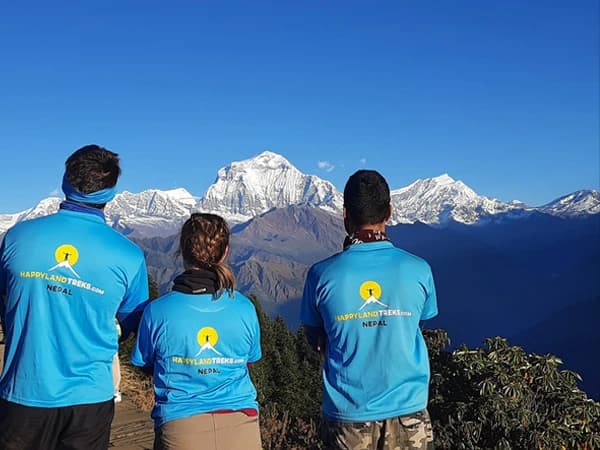
Hiking up early might be difficult but after reaching there, you will slowly wait for the sun to rise. As the sun rises, it paints the whole Annapurna range in golden. With dozens of peaks being lighten up, the view is surreal.
From Poon Hill viewpoint, you can see peaks like Annapurna (10th highest mountain in the world, Gurja Peak, Dhaulagiri (7th highest mountain in the world), Dhaulagiri IV, Dhaulagiri V, Dhaulagiri III, Dhaulagiri II, Tukuche Peak, Dhampus Pass, Dhampus Peak, Nilgiri, Annapurna South, Hiunchuli, Gangapurna, and Machhapuchhre. The view of peaks, clouds, and hills creates a heavenly atmosphere.
After spending some time there you will go back to the hotel and start the trek to Tadapani. Climbing up the hills on the edges of the hills, the feeling you get is really peaceful.
Then, you’ll reach Badal Dada. It is one of the second best viewpoint in the trek. You will see Poon Hill along with more than 7 mountains including Machhapuchhre, Annapurna, and Gangapurna.
During our trek, we saw a big letter “A” made by the landslide in the far hill in front of us. Natural tag for Annapurna. You can also check if it’s still there.
Yeah, you will rest there for a bit and enjoy the view. Then again the journey to Tadapani begins through the forest, from one hill to another, it’s amazing.
Day 5 is like a roller coaster ride as you will constantly be up and down the hill a lot. After up and downs, and final climb, you will reach Tadapani(2640m). The view is magnificent from there as well as you can see Annapurna and other surrounding peaks very close.
Then, back to hotel for overnight stay.
Day 6: Tadapani to Ghandruk Village
The trek to Ghandruk Village takes around 4 hours. After having breakfast, the trek begins and you will rest along the way having snacks and enjoying the view.
You will trek along the route with hills, forests and occasional glimpses of Gangapurna and Machhapuchhre as the trek continues along the Tadapani-Ghandruk trail. The view is gorgeous.
After approx. 4 hours of trekking through the forest, streams seeing cattle roaming around, you will reach Ghandruk (1940 m).
As soon as you see the village you can identify it as it is one of the most culturally decorated village in the trek.
A Gurung village with traditional buildings and narrow stone paths feels like a living museum. You can experience a lot in the village from innocent smiles, rich culture, to a historical museum trying their culture dresses dancing and singing.
After some enjoyment, you will stay at a local teahouse for overnight stay.
Day 7: Drive from Ghandruk Village to Pokhara
After so much enjoyment, adventure, and surreal experience beside the Annapurna Himalayas, you will say goodbye to the Annapurna and head back to Pokhara.
The return trip can be quite sad as you are saying goodbye to the Himalaya and the region you had so much fun in.
After approx. 55-60 km of drive, you will reach Pokhara. You can enjoy at Lakeside, roam around and then spend the night in the hotel in Pokhara.
Day 8: Pokhara to Kathmandu by drive or by flight
You will now travel back to Kathmandu either by road or by flight. If you take a bus, you have to be at Pokhara bus station by 6:30 am.
After 7-8 hours of bumpy roads and turns through the hills, you will finally reach Kathmandu. Then, after tiring ride, you will finally relax in your hotel.
But if you take a flight from Pokhara, it takes approx. 25 minutes to reach Kathmandu.
Day 9: Departure Day or stay longer
You can also stay long if you have time.
After so much fun and enjoyment, you will be dropped to Tribhuvan International Airport by one of our staff. You will leave Nepal behind but the memories never leave.
A truly amazing experience come to an end. But it’s really not an end as you can surely enjoy and make lots of memories in another vacation to Nepal.
Why Book with Happyland Treks?
When you book with Happyland Treks, you’re directly supporting local communities in Nepal.
3% of your trip cost goes directly to local communities people, helping improve lives in the regions you visit.
We also focus on small details that make your journey more comfortable and enjoyable:
- Timely departures and smooth coordination
- Snacks along the trail like dry fruits, fresh seasonal fruits, and cookies
- Experienced local guides who understand the trail, weather, and culture
- Proper pacing to match your fitness level
You will see the Himalayas as well as experience them the right way, while traveling responsibly.
FAQs - Poon Hill and Ghandruk Trek
1. Is a guide or porter necessary?
Hiring a guide is highly recommended for safety, navigation, and cultural insights. A porter is optional but helpful if you want a more comfortable trekking experience without carrying heavy loads.
2. What permits are required for Poon hill and Ghandruk?
For Poon Hill and Ghandruk you will need:
Annapurna Conservation Area Permit (ACAP)
TIMS (Trekkers’ Information Management System) card
These are mandatory for all trekkers.
3. What level of fitness is needed?
This is a moderate trek, suitable for beginners with basic fitness. You should be comfortable walking 4–6 hours daily on uphill and downhill trails.
4. What type of accommodation is available in Poon Hill?
Poonn Hill trek accommodation is in teahouses (mountain lodges) along the trail. Rooms are usually twin-sharing with basic facilities, including blankets and shared bathrooms.
5. How cold does it get Poon Hill?
Temperatures vary by season:
In Spring/Autumn nights, it is around 5°C to 0°C and in Winter, it can drop below 0°C.
6. Is the Annapurna Poon Hill trek safe for beginners?
Yes, the Poon Hill trek is considered safe for beginners. The trails are well-marked, and villages are frequent. Proper preparation, hydration, and pacing are key.
7. Is mobile network available on the Nepal Annapurna trek?
There is limited mobile network coverage in villages like Ghorepani and Ghandruk. Some teahouses also offer Wi-Fi and charging facilities for an extra cost.
8. Is it safe for solo travelers or women for Ghandruk Poon Hill?
Yes, the Poon Hill & Ghandruk Trek is one of the safest treks in Nepal. Many solo travelers and female trekkers complete it successfully. However, hiring a guide adds extra safety and comfort.
9. What is the highest point of the Ghorepani Poon Hill and Ghandruk trek in Nepal?
The highest point is Poon Hill (3,210 meters / 10,531 feet), famous for its sunrise views over the Annapurna and Dhaulagiri ranges.
10. Do I need a visa to enter Nepal?
Yes, most travelers can obtain a Nepal tourist visa on arrival at Tribhuvan International Airport or land borders.
11. Are ATMs and money exchange facilities available in Kathmandu?
ATMs and exchange centers are easily available in Kathmandu and Pokhara, but not on the trekking trail. It’s important to carry enough cash before starting the trek.
12. Is travel insurance required?
Yes, travel insurance is strongly recommended. It should cover:
- Trekking activities
- Medical emergencies
- Evacuation (helicopter rescue if needed)
-
13. How many days does the trek take?
The trek usually takes 4 to 6 days, depending on your itinerary and pace. And include Nepal arrival and departure 2 days extra.