Mandala Thangka Paintings - Where to buy in Kathmandu Nepal?
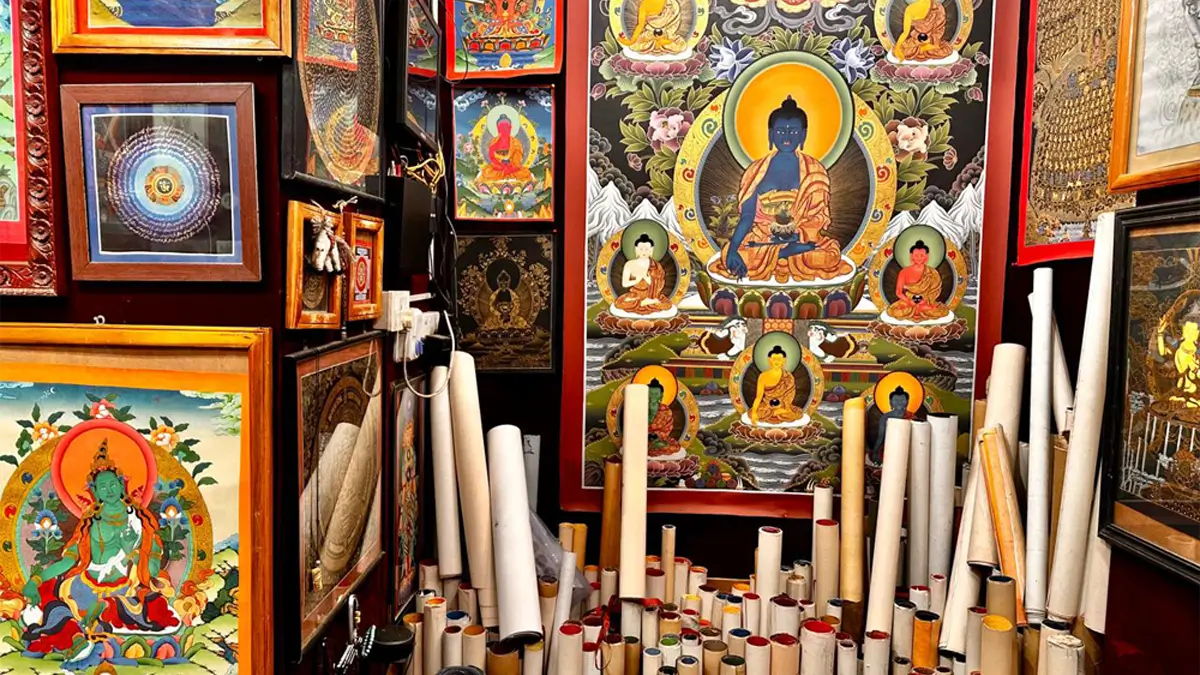
We can buy mandala thangkas at places like Thamel, Boudhanath, Swoyambhunath Stupa, Patan, Bhaktapur, and Kathmandu Durbar Square.
There are lots of places where you can find Mandala Thangka but the pretty popular place is Thamel. Lots of Thangka shops in Thamel sells quality art making it a go-to place for buying them.
You can even get brief description and insight of the details of those arts by the sellers.
Some of our previous trekkers on Happyland treks had bought Thangka paintings as their souvenirs. That’s why, we know some shops selling Thangkas from that experience with our previous clients.
We can recommend some shops for you. Feel free to reach out to us for our recommendation. You can contact us at WhatsApp on +977- 984 941 7757.
We can’t provide you the information of arts detailing and price as it varies but we can for sure suggest you those shops with quality Thangka arts.
What is Mandala Thangka Painting in Nepal?
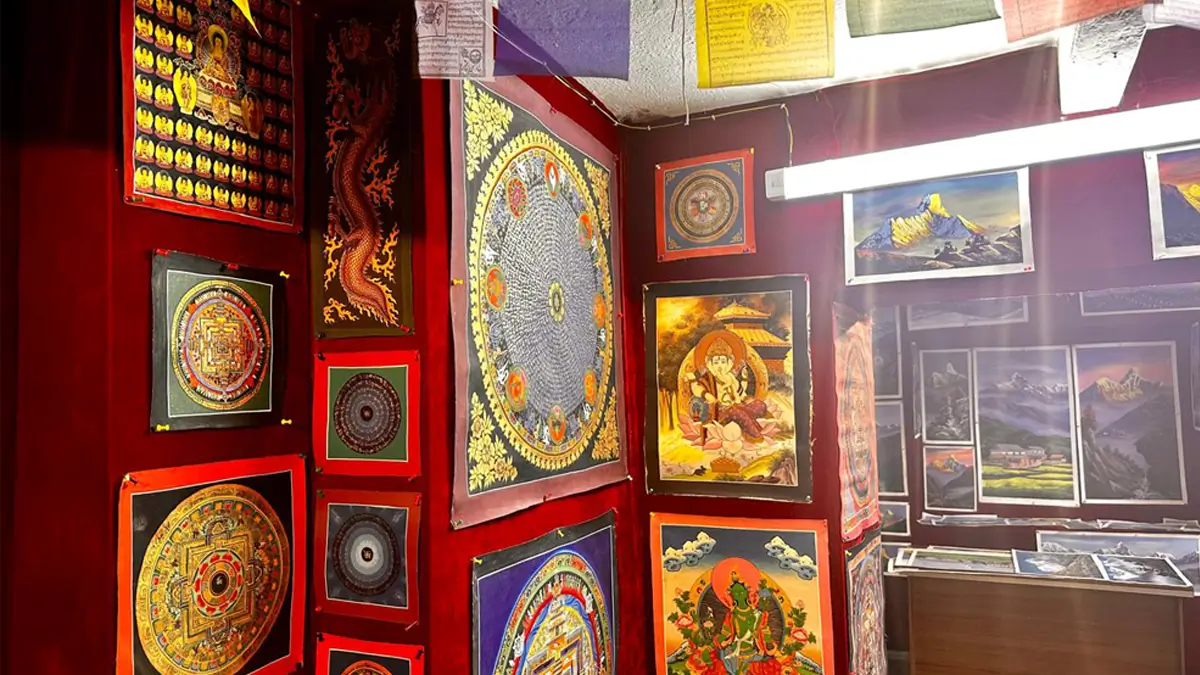
So, what exactly is Mandala Thangka painting in Nepal? Think of it as Buddhist art with a brain and a soul. It’s a sacred art form that blends mandala geometry, those perfectly balanced cosmic diagrams, with traditional Thangka scroll painting.
A mandala represents the universe, a spiritual map, or a meditation path, while a Thangka is a hand-painted scroll traditionally used for rituals, teaching Buddhist philosophy, and personal practice. Put them together, and you get Mandala Thangka painting, an art with a dual purpose: spiritual practice and artistic expression.
Every line, colour, and symbol has meaning. Central deities, Buddhas, Bodhisattvas, mandala diagrams, and symbolic motifs aren’t placed with intention and precision by trained artists who follow traditional lineages passed down through generations.
This is also where Mandala Thangka painting differs massively from casual wall décor or tourist art. A genuine hand-painted Thangka from Nepal takes time, discipline, and deep knowledge. And if you are wondering where to see, buy, or even learn Mandala Thangka painting, the Kathmandu Valley is the real hub.
Nepal remains one of the few places in the world where you can watch this sacred art being made, buy authentic Thangka paintings in Kathmandu, or even sit down and learn the craft yourself, straight from traditional masters.
Mandala and Thangka: Meaning, Connection, & Purpose
Untangling a mix-up people often make: mandalas and Thangkas are different, yet fit well side by side. Picture the mandala-like plans drawn on paper, while the Thangka shows what stands after construction ends.
A mandala is a sacred geometric diagram used in Buddhist meditation and cosmology. It represents the universe, spiritual order, and the inner journey of the mind. Every circle, square, and direction is intentional and symbolic.
A Thangka, on the other hand, is hand-painted scroll art used in Buddhist practice to depict deities, sacred scenes, and philosophical teachings. It’s visual storytelling with a spiritual purpose.
A Mandala Thangka emerges when these forms meet; structure comes from one, visible depth from the other. What takes shape is more than image: it holds space for thought.
Starting with a circle, the Mandala Thangka guides eyes inward, revealing forms of deities and hidden meanings behind symbols. These paintings mark new beginnings, which are passed down through generations without fading. Each line follows tradition, yet every brushstroke carries personal patience across time.
A bond like this, one that ties mandala to Thangka, changes how people see them.
Symbols, Colors, And Sacred Geometry in Mandala Thangka Art
you have ever looked at a Mandala Thangka and thought, “Wow, that’s beautiful, but also kind of intense,” you’re not wrong. Every color, symbol, and line in Mandala Thangka art means something. They are visual doctrines: Buddhist philosophy, psychology, and cosmology packed into one carefully planned painting.
Let’s start with color, because in Mandala Thangka painting, color is basically a language. Red represents life force, transformation, and compassionate energy. Blue stands for wisdom, vastness, and the infinite mind. White symbolizes purity and clarity, while yellow reflects grounded knowledge and spiritual richness.
Green is about enlightened action and dynamic compassion, and gold (used sparingly and intentionally) represents divine luminosity and ultimate enlightenment. These colors also connect to the five Buddha families and natural elements, meaning the palette is chosen to reflect the mind and the cosmos.
Then come the symbols. Lotuses represent purity, halos show enlightened awareness, and mudras (hand gestures) communicate specific teachings. Also, animals, deities, and sacred instruments all play roles in Buddhist iconography.
Add to that the sacred geometry: circles of fire, vajras, lotus petal rings, and the square palace with gates at the centre maps the path of spiritual transformation.
Put it all together, and you get something powerful. Colors convey meaning beyond beauty, symbols visually encode Buddhist teachings, and sacred geometry holds it all in place.
Mandala Thangka Painting in Kathmandu Today
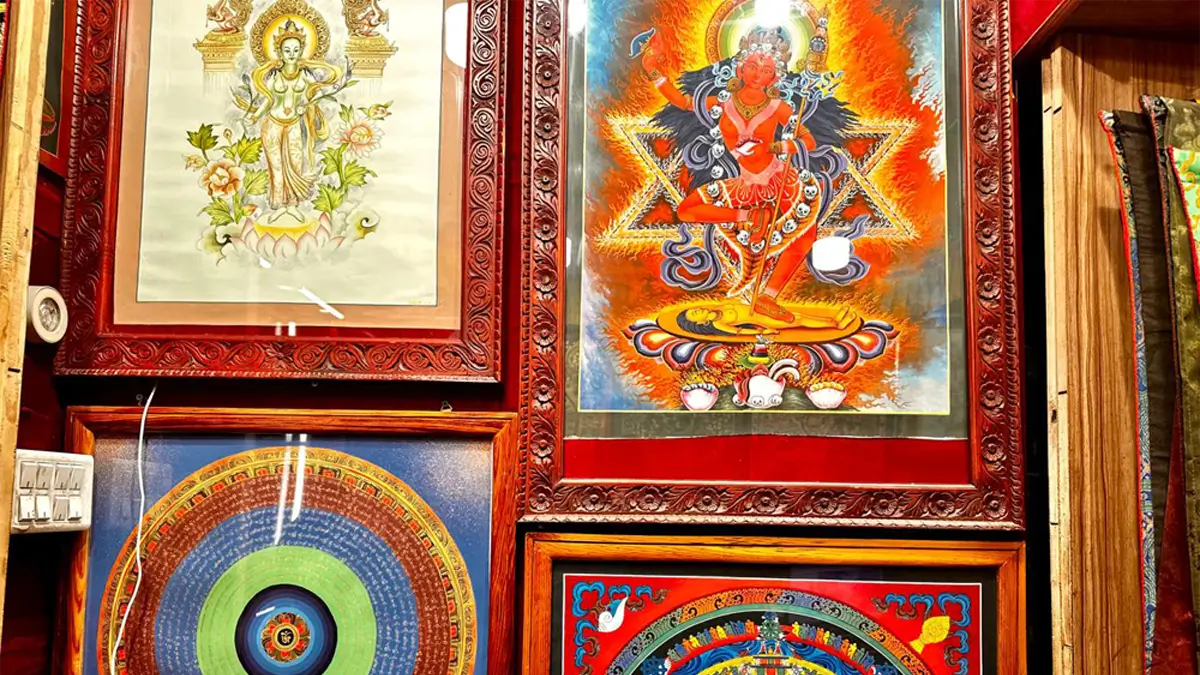
Thangka painting in Kathmandu today is very much alive, and no, it’s not hiding behind museum glass. The Kathmandu Valley, especially Thamel, Boudhanath, Patan, Swoyambhunath, and Bhaktapur, remains the main hub where this sacred art is still created the old-school way. If you are wondering where to find authentic Thangka paintings in Kathmandu, this is exactly where the trail leads.
For centuries, the valley has preserved and passed on Thangka painting through family lineages, with skills handed down from one generation to the next. Many artists still train through long apprenticeships and studying strict iconometry. It’s less “paint what you feel” and more “measure twice, paint once… and meditate while doing it.”
Each area has its own vibe. Boudhanath, near the great stupa, is packed with monastery workshops and Thangka studios producing ritual and commissioned works. Patan is the traditional artisans’ quarter, where fine craftsmanship is basically in the DNA. Bhaktapur, with its strong craft heritage, keeps the classical styles alive.
Today’s artists create everything from traditional Mandala Thangka paintings for religious use to carefully adapted modern pieces, still hand-painted, still symbolic, just more wall-friendly. You will find them in monasteries, art galleries, and artisan markets across Kathmandu, quietly reminding you that this isn’t a dying art.
Types of Mandala Thangka Paintings You Can Buy in Kathmandu
Mandala-Centered Thangka Paintings
Mandala-centered Thangka paintings are the ones where geometry takes the lead, and does it confidently. In these Thangkas, the mandala is the main character.
shape sits at the centre, built so each side matches the other exactly, which creates layered shapes that grow wider.
Picture lotus petals, wheels, gates shaped like palaces, each pointed a certain way, painted in a specific shade. Every gap between them matters just as much as what fills the space. These details guide attention when used in Thangka art, centered on mandalas. Such artwork appears often during quiet mental training, particularly within Buddhist traditions.
For those seeking Mandala Thangka art in Kathmandu, this form draws admirers to spiritual patterns and layered meaning. Though quiet in presence, it speaks through precise lines that hold ancient weight.
Because balance matters here, every shape serves a purpose beyond sight. While some overlook such details, others find them unforgettable.
Deity And Symbolic Thangka Art
Deity and symbolic Thangka art put a face, sometimes many arms, and a very intense gaze, right at the centre of the painting. This figure, often glowing, takes up most of the space. Rather than patterns pulling attention elsewhere, it is the divine form that holds everything together.
Buddha shows up a lot in Kathmandu, also Tara, Avalokiteshvara, Vajrayogini, which is tied to compassion, smarts, safety, or spiritual strength. A single tilt of the head might speak volumes, while fingers shaped in silent codes add layers beneath the surface.
What rests in a figure's hands can whisper ancient truths just as clearly as open eyes or folded legs. Objects held are never random; they point toward ideas beyond sight. These deities bring narrative warmth into view.
If you are planning on buying a Thangka in Kathmandu, this style often resonates with people looking for a deeper personal connection rather than abstract symbolism.
Traditional And Contemporary Mandala Thangka Styles
Traditional and contemporary Mandala Thangka styles are cousins, one sticks to the rules and the other flirts with them a little.
Starting with exact shapes, traditional thangkas obey old symbolic codes passed down through generations. From mountain-ground minerals, painters mix colors that hold steady for ages. There are exact placements of petals, halos, or gods, which help to maintain its authenticity.
A fresh spin on old patterns shapes today's Mandala Thangkas. Not bound by rules, these pieces lean into vivid tones alongside reimagined layouts. Some shift familiar symbols just enough to feel new again. They have unexpected details without sacrificing style.
One catches the eye with sharp focus, the other speaks softly through bold choices. What drives these thangkas apart is the purpose tucked into every line. Old-style pieces grow from stillness, built to guide thought. New versions breathe freely, shaped by today’s hand and mood. If you are buying a Thangka in Kathmandu, knowing which style you want can save you from awkwardly explaining why your “colourful abstract mandala” doesn’t exactly match centuries of Buddhist iconography.
Ethical and Hand-Painted Thangka Traditions in Nepal
Created by skilled hands, ethical and hand-painted Thangka traditions in Nepal follow old methods. What you see is exactly what it is, no shortcuts, no imitation. The process stays faithful, rooted in respect and steady practice.
Here, paint meets cloth only after careful thought and quiet dedication. These works carry weight, not because they are sold as special, but because they are built that way from the start
A single brushstroke at a time, every piece takes shape through hands trained by years beneath one teacher’s eye. These works hold stories older than memory, shaped by ritual and silence. You won’t find rushed copies here, nor mass-produced versions sold like souvenirs.
A true Thangka carries quiet care, shaped by hands trained over years. Instead of factory-made posters stacked in tourist stalls, you find depth in brushstrokes made with patience. These works grow from practice, and while imitation pieces serve quick decor, originals hold stillness built through time.
So, while buying, start by checking if the Thangka art in Kathmandu is actually painted by hand. These works carry breaths of tradition, so no two ever match exactly. Because they cannot be copied with precision, their value grows beyond looks.
Materials and Techniques used in Traditional Thangka Painting
Picking the right stuff matters a lot when making old-style Thangka art. The kind of pigments, binders, even the way brushes move, all shape whether it feels true, carries weight, and holds up through decades, maybe hundreds of years, depending on care.
Painted often on tightly woven fabric made by hand, most Thangkas begin life on cotton or silk. While cotton shows up more frequently, thanks to its rough feel and strength, silk slips in when elegance matters most.
Later, a layer of gesso, drawn from what nature provides, covers the cloth before any color touches it. This step ensures every bit of pigment finds firm ground to rest upon.
Now about pigments, these go beyond ordinary paint tubes. Stones, soil, and minerals get crushed by hand into deep, earthy tones. Often, the glow shows up when gold flakes or thin sheets are placed on halos, holy outlines, and bright spots.
A single mistake can ruin weeks of work. Before any color touches the fabric, there is scraping, sanding, and sometimes gesso is applied three times. Lastly, lines appear only once squares form across the surface.
Here, brushes crafted from animal hair or bamboo soak up color unlike synthetic ones. As they work, certain painters whisper mantras.
True, what things are made of really affects how long they last, plus whether they feel genuine inside. Lasting value often hides in choices most overlook.
Where To Buy Mandala Thangka Paintings in Kathmandu?
Finding a real Mandala Thangka in Kathmandu might be easier than expected. Yet spotting the right one takes more than luck; it needs sharp eyes.
Some shops near Swayambhunath sell quick copies, which are mass-produced elsewhere. True pieces come from artists who spend weeks on fine brushwork, hands stained with natural pigments.
Boudhanath offers better odds, especially in family-run corners where apprentices mix colors under dim lights. Price isn’t always the tell; some masters charge little just to keep tradition alive. Therefore, a good test is to watch how light plays across layers of paint at odd angles; it should feel deep, not flat.
Browsing here begins easily in Thamel, which is filled with stores offering anything from bright souvenir designs to modest painted artworks. Window-shoppers find it handy, though what you get might differ wildly in finish.
You can start at Boudhanath Stupa if you want genuine art. You will find more classic and sacred Thangkas there, usually painted by locals trained in the craft. Over at Swayambhunath Stupa, you will also find stalls overflowing with handcrafted paintings.
Now, browsing Bhaktapur and Patan means stumbling upon small studios where paintbrushes pass from parent to child across generations. These spots aren’t flashy, just quiet rooms filled with pigments and paper. Some sit near temple courtyards, others hide inside clusters of craft stalls.
Some Kathmandu-based art dealers even have online galleries with home delivery, handy if you are planning ahead. But here’s the thing: shopping in person is unbeatable. You can inspect the brushwork, check the pigments, and ask the artist about the lineage, things no website can truly convey.
If you are serious about authentic Mandala Thangka paintings, make the trek, chat with the artists, and let your walls thank you later.
Price Range of Mandala Thangka Paintings in Kathmandu
Wondering about the price of Mandala Thangka paintings in Kathmandu? Brace yourself, it’s a wide spectrum, kind of like Kathmandu traffic: some things are smooth sailing, others make your wallet scream.
Size plays a role, so does what it's made of. Hand-drawn ones cost more than machine prints. Big name artists charge higher rates. Then there's detail work, busier patterns mean bigger numbers on the tag.
Starting cheap, there’s mass-produced Thangka art, which are ideal for keepsakes. A step up, tiny handmade Mandalas bring realness at a fair price. Bigger painted works demand higher sums, obviously, particularly when using earth-based colors, touches of gold, crafted by trained hands from long-standing practice.
Around Thamel, Boudhanath and Swayambhunath, stalls offer genuine hand-painted Thangkas more often than not. These carry heft in price, yet deliver clear proof of skill.
How to Identify Authentic Mandala Thangka Paintings?
Now here's a question worth asking: what actually makes a Mandala Thangka genuine instead of some mass-produced copy made for travelers?
Painted by hand, real Thangkas appear on woven cotton or silk, made with minerals from nature plus old-style plant-based glues. Machine-made copies show up on low-cost fabric, slapped together with synthetic paint. They are mass-produced, quick, and lacking depth.
Up close, you can feel the surface of a true Thangka; colors shift gently, one into the next. Tiny brushes build depth stroke by stroke, layer upon layer. Lines stay sharp, deliberate, never sloppy.
If you come across a small flaw, it often proves that it was shaped by someone’s hands. Balance is key, the way figures sit within space follows strict rules.
Look closely at how it's framed and backed. Real Thangkas come with careful mounting and loose borders or shaky supports often point to factory-made versions. Just because something costs a lot doesn’t prove it’s genuine, though prices that seem too low usually signal trouble.
Learn Mandala Thangka Painting in Kathmandu
If you have ever thought, “I’d rather paint a Mandala Thangka than just buy one in Kathmandu,” good news, you totally can.
Not many expect to pick up brushwork skills in Kathmandu, yet it happens often. Even if the only drawing you have done lately looks like a shaky line puzzle, classes welcome beginners.
You can try quick sessions that fit a tourist schedule or longer lessons across weeks or months for those wanting depth. Most spots sit near the Boudhanath Stupa, while others in Patan’s artist's corners. A couple of small studios also wait inside Thamel’s maze.
Even if you are starting from nothing, that class has your back, guiding hands through shapes, signs, and brushwork, even if every stroke wobbles at first. Some programs hand you a finished piece, your very own Mandala Thangka.
A single lesson might cost a little or quite a bit, shaped by where it happens and what's covered. Some spots offer quick try-outs made for visitors. Others pass down old forms of practice, maybe inside quiet temple halls. The fee often depends on the time spent learning. Supplies can push the price up, too.
The punchline? You also learn why Mandala Thangkas exist in the first place.
What To Expect When Learning Thangka Painting in Nepal?
You will start with the basics: grid drawing, sacred proportions, steady line work, brush control drills, and slow, patient color layering (yes, patience is part of the syllabus). You will work on cotton or silk canvas, prep it properly, mix organic mineral pigments, and if your course includes it, carefully apply gold leaf.
A typical class day feels calm and structured: a short intro or quiet moment (sometimes meditation), a live demo by the instructor, lots of hands-on painting time, gentle corrections, and refining tiny details you didn’t know existed. Somewhere along the way, you will realize this is meditation with a brush.
Many studios even offer a certificate, which is nice, but the real takeaway is learning the spiritual meaning behind colors, symbols, and sacred geometry.
Emotionally? Expect focus, calm, and a weirdly satisfying sense of inner quiet, plus mild frustration when your circle isn’t perfectly round (it’s okay, no one’s judging).
FAQs
Can beginners learn Thangka painting in Kathmandu?
Absolutely. Many Thangka painting classes in Kathmandu are beginner-friendly, with no prior art or Buddhist background needed.
How long does it take to paint a Mandala Thangka?
A small mandala can take a few days to a couple of weeks, while detailed, traditional Mandala Thangkas can take months (perfection takes time).
Where is the best place to buy authentic Thangka art in Kathmandu?
For authentic hand-painted Thangkas, head to Boudhanath Stupa area, followed by Patan and select galleries in Thamel.
Is Thangka painting suitable for non-Buddhists?
Yes, Thangka painting is open to everyone. Many non-Buddhists learn it as art, meditation, or cultural experience in Kathmandu.
Is a Mandala Thangka painting a meaningful gift?
100%. A Mandala Thangka is a thoughtful, symbolic gift representing balance, peace, and intention, way better than a fridge magnet.
Buying a Thangka in Kathmandu?
Buying a Thangka in Kathmandu is probably the best option as there are lots of options of arts and places to choose from. Kathmandu is also home to various places with Thangka schools and specialist.