''Traveler's Choice — Save $ 52''
Price from
Why More Singaporeans are Choosing Nepal for their Next Trek?
Let's be honest, Singapore has plenty of amazing food, attractions, and weekend escapes, but towering mountains? Not quite. So, when it's time to swap city views for something a little more epic, Nepal keeps finding its way onto more Singaporeans' travel lists.
To start off with, you won’t regret choosing Nepal; it is surprisingly easily accessible. With frequent flights from Singapore going up to Kathmandu, you can leave the traffic of your hometown behind and trade it for incredible mountain air, breathtaking views, and world-renowned trails, all in a matter of hours.
Also, Nepali trails can cater to all types of trekkers. Be it that you have always wanted to see the real Mount Everest, to traverse through the diverse terrain of Annapurna or as an escape to somewhere quieter at Langtang, your trekking preference will be available. You can even choose a short beginner-friendly trek or something that will keep you going for weeks.
However, what sets Nepal apart as a trekking destination is the experience itself. The next day, you are having tea with a view, the day after, you are crossing a two-minute suspension bridge, and wondering why you didn't book your Nepal trip sooner.
Can Beginners from Singapore Trek in Nepal?
Short answer? Yes! You don’t need to be a seasoned hiker or a man who hikes on weekends. A few first-time Singaporean trekkers hit the peak of popular Nepalese routes each year in good preparation.
The idea is to choose a trek that’s appropriate for your level of fitness and available time. If you are a first-timer, consider the Langtang Valley Trek, Annapurna region trek the Mardi Himal Trek, or the include Poon Hill route Annapurna Base Camp Trek. Keep building your stamina with a stroll, some weekend treks, before you go. Walk at your own pace to enjoy the mountain view and let the Himalayas leave the rest to them.
How Much Does Nepal Trekking Cost from Singapore?
As we all know what question you have been mulling over since we started planning the trip: "So, how much will this exhaust me, ah?"
Well, the surprising news is that trekking in Nepal from Singapore is cheaper than people foresee. The extent of your budget will hinge on flights, trek package, visa fees, day-to-day expenses, and a number of incidental expenses.
The sweet spot is that Nepal has something in store for every budget. Whether you are living luxuriously or spending penny-wise, you will always find a trekking style that suits your needs.
Flights From Singapore to Kathmandu
Great news, you don’t need to spend a whole day on a plane to get to the Himalayas. The flying distance between Singapore and Kathmandu is about 3,530 km / 2,190 miles.
There are no regular direct flights yet, but a few airlines have a one-stop to Kathmandu for you, which, depending on which airline and layover, typically takes 7 to 12 hours, including any layovers. You can fly with Singapore Airlines, Scoot (via partners), Thai Airways, Malaysia Airlines, Batik Air, Air India, and IndiGo, traveling via 'Kuala Lumpur, Bangkok, Delhi, and Kolkata' as your transit.
So, if you wish to save money in Singapore dollars for your good accommodation in Kathmandu, then book your flight two to four months ahead of time, especially if you are traveling during Nepal’s spring (March, April, and May) and autumn (September, October, and November) peak trekking season.
Do Singaporeans Need a Visa for Nepal?
Yeah, Singapore passport holders qualify for a Visa on Arrival in Nepal. Simply fill out the arrival form online before the trip or one of the arrival kiosks at Tribhuvan International Airport in Kathmandu, pay the visa fee, and address the immigration counter. Usually, most travellers do it quickly upon Kathmandu arrival if all their documents are prepared.
You can apply for 15 days (USD 30), 30 days (USD 50), or 90 days (USD 125) tourist visa, all of them are multiple-entry visas. Before you depart, make sure your passport has at least six months' validity from your date of arrival, and it is recommended that you have copied your hotel and trekking itinerary on hand, just in case it is required.
Singapore Dollars to Nepalese Rupees
Before you get started calculating how many plates of momo your budget can buy, you might want to first understand how money works in Nepal.
The local currency is the Nepalese Rupee (NPR), and while the exchange rates fluctuate, 1 Singapore Dollar (SGD) will get you about 118 Nepalese Rupees but sometimes lower rate or sometimes high rate. But it is always better to check the latest exchange rates before you go so you can plan your budget more precisely.
Singapore dollars can be traded at Tribhuvan International Airport, at banks, and at money exchange counters throughout Kathmandu and Pokhara. While the airport counters are convenient as they are available right when you land, you will often get slightly better rates in the city.
As much as credit and debit cards are accepted in most hotels, restaurants, and larger shops in Kathmandu, cash is king once you are trekking. The mountains only accept cash, and ATMs are rare as the altitude rises. That's why you need to withdraw or exchange enough money before your trek begins.
Which Nepal Trek is Best for Travelers from Singapore?
Everest Region Trek
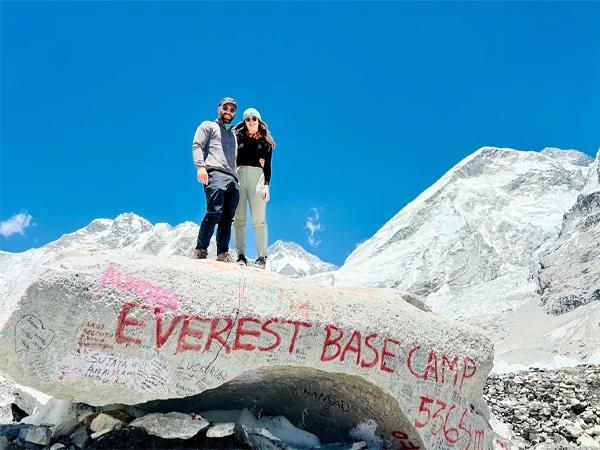
If your bucket list has been saying you want to see Mount Everest with your own eyes for years, then welcome to the Everest region. If you’re planning to do Everest Base Camp Trek from Singapore, yes it's bit difficult, but the mountain scenery is beautiful, you will love the journey.
The Everest Base Camp Trek is the most iconic trek in the region. Over 12 to 14 days, you traverse iconic Sherpa villages, cross exciting suspension bridges, stop at ancient monasteries, and ultimately stand at the foot of the world’s tallest mountain.
If you'd rather trade humongous crowds for pretty alpine lakes, the Gokyo Lake Trek is a great alternative. Trek from the first day to beautiful turquoise lakes and the Gokyo Ri viewpoint.
But if you are after the ultimate challenge? Well, the Everest Three Passes Trek will combine the Everest Base Camp, Gokyo Lakes and three high mountain passes all in one epic trek.
Annapurna Region Trek
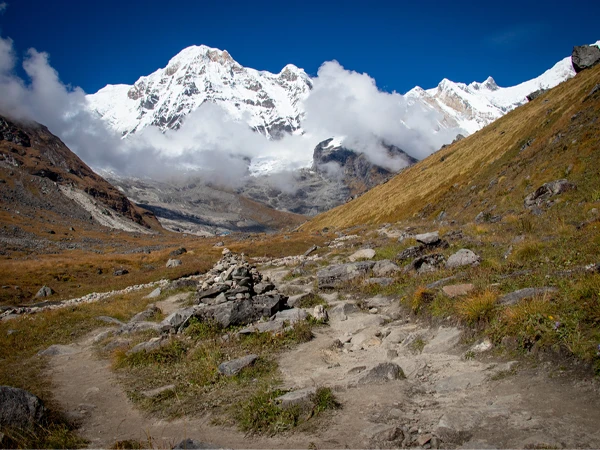
The Annapurna Base Camp Trek is a favourite for first-time trekkers and seasoned hikers alike. Over 4 to 16 days, the trail takes you through traditional Gurung and Magar villages, rhododendron forests, and scenic valleys before reaching the spectacular Annapurna Sanctuary.
There are many Singapore trekkers planning the Nepal Annapurna base camp their first time and second visit looking more like Everest Base Camp.
If you enjoy longer adventures, the Annapurna Circuit Trek delivers incredible variety and the famous Thorong La Pass. Every few days feels completely different.
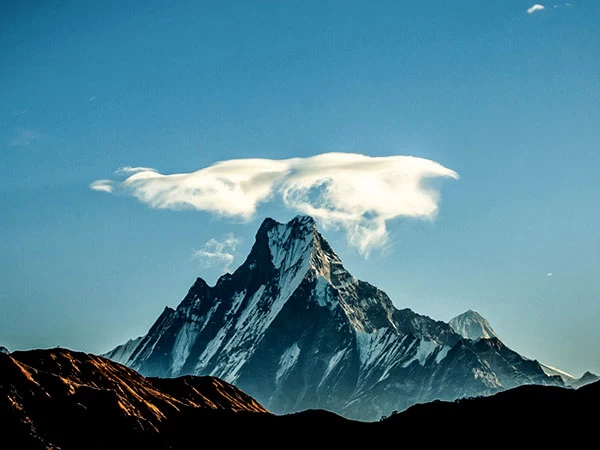
Short on time? The Mardi Himal Trek is a hidden gem that packs a big punch in just a few days. With close-up views of Machhapuchhre (Fishtail) and the Annapurna range, it is living proof that you don't always need weeks in the mountains to have an unforgettable adventure. Ghorepani Poon Hill Trek is one that is beautiful with more than 12 different snowy peaks and morning sunrise from the Poon Hill view point.
Langtang Region
The Langtang region may well be Nepal’s best-kept secret, and the Langtang Valley Trekis the tourist hallmark of the area. It is typically a 7 to 16-day tour of Langtang Lirung and the surrounding snow-covered mountains.
If you are looking for a more spiritual experience, the Gosaikunda Lake Trek will lead you to a group of holy alpine lakes high up in the mountains. It brings a mix of cultural events and natural scenery into the mix, especially during local festivities.
The Tamang Heritage Trail takes you through many traditional Tamang villages, local hospitality, and beautiful mountain scenery. You get to enjoy both the locals and the scenery. Nepal trekking from Singapore Kathmandu land and Langtang trekking drive 5-6 hours from Kathmandu and Langtang is a perfect mix of everything but more feel of Buddhist culture.
When Should Singaporeans Visit Nepal for Trekking?
If you are accustomed to Singapore’s warm, tropical climate throughout the year, then you may be pleasantly surprised by the variety of seasons in Nepal. Instead of just summer, you can enjoy colourful springtime, a crisp autumn season, and even see the snow in winter.
Pick spring (March, April, and May) or autumn (September, October, and November) if you want to meet other trekkers.
In spring, you can enjoy the rhododendron forests in full bloom. Temperatures will be comfortable, and the mountain views will be clear as day. In autumn, the weather is always great, the air is fresh, and the mountains look spectacular. These are also the best time for trekking, and therefore, the trails are always full.
If you don't mind cold mornings and don't bother with fewer trekkers on the trail, you could even go trekking in winter (December, January, and January). Just pack some extra warm layers because the temperature in the mountains is completely different from what you are used to back in Singapore.
The monsoon season (June, July, and August) is usually avoided due to the constant rainfall, slippery trails, and cloudy mountain views. You might prefer this season as a beach-weary trekker, as the crowd is less, but some of the areas in the rain shadow, such as parts of the Annapurna, are still good trekking destinations.
Food in Nepal: What Singaporean Trekkers Should Expect
Let’s address one very important question: yes, you will eat well in Nepal! There aren’t really any hawker centres on the trekking routes, but you will be glad to know that the food is far from predictable.
If you are in Kathmandu or Pokhara, you can find authentic Nepali food, as well as Indian curries, Chinese, Korean, Japanese, Italian, and, in some cafés, some very familiar Western breakfast foods. So if you develop a sudden love-hate relationship with pappardelle and feta, you are in luck.
On the mountain, the food is simpler but fresh, and everywhere, full of energy. You get the (local favourite Dal Bhat Nepali combo food) which is steamed rice served with lentil soup, vegetables, pickles, and curry. Tea houses even offer unlimited refills at the same cost for Dal bhat, that’s why trekkers joke that there’s dal bhat power, 24 hours! You also find noodles, fried rice, momo (the popular Nepalese dumplings), soups, pancakes, eggs, and potatoes on the most common trekking menus. Also, spaghetti, sandwich, pasta, pizza, burger, rosti, curry with rice, and many more.
There’s plenty of vegetarian food, and they will happily cook every meal for you at the trekking tea houses. You can easily find halal restaurants in Kathmandu, and Pokhara.
One more: Don’t drink tap water. Carry a reusable bottle, and either use water purification tablets, or refill at a safe drinking station.
What Should You Pack When Flying from Singapore to Nepal for Trekking?
Packing for Nepal trek isn't quite the same as packing for a weekend trip in Singapore. You trade tropical heat for cool mountain mornings, so the trick is to pack smart rather than pack everything. Also, many bulky trekking items can be rented in Kathmandu.
Here's a quick packing checklist.
Clothing:
- Moisture-wicking T-shirts
- Fleece jacket
- Down jacket (rent if preferred)
- Waterproof jacket
- Trekking pants
- Thermal base layers (for higher altitudes)
- Warm hat and gloves
- Hiking socks
Footwear:
- Broken-in hiking boots
- Comfortable sandals or sneakers for tea houses
Essentials:
- Trekking poles
- Passport and visa documents
- Travel insurance
- Cash in Nepalese Rupees
- Power bank
- Universal travel adapter
- Reusable water bottle
- Sunglasses
- Sunscreen
- Lip balm
- Health & Personal Care
- Personal medications
- Basic first-aid kit
- Water purification tablets
- Wet wipes
- Hand sanitizer
For more information about Nepal trekking gear list visit our article.
Is Nepal Safe for Singaporean Trekkers?
Yes, Nepal is safe to trek. Thousands of international travellers visit Nepal and there are also Singaporean trekkers who love the Himalayas in Nepal. trek its scenic mountain trails every year without any incident.
But the biggest challenge is the mountains. High altitude, the variable weather, and the long days of trekking must be respected. So, slow it down instead of being on your personal record. You will be safe.
The best way to do so is to trek with a knowledgeable local guide, stick to your itinerary, stay well hydrated, and allow some time for your body to acclimatise. A good rule is to inform family/friends of your travel plans and not to entertain the temptation to make your own detours off the marked trails.
The Nepalese are known for their hospitality, and trek routes are usually set and hospitable. Preparation, some common sense, and a great team will allow you to enjoy unforgettable Himalayan views, what first drove you in those mountains in the first place.
Nepal Trekking for Singapore Trekkers necessary Travel Insurance?
Travel insurance should be the last thing you try to economise on. It's that one thing you wish you never had to use, but are glad you took off if something goes wrong. So, for a Singapore trekker the trekking insurance is necessary.
Look carefully at your policy and make sure it covers high-altitude trekking up to the maximum altitude of your chosen route, and that it covers emergency evacuation by helicopter in the Himalayas, it's usually the fastest and safest way to get medical treatment if you have altitude sickness, an injury, or bad weather.
Rather than skipping through the details as you are booking your flight from, take a few extra minutes to read the text. The cheapest plan insurance isn't always best if it excludes trekking or altitude problems.
Why Book Nepal Trekking from Singapore with a Local Nepali Tour Operator?
If you are travelling from Singapore, booking your trek directly with a local Nepali tour operator just makes sense. Who better to know exactly how challenging your trekking adventure is likely to be than locals who live amongst these mountains?
Once you have a trusted local partner, you can get personalised trip recommendations based on your fitness level, travel preferences, budget, and annual leave. You will also benefit from professional local guides, real-time pricing, and up-to-date information on permits.
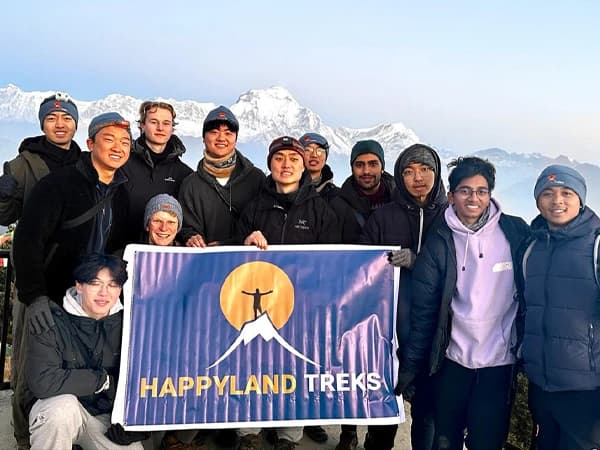
With Happyland Treks, you are also supporting local communities, with 3% of the profits per trip going towards social projects in Nepal. So, you get a wonderful trek that creates lasting memories, and also helps the local communities.
If you are ready to leave the Singaporean skyline behind, let your local pals plan and arrange your trip to the Himalayas.
FAQs
What is the time zone difference between Singapore and Nepal?
Singapore is 2 hours 15 min behind Nepal. So, if the time in Singapore is 10:00 AM, the time in Nepal is 7:45 AM.
Can I order Singapore food in Nepal?
Not really. You won’t find Singaporean food in Nepal. However, there are numerous international restaurants where you can order something Chinese, Indian, Malaysian, or even Western. If you arrive for the trek, then expect more Nepali food to eat a lot of Dal Bhat or momo, noodles, fried rice, etc.
Can I get a visa on arrival to Nepal in my Singapore passport?
Absolutely! You can get a Visa on Arrival at Tribhuvan International Airport as a Singapore holder by simply filling out the application, paying the visa fee, and showing your passport that’s valid for at least 6 months from the Nepal entry date.
Is Nepal too expensive for Singaporeans?
No. Much more so than in Singapore, accommodation, food, transport, and trekking in Nepal are affordable.
Can I use my Singapore SIM card in Nepal?
You can use international roaming, but it can be expensive. Getting a Nepal SIM card or an eSIM is cheaper if you want to be connected.
Do Nepal plug work on Singapore devices?
Mostly, yes. It’s commonly Type C, D, and M sockets with 230V electricity. Pick up a universal travel adapter, and you will be fine.
Can I use Grab, PayNow, NETS, or YouTrip in Nepal?
No Grab here! Taxis are still accepted the old-fashioned way. PayNow and NETS are not accepted. YouTrip and other travel cards may work where card payments are accepted. Be sure to carry Nepalese rupees for trekking. And some USD cash at the Kathmandu airport.
Should I exchange SGD before flying or in Kathmandu?
You can do either, but you are most likely to get a better rate in Kathmandu than at the airport. It’s a good idea to exchange a little cash on the plane, or upon arrival, and the rest in Kathmandu. Or change in USD before flying to Nepal.
Can I use my Singapore travel insurance for high-altitude trekking?
Maybe, but don’t automatically assume that your Singapore insurance will take care of you. You should check that your travel insurance covers high-altitude trekking and emergency helicopter evacuation. Many travel insurance plans do not include those.
Will my Singtel, StarHub or M1 roaming work in Nepal?
If you have a roaming plan with any of these three operators, you are good to go. Just keep in mind that roaming rates will be very expensive.
Can I find halal food in Kathmandu?
Yes. There are quite a few halal restaurants in Kathmandu serving Indian, Pakistani, Middle Eastern, and local food.
How many annual holiday days do I need for Everest, Annapurna, or Langtang?
Plan for 14 to 16 days for Everest Base Camp, 9 to 14 days for Annapurna Base Camp, 8 to 10 days for Langtang Valley, including the trek and a short stay in Kathmandu. If you want to spend more time in Nepal, add a few days to your annual leave.