Highlights of the Annapurna Circuit
- Manang Acclimatization day and Himalayan Rescue Association (HRA) Aid Post in Manang. Acute Mountain Sickness Clinic.
- Immerse in a 360-degree panorama of more than 13 peaks above 6000m-8000m+ and many other unnamed peaks.
- Cross Thorong La pass at 5,416m, one of Nepal’s most thrilling high Himalayan passes.
- Explore the legendary Muktinath Temple at 3,800m — one of the holiest pilgrimage sites in both Hindu and Buddhist traditions, sitting right at the edge of the high desert.
- Pass through old school Himalayan villages and immerse yourself in the culture of the ancient Himalayan tribes: the Gurungs, Thakalis, and Managis.
- Start from the lush sub-tropical forest to the high alpine Himalayan terrain in just a matter of days.
- Sleep in an available Himalayan trekking tea house.
- Follow the raging Kali Gandaki River, the world's deepest gorge, carved between Annapurna and Dhaulagiri.
- Discover the spiritual and healing energy of the Annapurna Himalayas.
Best time for Annapurna Circuit Trek - ACT
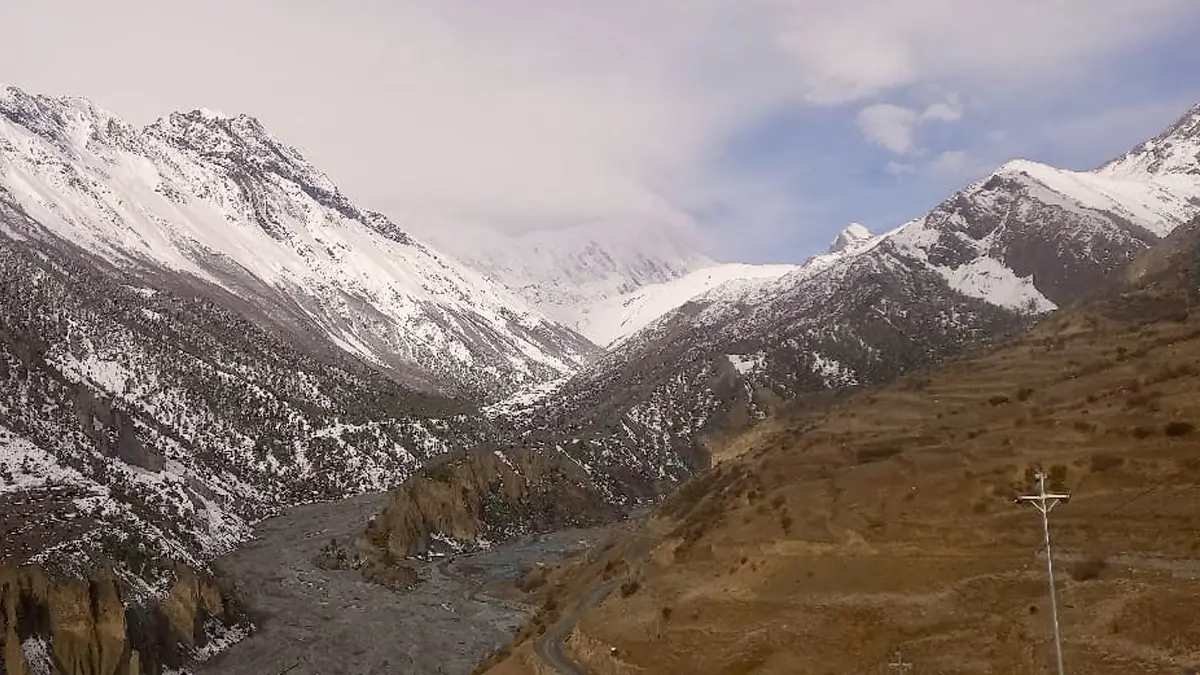
Annapurna circuit trekking available all the months in a year but Spring and Autumn are considered the best times for the Annapurna Circuit Trek. We highly recommend that you trek in the spring and Autumn for the ultimate and best experience.
The Annapurna Himalayas come up with different moods at every season. TBH, there is no such thing as the best time for the Annapurna Circuit Trek. ACT is doable in every season of the year. Every season has its own advantages and benefits for trekking.
Choose Spring if you want to experience vivid rhododendron blooms and clear weather. Choose Autumn if you want crystal clear Himalayan views. Choose Summer if you want to experience a dramatic landscape changing every minute. Choose winter if you love solitude and stark landscapes.
So, the best time for the Annapurna Circuit Trek? It depends on you, which mood of Annapurna you like to experience.
Spring Season: March, April, and May in Annapurna Circuit
- The trail is full of vivid rhododendron blooms followed by Himalayan orchids, Magnolias, and others, which turn the trail into a colorful nature tunnel.
- Active wildlife activity as it is post-mating season. You get high chance of encountering rare and endangered species.
- Clear weather with sharp views of Himalayan giants.
- The temperature is perfect in Spring.
Autumn Season: September, October, and November in Annapurna Circuit
- Wildlife activity and animal movement are at their peak.
- Suitable temperature and clean weather during the daytime.
- Chance to find medicinal herbs like Yarsagumba and Panchaule at higher altitudes.
- Crystal clear views of the high Himalayas.
Summer Season: June, July, and August in Annapurna Circuit
- The trail shows up in its lush and greenest form of the whole season.
- The trail is less crowded.
- Dramatic and changing landscapes every minute.
Winter Season: December, January, and February in Annapurna Circuit
- The trail is less crowded.
- Experience solitude and stark landscapes.
- Snow-blanketed trails, turning them into a complete snow wonderland.
- In winter it gets colder and freezes if there is too heavy snowfall along the Thorong La pass so it is good to update with locals also.
Why Choose Trekking the Annapurna Circuit - ACT?
In your Annapurna Circuit Trek adventure, you encircle the world’s 10th highest peak and observe the Annapurna Himalayas from every possible angle. You see 15+ peaks of 6k-8km+ in one single vantage point. You cross one of the world’s highest Himalayan passes, Thorong La Pass at 5,416m/17,769ft.
You walk through 5 different climate zones from tropical to alpine to the Arctic landscapes. You experience both Hindu lowlands + Buddhist highlands in one single trek. You can experience unique Tibetan culture preserved in high villages of Nepal.
You pass by various ancient and isolated Himalayan villages, untouched by the modern world. You get to immerse yourself deeply in local Himalayan culture. The views? No other Annapurna trek can match the views that ACT gives.
Annapurna Circuit Trek has reserved its spot on the top 3 global trek rankings. No other trek combines altitude, culture, landscape variety, geography, and spirituality into one accessible package.
Accommodation on the Annapurna Circuit Trek: Tea Houses to Luxury Lodges
Did you know? TIMES magazine recently featured Manang's traditional teahouses of the Annapurna region.
Your accommodation on the Annapurna circuit trek will be in a traditional Gurung tea house with a modern touch. The architecture reflects mountain life and traditional Himalayan Gurung culture.
The teahouses on the way to the Annapurna circuit trek are more advanced and well-maintained than other routes like the Manaslu Circuit trek, Gosaikunda Lake trek, etc. The tea houses act as a cultural bridge between different cultures. The mountain tribes, Gurung and Thakali families, host you.
Rooms are simple but comfortable. Twin beds, foam mattresses, clean blankets, attached bathroom, and a window with a magical backdrop of the Annapurna range.
Is there any luxury Accommodation available on the Annapurna Circuit Trek?
Yes, luxury accommodation on the Annapurna Circuit now exists up to Manang and some sections beyond.
You find well-built lodges with hot showers inside the room, electric blankets, proper coffee machines, even bakery items. It depends on your trekking package. Standard tea house costs less. Luxury costs more.
You can even upgrade your standard Annapurna Circuit Trek to the luxury ACT package. Our itinerary is fully flexible and customizable, where you can fully customize and upgrade the itinerary and other services.
Compared to the Manaslu Circuit or Kanchenjunga Trek, the Annapurna Circuit Trek accommodation feels more developed.
In bigger villages like Manang, Yak Kharka, and Muktinath, the standards rise. Manang has hotel-style lodges close to 2-3 star standards. Not city luxury, but impressive for 3,500 meters
Food Options on the Annapurna Circuit Trek
Food on ACT is surprisingly diverse. You get pure and traditional high Himalayan foods like Thukpa, Tsampa, Thenduk, traditional Nepali combo food: Dal Bhat – rice, curry, lentil soup) Rildok, to western foods like Pizza, pasta, sandwich, Fry Noodle, Potato, Rosty, spaghetti, and burgers. Many vegetables are locally grown, healthy, and organic.
Popular Apple Garden along the Annapurna circuit and Jumla.
You pass by Nepal’s biggest apple farm at Bhratang, where you can try fresh apple pie, apple sukuti, and Manang’s premium apple wines. Bhratang is a commercial apple farm in Nepal. and Marpha village is the apple orchards capital of Nepal also the old monasteries, Thakali Tibetan culture. Jumla also one of the largest apples producing district in Nepal.
WiFi, Charging, Electricity & Hot Shower on ACT
Electricity is now available throughout most of the Annapurna Circuit Trail. Many lodges run on hydro power or solar. In rare cases, when clouds cover the sky for multiple days, the batteries drain, and the lodges ration electricity to kitchen equipment only.
Charging costs around NPR 300–500, depending on altitude and tea house. Lower villages sometimes include charging for free.
WiFi now exists but isn’t always reliable. The Wi-fi slows down with altitude gain. NTC network works better than Ncell in most areas. Mobile networks work better than WiFi in most areas.
Nepal Telecom (NTC) provides the most reliable coverage throughout the circuit. Their towers reach up to Thorong Phedi with a decent 3G and occasionally 4G signal.
Do not forget to pack a power bank with a high battery (minimum 20,000mAh). Hot showers are available in most villages. Expect to pay NPR 300–500. Higher altitude, higher price.
Why Trekking the Annapurna Circuit is one of the Best Treks in Nepal?
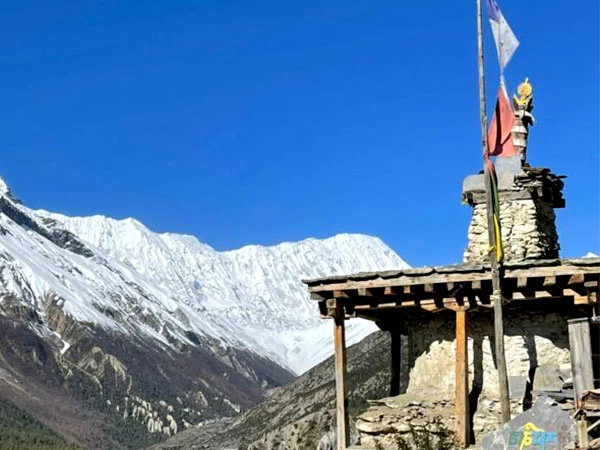
Journey during the Annapurna Circuit trek feel more about Buddhist culture, along the trekking trail to Annapurna Circuit and you will also see and visit chorten stupa, monastery, tibetan prayer flag, prayer wheels, mani stone wall and many things to see around the the journey. And in Manang there is a Health Aid Post: Himalayan Rescue Association (HRA) Acute Mountain Sickness Clinic. Check for altitude sickness like heart beat and pulse, they help you to treat the illness etc.
Trekking the Annapurna Circuit gives you almost the whole Himalayan menu in one continuous trail. You fully encircle one of the great mountain massifs of the Himalayas. That’s why it sits near the top of every “best treks in Nepal” list and stays there.
You don’t just see one mountain valley while trekking the Annapurna Circuit. You cross several worlds. The trail starts in warm subtropical forest, terraced fields, and the world’s deepest gorge. Step by step, you enter different dimensions of the world’s highest Himalayas.
You don’t just see one mountain valley. You cross several worlds from subtropical forest zones to the high Himalayas zone. One loop. One journey. Many different worlds on a single trail.
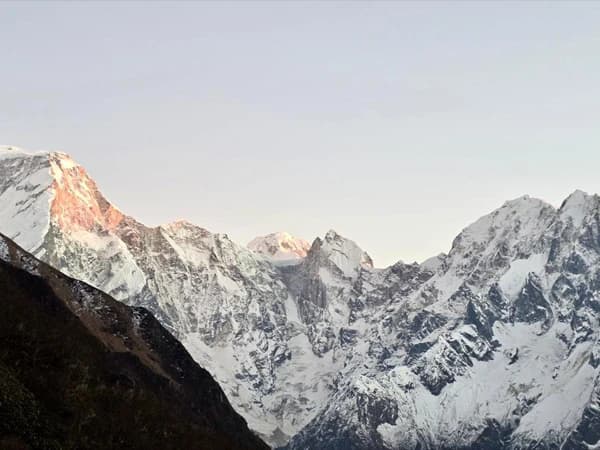
It feels like walking in the past, which gives a rural Nepal vibe. You get a 360-degree panorama of more than 15+ mountains above 6,000-8,000m+.
The Annapurna Circuit delivers what serious mountain trekkers search for. Massive peaks in constant view. Geographic diversity compressed into a matter of days. Ancient pilgrimage sites with living spiritual practice. Real villages where culture existed long before tourism and still feels alive.
One of the world’s highest Himalayan passes, Thorong La Pass at 5,416m, gives the high‑pass thrill. Muktinath at 3,800m gives the ancient spiritual heart, as one of Hinduism's most sacred pilgrimage sites in the entire Himalayan range. The Kali Gandaki gives you the feeling of walking inside one of the world’s deepest gorges.
Between these points, you cross Gurung villages, Manangi settlements, and Thakali towns. You experience three different cultures, see three different ways of life, and still walk the same old trading route that once linked Tibet and the lowlands.
From Ghyaru and Ngawal villages on the northern trail variant, you get the absolute best views of the Annapurna range, which views is the best till Manang trail. The entire south face of Annapurna II, III, IV, and 9 other 5000-6000m+ peaks spreads across your vision.
These villages sit on high ridges above the main valley. Most trekkers take the lower Manang route and miss these viewpoints completely.
We’re Happyland Treks highly recommend you to trek along the upper pisang route to Manang like trekking routes via Ghyaru, Ngawal, Bhraka, and Manang.
The circuit stays Nepal’s most complete trekking experience. Not the most remote. Dolpo and Kanchenjunga take that title. Not the highest. Everest Three Pass trek wins in altitude.
But, for one route that gives varied scenery, strong culture, big snow‑capped mountains, a major pilgrimage site, a true high pass, side trips like Ice Lake, Gangapurna Lake, and Tilicho Lake. Trekking the Annapurna Circuit in Nepal still stands alone.
Side Treks from Annapurna
Nar Phu Valley,
which opens from Koto village below Manang
Ice Lake
ICE lake sits at 4,600 meters in a high cirque 600 vertical meters straight above Braga. Locals call it the frozen lake. The round trip takes five to six hours from Braga village. Three hours climbing, two hours descending.
From the lake viewpoint, you see 12 major peaks in a single panorama. And the views?
Gangapurna dominates at 7,455 meters directly south. Annapurna III towers southwest at 7,555 meters. Annapurna IV rises southeast at 7,525 meters.
The entire Annapurna massif spreads across your vision. Tilicho Peak fills the western skyline at 7,134 meters, and many unnamed peaks below 6k fill the gap. The Great Barrier ridge extends from Tilicho toward Gangapurna.
Tilicho Lake Trek
Tilicho Lake at 4,919 meters is a classic add-on to trekking the Annapurna Circuit. I guarantee you 100% that you won’t regret adding additional trekking days to your itinerary to visit Tilicho Lake.
Locals call Tilicho a sacred lake. During the festive season, the Bompos (shamans) do fire rituals, soul calling rituals, and other ancient Himalayan rituals.
Annapurna Tilicho Lake rewards you with a beautiful 360 panorama of more than 11 mountains above 6-8km+, and a bunch of other mountains that don’t have any name yet.
Here are the routes mostly used.
- Manang → Khangsar (or through Gunsang)
- Khangsar → Tilicho Base Camp / Tilicho area lodge (names and lodge locations shift by season)
- Base Camp → Tilicho Lake → back (same day)
- Return to the ACT by backtracking to Khangsar/Manang, then continue toward Yak Kharka, Thorong Phedi, and Thorong La Pass (5,416m)
Some trekkers try to connect via Mesokanto La after Tilicho. That route is tougher, more exposed, and more weather-dependent. It’s not the normal teahouse flow.
This restricted side valley only opened to trekkers in 2002. Special permits cost extra. The valley runs north toward Tibet with villages that speak their own language distinct from Nepali or Tibetan. Nar and Phu settlements preserve medieval Himalayan culture almost unchanged.
The detour adds four to five days. You climb from Koto through a narrow gorge to Phu village at 4,050 meters. Ancient stone houses cluster defensively. A monastery perches on the cliff above. You cross Kang La Pass at 5,240 meters to re-enter the main circuit at Ngawal village.
Kangla Pass rewards you with 360-degree panorama of more than 15 Himalayan peaks above 6k-8km+.
Annapurna Circuit Trek Difficulty. Is ACT hard?
Annapurna Circuit Trek is graded as a moderate-level trek. Difficulty isn't technical. You don't need ropes and ladders unless you're trekking in deep winter, which is a different kind of stupidity.
The difficulty is cumulative. It's the 6–7 hours of walking every single day with a pack on your back. The climate shifts from subtropical jungle to alpine cold to high‑altitude desert in a matter of days, as you move toward Mustang.
Thorong La Pass sits at 5,416 meters. Above 3,000 meters, your breathing shifts. Sleep becomes lighter and appetite drops. The real difficulty isn’t the physical challenge, but it’s the altitude.
The Annapurna Circuit doesn't care about your comfort or experience. Headaches and fatigue are common if you ascend too quickly. It cares about your acclimatization schedule and your pace.
We have packed our itinerary of ACT with enough acclimatization days to ensure you adjust well in the high altitude.
If you’re reasonably fit, prepare early and give yourself proper acclimatization days; trekking the Annapurna Circuit is doable and easy.
Can beginner trekkers complete the Annapurna Circuit Trek?
Yes, you can, mentally strong beginner trekkers can complete the Annapurna Circuit Trek easily. There is no such thing as pro or beginner for the Himalayas. Those who follow mountain rules and respect the mountains are pro, and those who ignore are the noobs.
Your experienced Nepal trekking guide monitors your health constantly. They watch for nausea, headache, dizziness, and any other early altitude sickness symptoms. Your guide and team are 24-hour available for your safety and security.
Mountains do not care about your experience; discipline matters here. Train your legs. Practice long walks. Carry a light pack before the trek. Arrive prepared, not guessing.
The landscape shifts from jungle to alpine terrain to high, desert‑like Mustang. You walk in a high alpine Himalayan terrain, where you walk above 5,000m above sea level, in a matter of days.
Beginner success rate on Annapurna Circuit sits around ninety-five percent as long as they follow their guides and proper mountain protocols.
Failures on ACT happen when people skip rest days, ignore altitude sickness symptoms, or push for Thorang La summit quickly, instead of addressing problems early.
If you acclimatize properly, keep your pace slow and steady, follow a well-planned itinerary, eat well, sleep properly, and walk with a reliable guide, porter, and supportive companions, even a first-time trekker can complete the legendary Annapurna Circuit without trouble.
Who Chooses the Legendary ACT?
Annapurna circuit trek is best for trekkers who want one journey to give them everything that Nepal’s mountains are famous for. This trek is a strong choice for people who enjoy changing landscapes every hour.
You begin in a lower green country and move step by step into a dry, high Himalayan world via high alpine wild Himalayan terrain.
Trekkers who love mountain geography usually connect deeply with this route because the land never stays the same for long.
Annapurna Circuit Trek also fits travelers who want culture as much as scenery. The trail moves through old settlements, Buddhist villages, prayer walls, monasteries, and long-used paths that still carry the feel of an older Himalayan life. That gives the trek depth beyond the views.
It is also meant for trekkers who want a physical challenge with purpose. Thorong La Pass gives the journey its harder edge and its strongest reward.
The entire trail is surrounded by high and raw energies. You pass via many spiritual hotspots along the trail. You can feel the high vibration of energy everywhere around old age gompas and monasteries.
The raw Annapurna Himalayas provide raw and warm energy that makes you feel calm and relaxed. They absorb our negative energies and give us high vibration of positive energies in return.
This high Himalayan trek is a perfect Himalayan wonderland for spiritual trekkers.
Packing List for Annapurna Circuit Trek
Upper Body Layers
- Base layer (2 pcs)
- Lightweight, quick‑dry T‑shirt or thermal top
- Mid layer (1–2 pcs)
- Fleece jacket or light wool sweater
- Insulation jacket (1 pc)
- Down or synthetic puffer for cold mornings and evenings
- Waterproof, windproof jacket with hood
- Light shirt (1 pc)
- Long‑sleeve trekking shirt for sun and dust
Lower Body & Legs
- Trekking pants (2 pcs)
- Quick‑dry, comfortable, one thin, one a bit warmer
- Quick‑dry, comfortable, one thin, one a bit warmer
- Thermal bottoms (1 pc)
For cold nights and Thorong La day
- Shorts or zip‑off pants (1 pc)
For lower, warm sections
- Waterproof over‑pants (1 pc) | Optional but useful in rain or snow
Socks, Footwear & Gaiters
- Trekking socks (3–4 pairs) | Wool or synthetic, no pure cotton
- Warm socks (1–2 pairs) | Thicker pair for high camps and nights
- Hiking boots (1 pair) | Broken‑in, ankle support, good grip
- Camp shoes/sandals (1 pair)
- Gaiters (optional)
Head, Hands & Face
- Sun hat or cap (1 pc)
- Warm beanie (1 pc)
- Buff/neck gaiter (1 pc)
- Gloves (1–2 pairs)
- Sunglasses (1 pc) | UV protection, glacier‑style preferred
Sleep & Bags
- Sleeping bag (1 pc) | Comfort rating around ‑10°C to ‑15°C
- Sleeping bag liner (optional) | Extra warmth and hygiene
Gear & Other Essentials
- Backpack (1 pc) | 35–45L daypack if porter carries big bag
- Duffel bag (1 pc) | 60–80L if using porter service
- Trekking poles (1 pair)
- Headlamp (1 pc) | With spare batteries for early starts
- Water bottles or hydration bladder (2–3 L total)
- Water purification (tablets, drops, or filter) | Steripen
Personal Items & Health
- Basic first aid kit | Blister care, band‑aids, tape, pain relief, ORS
- Altitude medicine (after doctor advice) | diamox
- Personal medicines
- Sunscreen (high SPF)
- Lip balm with SPF
- Toiletries | Toothbrush, paste, biodegradable soap, small towel, tissue
Electronics & Money
- Phone + charger
- Power bank
- Camera (optional)
- Universal adapter
- Cash in Nepali Rupees
- No reliable ATMs beyond Lamjung and Pokhara
Essential Tips for Trekking the Annapurna Circuit
- Acclimatize properly in Manang. You can do the Ice Lake hike. It saves you on Thorong La day.
- Drink four liters of water daily. Even if you don’t feel thirsty. Altitude dries you out fast.
- Walk slow from day one. Especially after 3,000m. Fast walkers suffer the most.
- Never ignore a headache at altitude. Take it seriously and descend if it gets worse.
- Hire a government-certified Nepal trekking guide, who will be available 24 hours for your safety. They spot altitude problems early and help you prevent it.
- Pack light.
- Carry enough cash in small notes. ATMs die after besisahar, and most lodges only take rupees.
- Start the Thorong La climb before 5am.
- Train your legs with stairs uphill and downhill walks with your day backpack.
- Change socks every day and treat blisters immediately. Don’t forget to carry blister treatment aid.
- Layer properly. Mornings at Thorong Phedi can be -10 -15°C. Days in lower valleys can hit 25°C.
- Mental toughness wins this trek more than fitness. Some days feel endless. Keep moving anyway.
- Respect the mountains and the locals. Walk the correct way around mani walls. Ask before taking photos.
- Hike high, sleep low.
- Listen to your guide. Their experience is more valuable than your plan.
- Buy the special Nepal trekking insurance covers 5500m.
Annapurna Circuit Route & Map Explained
The Annapurna Circuit wraps around the Annapurna massif in a full loop. Most trekkers walk anti‑clockwise, starting from the east and crossing Thorong La Pass before dropping west into the Kali Gandaki Valley.
The landscape shifts from humid low valleys to alpine zone to Mustang high desert.
Besisahar to Jagat feels like stepping into another world. The trail hugs the Marsyangdi River through thick subtropical jungle, rice terraces, and roaring waterfalls that crash down from hidden cliffs. Suspension bridges sway high above the water.
Jagat to Chame tightens the grip. The gorge narrows. The path sticks to cliff edges with real exposure. Forest slowly changes color as you climb. Oak and pine take over. You pass the natural hot springs at Tatopani, filled with natural minerals.
First real taste of mountain silence appears. Annapurna II suddenly towers straight above Chame like a white giant watching over everything.
Chame to Upper Pisang delivers the first jaw-dropping moment. The valley opens wide. You pass by Nepal’s largest apple farm in Bhratang. You can try local Himalayan fresh apple pie, apple wines, apple sukuti, and many more.
Chame to Upper Pisang delivers the first jaw-dropping moment. The valley opens wide. You get your first view of the spiritual mountain, Swarga Dwari, the Paungda Dada. You pass by many cave faces. From here you see a 360-degree panorama of Annapurna II, III, IV, Gangapurna, and Lamjung Himal all at once.
Upper Pisang to Manang gives you a choice. Take the lower path for easier walking or climb the upper trail through Ghyaru and Ngawal. The views from the Ghyaru and Nawal tops every other view in the entire circuit.
You can count more than ten peaks above 7,000 meters from one spot. The next destination is Bhraka. From Bhraka, the trail splits in 3 ways: one to Ice Lake, another to Manang, and another to Milarepa cave and Milarepa glacier.
Then after Manang, the valley stops time. At 3,519 meters, the wide basin opens like a high-altitude theater. From Manang, you can reach Ice Lake in one day or push two days to Tilicho Lake at 4,919 meters, one of the highest lakes on earth. The views from Tilicho Lake are worth a million dollars.
Manang to Thorong Phedi turns the trek serious. Trees vanish. The land becomes a high Himalayan desert, with a 360-degree panorama of some of the world’s highest peaks. Thorong Phedi sits at 4,450 meters below the pass.
The morning on Thorong Phedi makes you feel like you wake up to a different dimension of the world’s highest Himalayas. Thorong La at 5,416 meters is the soul of the Annapurna Circuit. The climb starts early at 3:33 AM in darkness.
The final ridge delivers a 360-degree explosion of peaks. Annapurna, Dhaulagiri, Chulu peaks, Thorong Peak, and distant Mustang ranges all stand before you. More than twenty mountains above 6,000-8,000meters and many other unnamed peaks surround you at the top.
The long drop from Thorong La into Muktinath changes everything again. You lose 1,600 meters in one day. Muktinath is the spiritual hub of the entire circuit, with 108 freezing taps. An eternal flame burning from rock. Hindus and Buddhists have prayed here for centuries. The energy in this place is heavy and ancient.
It is believed that if you circle anticlockwise beneath all the 108 taps, your sins will be removed, and the water is considered holy water. You get to see many new Himalayan peaks from this side of the trail.
Marpha to Tatopani brings you back down into warmth. Dhaulagiri and Nilgiri peaks still dominate the skyline. You can also relax in the steaming pools, filled with natural minerals, while rhododendron forest closes in again.
You get the whole Himalayan package in one trek. This is why trekking the Annapurna Circuit remains special.
In one single loop, you walk through the subtropical zone, hills, pine forests, high desert, glacial valleys, ancient pilgrimage sites, and living mountain cultures. Few treks on earth compress so much beauty, history, and power into one journey.
Do You Need a Guide for the Annapurna Circuit?
Rules around trekking in Nepal change often. Sometimes trekking the Annapurna Circuit needs a government-certified trekking guide; sometimes it may not.
But beyond rules, hiring a guide gives you more than just compliance.
Above 4,000 meters, having someone watch your condition matters. Guides recognize early altitude sickness signs. Headache patterns. Appetite loss. Breathing trouble at night. They adjust rest days. They slow the pace. They arrange descent or oxygen if symptoms worsen.
Emergency support runs 24 hours. Helicopter evacuation coordination. Contact with rescue teams. Communication with lodges and clinics. You don't handle that alone at high altitude when thinking clearly becomes hard.
A trekking guide acts like a cultural bridge between two cultures: local Himalayan culture and Western culture. They connect you to connect with real mountain culture deeply. Your professional guide knows every best vantage point, every shortcut, and every turn of the trail.
A good guide removes hassles. Permits. Check-posts. Teahouse calls. Transport switches. You keep walking. The logistics get handled. The teahouse remains fully packed during the autumn season and spring seasons; your guide does all the pre-bookings and reservation work too.
For a deeper cultural experience and a smoother, safer crossing of Thorong La top, hiring a guide fits the Annapurna Circuit perfectly.
Annapurna Circuit Trek Cost Breakdown (Updated)
The cost of the Annapurna Circuit trek between 1150 USD to 1900 USD. the exact trekking cost depends on the trek durations and the services. The trekking duration you can make shorter 10 days to longer 18 days including your Nepal arrival and departure date.
One of the 14 days trek is 1,387 USD per person when you join our small groups, or private solo trek.
This price covers pretty much everything you need from the moment you’re in the mountain. Except for tips and extra expenses, which are not included.
For 1387 USD, you get all your permits sorted so you never have to worry about checkpoints on the trail. Trekking teahouse accommodation is included every single night with bed, blanket, Pilo and a cozy room.
You eat three solid meals every day, breakfast, lunch and dinner – with plenty of choices Nepali and western food along the Annapurna trekking trail. The food is fresh and cooked by the local families running the traditional tea houses.
We include a full-time guide and porter who look after you 24 hours during the whole Annapurna Circuit Trek. Your guide stays right with the group while the porter handles the heavy bags so you only carry a light daypack.
Round-trip transportation from Kathmandu to Kathmandu is part of the trekking package. You don’t pay extra for buses or taxis, except for the flights, as flights are optional.
A few small things like drinks, snacks, hot showers, or WiFi in the trekking teahouses are on you, but the big stuff like permits, accommodation, food, guide, porter, and all the transportation is already taken care of in that package service.
If you want the real Himalayan experience without any hassle, this package delivers the Annapurna Circuit Trek at a fair price.
Itinerary of the Annapurna Circuit Trek
The itinerary of the Annapurna Circuit Trek is very flexible and customizable. The standard ACT itinerary comes with 14 days of high Himalayan package.
You can also add trekking days if you want to explore more of the hidden gems nearby, or subtract the trekking days if you do not have enough time.
Itinerary - Annapurna Circuit Trek (14 days)
Day 01: Arrival in Kathmandu (1,400m)
Day 02: Kathmandu to Besisahar (760m), Drive approx. 6-7 hours
Day 03: Besisahar to Chame (2,650 m), Drive approx. 4 hours.
Day 04: Chame to Pisang (3,350 m), Trek approx. 5-6 hours.
Day 05: Pisang to Nawal (3,650 m), Trek approx. 5 hours.
Day 06: Nawal to Manang (3,540 m), Trek approx. 3-4 hours.
Day 07: Manang Acclimatization (3,540 m), Free day, walking and wandering.
Day 08: Manang to Yak Kharka (4,050 m), Trek approx. 3-4 hours.
Day 09: Yak Kharka to Thorang Phedi (4,580 m) or High Camp (4,880 m) Trek approx. 3-4 hours.
Day 10: High Camp to Thorang La Pass (5,416 m) and Muktinath (3,800 m), Trek approx. 7-8 hours.
Day 11: Muktinath to Tatopani (1,200 m), Drive approx. 5 hours.
Day 12: Drive Tatopani to Pokhara (820 m) Drive approx. 3 hrs.
Day 13: Pokhara to Kathmandu Drive by Tourist Bus (1,400 m) Drive approx. 6-7 hrs. (Optional flight)
Day 14: Departure Day, Transfer to Airport or Stay Longer.
Includes of Annapurna Circuit Trek 14 days
Airport pick up and drop off by private transport. Kathmandu to Besisahar local bus, Besisahar to Chame sharing jeep, Muktinath to Tatopani local bus, Tatopani to Pokhara local bus, and Pokhara to Kathmandu tourist bus.
Trekking teahouse on the trail.
Breakfast, Lunch, and Dinner.
Optional tea or coffee
All your trekking permits and entry fees are covered, including All government and local taxes.
English-speaking guide.
1 porter for 2 clients, Porter carry-on company duffel bag overnight luggage on the trek.
Basic first aid medical kit.
Fresh seasonal fruits apple or Pomegranate.
Peanut, biscuit, almond, dry date, pista cashew.
Welcome drinks and farewell dinner in Kathmandu.
Reward Achievement point Thorang La Pass 5416m.
Exclusions of Annapurna Circuit Trek 14 days.
- Food and accommodation during your stay in Kathmandu.
- Travel medical insurance and emergency evacuation costs.
- Nepal entry visa fee. International airfare.
- Personal equipment.
- Tips for guide and Porter (Tipping is expected)
- Personal expenses such as: Alcoholic beverages, hot shower, water bottle, cold drinks, hot water, battery charge, donation. etc.
- Any other expenses that are not mentioned in the ‘price includes’ section.
Itinerary of Annapruna Circuit Trek via Tilicho Lake- 16 days
The cost of the short Annapurna Circuit Trek via Tilicho lake is $1593 for 16 days.
Day 01: Arrival in Kathmandu (1,400m)
Day 02: Kathmandu to Besisahar (760m) – Drive by bus, 6-7 hrs
Day 03: Besisahar to Chame (2,710m) Drive by shared jeep 4-5 hrs
Day 04: Trek Chame to Upper Pisang (3,300m), 5-6 hrs
Day 05: Trek Upper Pisang to Nawal (3,660m), 5-6 hrs
Day 06: Trek Nawal to Manang (3,540m), 5-6 hrs
Day 07: Trek Manang to Khangsar (3,750m), 4 hrs
Day 08: Trek Khangsar to Tilicho Base Camp (4,150m), 5-6 hrs
Day 09: Trek Tilicho Base Camp to Tilicho Lake (4,919m) and Siri Kharka (4,060m), 6-7 hrs
Day 10: Trek Siri Kharka to Yak Kharka (4,110m), 4-5 hrs
Day 11: Trek Yak Kharka to Thorong Phedi (4,525m) or High Camp (4,800m), 5 hrs
Day 12: Trek Phedi/High Camp to Thorong La Pass (5,416m) and Muktinath (3,760m), 7-8 hrs
Day 13: Drive Muktinath to Tatopani (1,200m), 5-6 hrs
Day 14: Drive Tatopani to Pokhara (822m), 4-5 hrs
Day 15: Drive Pokhara (822m) to Kathmandu (1,400m), 6-7 hrs
Day 16: Departure day hotel to the airport
Itinerary for Short Annapurna Base Camp Trek
Day 01: Arrival in Kathmandu, transfer to the hotel
Day 02: Drive from Kathmandu to Pokhara by tourist bus. (Optional flight)
Day 03: Drive from Pokhara to Jhinu Danda and Trek to Sinuwa (2,220m) – Approx. 2:30 hours drive, and 3-4 walk
Day 04: Trek from Sinuwa to Himalaya (2,900m) – Approx. 6-7 hours
Day 05: Trek from Himalaya to Annapurna Base Camp (4,130m) – Approx. 5-6 hours
Day 06: Trek from Annapurna Base Camp to Bamboo (2,310m) – Approx. 7-8 hours
Day 07: Trek from Bamboo to Jhinu Danda (1,780m) – Approx. 5-6 hours
Day 08: Walk from Jhinu Danda and Take a Local Bus to Pokhara (approx. 3 hrs.)
Day 09: Drive from Pokhara to Kathmandu or optional flight
Day 10: Departure to the airport or stay longer
The cost Includes:
Kathmandu - Pokhara - Kathmandu is by tourist bus, (Private transport from Pokhara - Jhinu - Pokhara)
2 nights, accommodation in Pokhara with breakfast.
Accommodation trekking teahouse on the trekking trail.
Breakfast, Lunch, and Dinner. with a cup of tea or coffee.
All your trekking permits and entry fees are covered, including All government and local taxes.
English-speaking guide.
1 Porter for 2 clients
- Trekking Snacks and Chocolate
Peanut, biscuit, sinkers chocolate or muesli bar.
Basic first aid medical kit.
Fresh seasonal fruits apple and pomegranate after the dinner.
Reward Achievement point ABC Annapurna Base Camp.
The cost Excludes:
- Any food and accommodation during your Kathmandu stay.
- Travel medical insurance and emergency evacuation costs.
- Nepal entry visa fee. International airfare.
- Personal equipment.
- Tips for guide and Porter (Tipping is expected)
- Personal expenses include Alcoholic beverages, hot showers, water bottles, cold drinks, hot water, battery charges, and donations.
- Any other expenses which are not mentioned in the ‘price include’ section.
Weather for the Annapurna Circuit Trek
| Trekking Season |
Months |
Temperature Around |
Trail Condations |
Trekking Suitability |
| Autumn Season |
September-November |
10°C to 20°C (day) / -10°C to -15°C (night at high camp) |
Dry, stable, clear skies, best mountain views |
Best time to trek the Annapurna Circuit |
| Spring Season |
March - May |
8°C to 18°C (day) / -5°C to -10°C (night at high camp) |
Mostly clear mornings, afternoon clouds build from April |
Second best time, good weather, mountain view often, rhododendron blooms |
| monsoon Season |
June - August |
15°C to 25°C (day) / 5°C to 10°C (night) |
Heavy rain, muddy trails, fresh trail more green and wet, waterfall, stream, river. |
Experience it all, like mountain, rain, mud, wet, river, green hill valley, challenging trail etc. |
| Winter Season |
December - February |
-5°C to 5°C (day) / -15°C to -20°C (night at high camp) |
Snow on trail. |
Only for well-equipped and experienced trekkers. |
Annapurna Circuit VS Everest Base Camp
| S.N |
Annapurna Circuit Trek (ACT) |
Everest Base Camp Trek (EBC) |
| Trek Type |
Full loop - new terrain every single day |
Out and back - same trail on the way in and out |
| Maximum Altitude |
Thorong La Pass - 5,416m |
Everest Base Camp -5,364/Kala Patthar 5,545m |
| Standard Duration |
14 days (customizable -add or subtract days) |
14 days (standard, also customizable and flexible) |
| Difficulty Level |
Moderate to Challenging |
Moderate to Challenging |
| Hardest Section |
Crossing Thorong La Pass at 5,416m in early morning |
Khumbu glacier section and Kala Patthar summit push |
| Landscape Variety |
Jungle, river gorges, high desert, alpine terrain, rain shadow zone - all in one trek |
Rocky, morain, Khumbu glacier, sherpa villages, rhododendron forest |
| Cultural Experience |
Gurung, Magar, Thakali, and Tibetan communities — deeply diverse |
Sherpa culture, Buddhist monasteries, Namche Bazaar market |
| Most Iconic Moment |
Standing on Thorong La Pass with full Himalayan panorama |
Standing at the world’s highest base camp, Everest Base Camp or sunrise from Kala Patthar |
| Mountain Views |
Annapurna I, Dhaulagiri, Manaslu, Gangapurna and 11+ more |
Everest, Lhotse, Nuptse, Ama Dablam, Pumori and 15+ more |
| Tea House Quality |
Good in lower sections, basic near Thorong La high camp |
Generally good throughout, well-established on the route |
| Hot Springs |
Yes - Yes — natural hot springs at Tatopani after Thorong La descent |
No hot springs on the route |
| Permit Require |
ACAP Permit |
Sagarmatha National Park permit and Khumbu Pasang Lhamu Municipality card |
| Average Trek Cost |
US$1198-1600 |
US$1600-1900 |
| Best Time to Trek |
October – November and March – May |
October – November and March – May |
| Acclimatization Days |
Manang Acclimatization Day |
Namche Bazaar and Dingboche — two acclimatization days |
| Road Access to Trailhead |
Yes — jeep road reaches Chame and beyond |
Flight into Lukla is highly recommended, which is an Pratical option, but can be done overland too via Salleri. |
| Overall Verdict |
Best for trekkers who want full landscape diversity, cultural depth, and a true loop experience |
Best for trekkers who want the iconic Everest name and the raw Khumbu glacier experience |
Permits for Annapurna Circuit Trek
You don’t have to worry regarding the Annapurna trek permits, because your tour operator handles all of the permits for you.
Annapurna Conservation Area Permit (ACAP)
The Annapurna Conservation Area Permit (ACAP) is required for every trekker in the Annapurna Circuit route.
This permit covers entry into the Annapurna Conservation Area (Besisahar/Bhulbhule–Manang–Thorong La–Muktinath–Jomsom side and nearby areas).
Trekkers Information Management System card. (optional, might or mightn’t need)
The rules of TIMS Cards change often depending on season and route control points. Sometimes we need to make and sometimes not.
Optional / Extra Permits (Only for Side Trips)
These are not needed for the standard Annapurna Circuit trek, but they are required if you add restricted side routes like- Narphu valley, and Upper mustang.
Nar Phu Valley (Restricted Area) Valley
- Permit needed: Restricted Area Permit (RAP) for Nar-Phu
- Also required: ACAP still applies
- Rules: guide required compulsory; permit issued through a registered trekking agency; solo treks are now opened.
Upper Mustang (From Kagbeni onward)
- Permit needed: Upper Mustang Restricted Area Permit
- Also required: ACAP
- Cost: expensive compared to standard permits
- Rules: issued through a registered trekking agency; guide required.
Documents You Should Carry (For Permits + Check-Posts)
Bring these to obtain permits and to show at checkpoints along the trail:
- Passport (original) – always carry it during the trek
- Passport photocopies – at least 2–4 copies
- Nepal visa – already in your passport (tourist visa)
- Travel insurance details – print a copy (altitude/helicopter evacuation coverage if possible)
- Emergency contact info – written on paper
- Guide/agency details (if guided) – company name + guide license info (useful at checkpoints)
FAQs on Annapurna Circuit Trek
How many days is the Annapurna Circuit Trek?
Annapurna circuit trek between 10 days to 16 days depends on the routes you choose.
How difficult is the Annapurna Circuit trek?
It is a moderate-to-challenging trek. Crossing Thorong La Pass at 5,416m/17,769ft is the hardest day. Beginner trekkers with a strong mentality as well as good fitness and prior hiking experience easily complete ACT.
What is the best time to do the Nepal Annapurna Circuit trek?
Annapurna Circuit trek best time during the autumn trekking season (October–November) is the main best time. Spring season (March, April, and May) is also a great time. Every different time something is different to see.
Mid June to mid September monsoon season comes with dramatic weather that changes every hour. Winter months December, January, and February are cold but still doable with the right gear. The trails are less crowded during winter and monsoon.
What permits are needed for the Annapurna Circuit trek?
For trekking to Annapurna Circuit you need Annapurna Conservation Area Permit (ACAP) If you’re trekking with tour operator agency, the agency will arrange and manage all the paper work for the trekking entry permit.
What is the highest point of the Annapurna Circuit trek?
Thorong La Pass at 5,416m/17,769ft is the highest point of the Annapurna Circuit trek in Nepal. It is also the most physically demanding and rewarding section of the entire route.
Is altitude sickness common on the Annapurna Circuit trek?
Yes, altitude sickness is a real risk above 3,500m. Acclimatization days in Manang help. Carry Diamox, ascend slowly, stay hydrated, and never ignore headache or nausea symptoms.
Where does the Annapurna Circuit trek start and end?
The Annapurna Circuit trek starts at Besisahar and ends at Tatopani, Beni, Nayapil or Pokhara depending on the durations you choose. We begin at Chame by jeep to skip the lower road sections between Besisahar to Chame.
What should I pack for the Annapurna Circuit trek?
Pack trekking boots, a down jacket, waterproof layers, trekking poles, a -20°C sleeping bag, headlamp, sunscreen, water purification tablets, and a first aid kit with Diamox. We arrange the Diamox and medics for you.
How fit do I need to be for the Annapurna Circuit trek?
You need a medium base fitness level. Regular hiking, cardio, and leg-strengthening exercises in the months before your Annapurna Circuit trek will prepare your body well for long daily climbs.
What food is available on the Annapurna Circuit trek?
Teahouses serve Nepali food as well as western and European. Most trekkers love to eat Nepalese food compared to western and European.
Is the Annapurna Circuit trek safe?
Yes, it is safe when done with a licensed guide, proper gear, and good trekking insurance. The biggest risks are altitude sickness and sudden weather changes near Thorong La Pass.
Do I need travel/trekking insurance for the Annapurna Circuit trek?
Absolutely yes. You need a Nepal trekking insurance that covers high-altitude trekking above 5,000m Especially for the Annapurna circuit trek your insurance need to covers 5416m.
Can beginners do the Annapurna Circuit trek?
Beginners with good fitness and proper preparation can complete the Annapurna Circuit trek. Trekking with a licensed guide makes the route far safer and more manageable for first-time trekkers.
How is the Annapurna Circuit trek different from Everest Base Camp?
Annapurna Circuit is a full loop with jungle, gorges, high desert, and alpine terrain all in one trek. Everest Base Camp is an out-and-back trail. The Annapurna Circuit offers more landscape variety and richer cultural experience overall.