The 4 Best Guided Treks in Nepal at a Glance
| Trekking Regions |
Popular Treks |
Best For |
Difficulty |
What you'll Experience |
| Everest |
Everest Base Camp, Everest Three High Passes |
Iconic Himalayan scenery andhigh-altitude adventure |
Chllenging |
Everest views, Sherpa village, monasteries, glaciers and dramatic mountain landscape |
| Annapurna |
Annapurna Circuit, Annapurna Base Camp, Mardi Himal, Poon Hill |
Diverse landscapes and varied trekking experiences |
Moderate to Challenging |
Snow-capped peaks, forests, terraces hills, wterfalls, villages, and mountain culture |
| Langtang |
Langtang Valley, Gosaikunda Lake, Helambu |
Shorter Himalayan adventures and cultural experiences |
Moderate |
Alpine valleys, forest, monasteries, lakes and mountain views |
| Manaslu |
Manaslu Circuit, Tseum Valley |
Remote trails and a more rugged Himalayan experience |
Challenging |
Mount Manaslu, remote villages, Buddhist culture, deep valleys and high mountain passes |
Treks in the Everest Region: The Home of Iconic Himalayan Treks
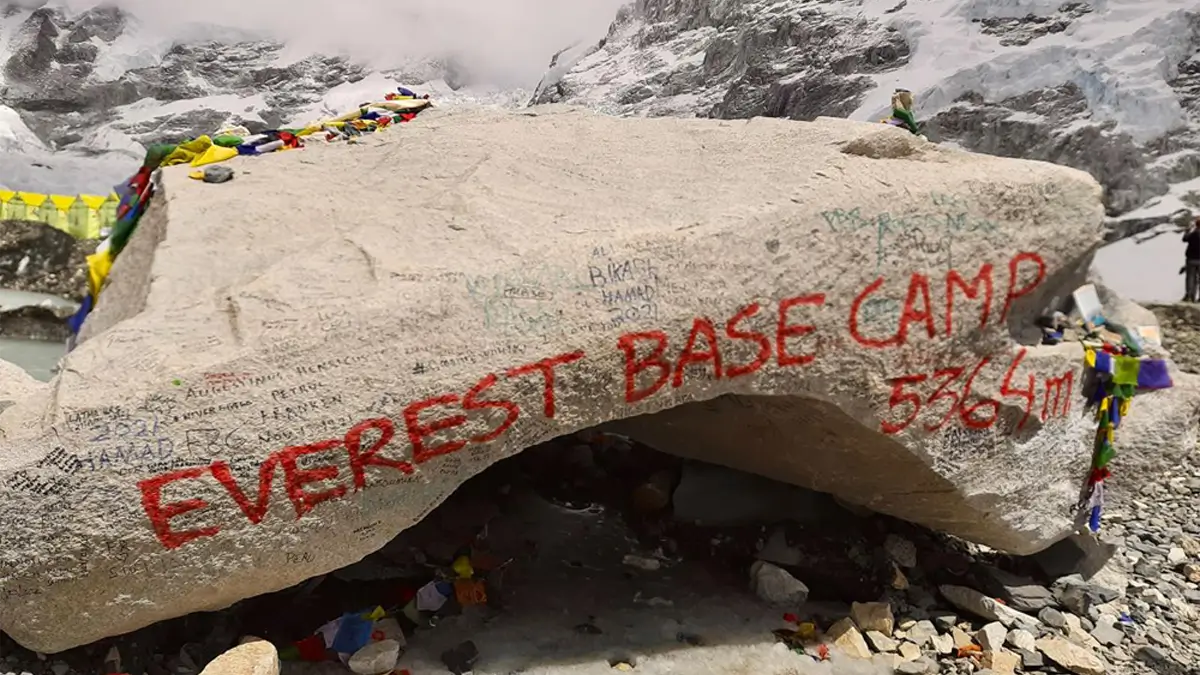
Home to Mount Everest (8,848 meters) and the famous Khumbu Valley, this is the destination for people who want giant mountain scenery, Sherpa culture, Buddhist monasteries, high-altitude villages, glaciers, and trekking routes for adventure lovers worldwide.
The services (and the type of) can range from conventional treks to epic high-altitude adventures. You can customise your tour to fit your schedule, fitness level, and your taste for Himalayan drama.
Everest Base Camp Trek is the best-known trek in the region and the classic trail for the nearest views of the Khumbu Himalaya. The trail goes through the moving and colourfully busy Namche Bazaar, serene Sherpa Villages and Everest View Trek, and old monasteries before reaching Everest Base Camp – EBC.
The Gokyo Valley Trek will take you on a detour from the classic Base Camp trail and into a quieter part of the Everest region. The key selling points are the gorgeous Gokyo Lakes, Ngozumpa Glacier, and panoramic mountain scenic views from Gokyo Ri. Great if you want the best views of the Everest region without taking the most popular trail.
If you want an ultimate challenge, the Everest Three High Pass Trek will take you a few rungs higher. The trail crosses Kongma La, ChoLa, and Renjo La and links some of the best valley and vista trails.
Everest trekking with a guide is a lot more than marveling at the distant Everest. You will walk through villages, monasteries, suspension bridges, ornate mani walls, prayer flags, and glide between the green valleys and glacial alpine landscape.
Annapurna Region Trek: The Land of Diverse Landscapes
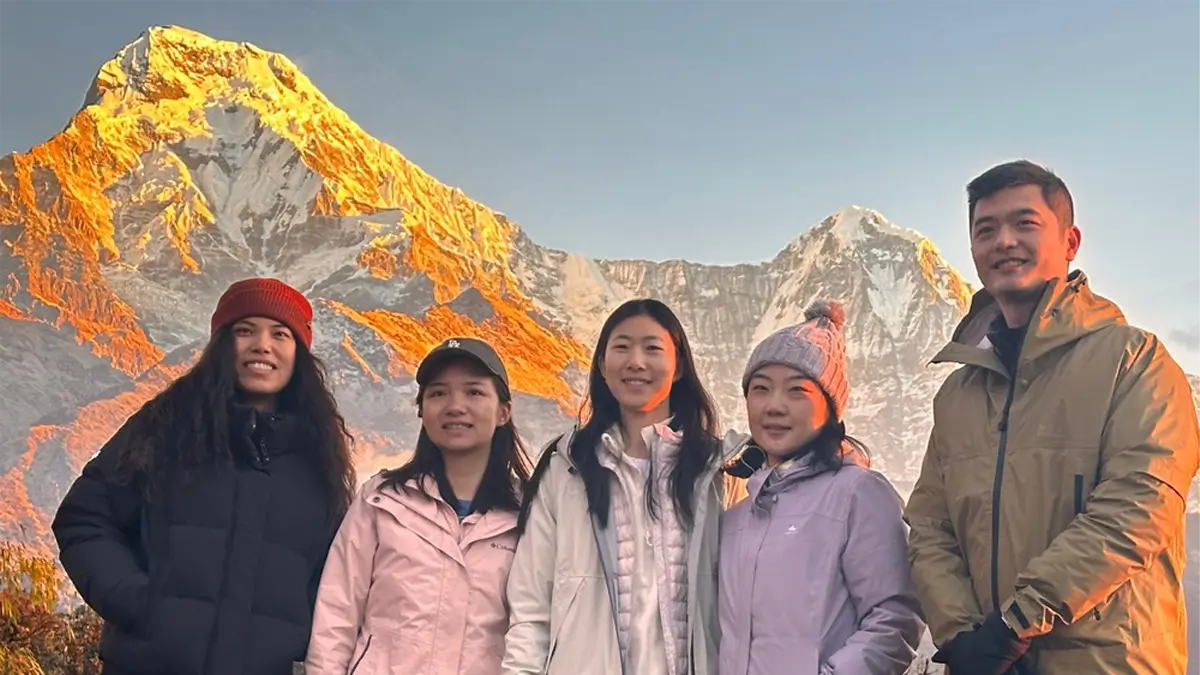
Just one trip to Annapurna offers a range of landscapes comprising lush forests, terraced hills, waterfalls, Himalayan summits, snowfields, and villages. It is also one of the popular trekking areas in Nepal as there are trekking routes that suit all experience, time, and budget.
Annapurna Circuit Trek is a classic long-distance trek in Nepal. Encircling the Annapurna massif, the trek offers you the opportunity to experience truly amazing vistas of lower valleys, lush forests, high altitude trekking, and the famous Thorong La Pass.
Annapurna Base Camp Trek is another classic trek in Nepal, taking you deep inside the Annapurna Sanctuary. Surrounded by some crushing giants of the Himalayas, the trek takes you through lush forests, villages, and terraced hills to the base camp.
The Mardi Himal Trek is a quieter and shorter trek in the Annapurna, and let’s not underestimate its shorter itinerary. The views are nothing short of amazing. The trek is for you if you are craving for a Himalayan trek but don’t like spending weeks away from home.
What’s the biggest drawcard of this trekking area? It’s the variety. The Annapurna's have more of everything, both natural and cultural in nature, and so the trek is fascinating from start to end.
You have an amazing experience trekking here, in the good unpredictable sense. You could be standing face to face with green trees at the start of your trek, walk past terraced fields and village huts, and then end up looking up at a wall of gleaming white peaks.
Trekking to the Langtang Region: Culturally Rich and Ideal for Shorter Himalayan Adventure
Looking for a real Himalayan experience that won't last two weeks exploring the deep heart of the mountains? You get rugged mountain scenery, green valleys, old-fashioned villages, and cultural exposure to the Tamang people, just a few days north of Kathmandu at Langtang Valley.
The most popular trek in the area, as well as one of the most varied shorter treks in the country, the Langtang Valley Trek takes you through forests, rivers, and old-fashioned villages. The trail then rises into the high alpine Langtang Valley and up to the Kyanjin Gompa.
The Gosaikunda Lake Trek also takes you through green hills, forests, old-fashioned villages, and cultural exposure to the Hyolmo people. With the beautiful combination of majestic mountains, forest, and culture, and relatively easy trekking routes, Langtang has more of the view of towering mountains behind you compared to headline-grabbing trekking routes in Nepal.
Guided Treks to Manaslu Region: Home to Remote Himalayan Trekking
If you prefer your Himalayan adventure to have a little more privacy, a little more ruggedness, and a little fewer trekkers, the Manaslu area is worth dwelling on. Nestled around Mount Manaslu, the world’s eighth-tallest mountain at 8,163 meters, the area has remote trails, scenic valleys, comely village heights, and a purely Himalayan vibe.
Manaslu’s most famous trek is the Manaslu Circuit Trek, one of Nepal’s most rewarding remote treks. The trek follows the Budhi Gandaki Valley around Mount Manaslu, and one of the trek’s major sights is crossing the Larkya La Pass at 5,106 meters high.
The Tsum Valley trek takes you into a remote Himalayan valley noted for its Buddhist history, traditional village life, and its remote setting. The valley has a Tibetan-like culture, and is the perfect trek if you want to be a part of a lesser-known side of the Himalayas.
Manaslu feels less connected to the world beyond. The farther you travel around the region, the less traveled the routes get and the more dramatic the scenery becomes. The villages get smaller, the mountains smaller distance away, and it feels like daily routines are done in a completely different rhythm.
Everest, Annapurna, Langtang, Or Manaslu: Which Region Should You Choose?
Still looking at the four options as if you decide what to have for dinner? That’s ok. Everest, Annapurna, Langtang, and Manaslu are great, but they’re also very different in terms of trekking experiences. The best region depends on your time, your fitness, your trekking experience, and, of course, how much mountain drama you want in your life.
If you have had Mount Everest on your bucket list long enough, this should be the incident of a lifetime, the obvious pick. Everest is the best choice if you want your first big Himalayan experience, iconic scenery, high-altitude trekking, and the pleasure of saying later, “Yep, I trekked to Everest Base Camp in Nepal.
If you want a little bit of everything-yielding, enchanting scenery, cultural experiences, and trekking options, Annapurna is the all-rounder. You will be cut from green forests and terraced hills to traditional villages and snow-covered mountains in the same trekking experience.
Don’t have two or three weeks to spare? No problem. Langtang is here for the shorter Himalayan adventures. This region is best for first-time trekkers, cultural experiences, and travelers with limited time.
If crowded trails aren’t your thing, and “remote” sounds more exciting than “popular”, look towards Manaslu. This region is best for experienced trekkers, remote adventures, fewer crowds, and rugged carable mountain.
Why Choose a Guided Trek in Nepal?
You can look at the Himalayas, snap a picture or two, and call it a day. But if you are actually going into the mountains, we recommend you trek with a local trekking guide in Nepal for a smoother and less stressful experience! Having a guide will bring several benefits, from knowing the trails to making better decisions.
Mountain trails can be confusing, especially with the changes of weather or landslides or trail conditions. A local guide knows the route and terrain, so he/she can be your navigator.
Given that high altitude is not something to be made a sport! Your guide will help you determine a sensible pace, know how to recognize the signs of symptoms, and advise you to rest or acclimatize appropriately.
And in many cases, you can also delegate planning. Depending on your package, your guide or trekking company can help with permits, accommodation, food, transportation, and daily route planning.
More importantly, you will gain experience! Your guide can share about the communities, her/his history, religion, wildlife, and landscapes you will encounter. Thus, you will have a deeper understanding of the places you are wandering through.
Best Time, Season, And Months for Epic Guided Treks in Nepal
Curious when’s the best time for epic guided treks in Nepal? Spring and autumn are usually the best. You have better mountain visibility, clearer skies, and overall nicer trekking conditions. Basically, the whole Himalayas cooperate for once.
The best season to trek in Nepal is spring. The weather is generally good, mountain views are often clear, and the lower trails are in full rhododendron bloom. It can still be quite cold at higher altitudes in March, and warmer in April and May.
The best trekking season in Nepal is autumn. After the monsoon season, the skies are often clear, the air is refreshing, and mountain views are often spectacular. October and November are particularly popular. And the catch? Everyone else knows this too, so expect busier trails and tea houses during peak periods.
Can You Trek in Nepal During Monsoon or Winter?
Well, winter trekking is possible, particularly on lower-altitude routes, but higher trails can become extremely cold and snowy. High passes may also be affected by winter conditions. If you don't mind cold mornings and want quieter trails, December to February can still work for suitable routes. Just pack like you mean it.
As for the monsoon season, it brings frequent rain, cloudy skies, and potentially muddy or slippery trails across much of Nepal. It is generally not the first choice for most high-altitude treks. However, some rain-shadow areas can offer better trekking conditions during this period. Your guide or trekking company can help determine which routes are suitable.
How Difficult are the Guided Treks in Nepal?
Let's be honest: guided doesn't mean easy. Yes, you may have a guide in charge of the route, logistics, and mountain know-how, but your legs still remain on the doing part. The difficulty of a guided trek in Nepal would vary, of course, depending on the route, your elevation, the time length, the difficulty of the terrain, the weather conditions, and your own level of fitness.
But the good news is that you do not have to be a professional mountaineer to trek safely on every trek.
Since the Langtang region is usually best suited for a short, somewhat difficult Himalayan trek for beginners, and there is a range of different difficulties in the Annapurna region, due to the sheer number and variety of routes available.
In this case, the Everest region is more demanding, mainly due to the high altitude. And as the Manaslu region is also quite a challenge, this is normally only recommended for those who are comfortable with long and challenging treks in remote areas.
So yes, beginners can take part in guided trekking in Nepal, but only if they choose a suitable route and prepare adequately. A guided trek offers support in terms of pace setting, route guidance, acclimatization, and daily logistics, but you still need to make a decision based on your own fitness, experience, and available time.
How Much Does a Guided Trek Cost in Nepal?
So, how much does a guided trek in Nepal cost? Well, the guided cost differs with guided experience and the trekking company what they offer.
How much a guided trekking trip in Nepal will cost depends on the area you are trekking in, and the quality of services and their experience, Duration of your trekking plan and for, the difficulty of the trail, the size of the group, the accommodation, the transportation, the permits, the guide, and porter services. They are not always too costly.
In Nepal, you will be able to find guided treks for nearly every budget in the country, doing shorter treks or longer ones in the Nepal Himalayas. The key thing is to not get sucked into the price game, or pick a package just because it seems cheap, but to check what is actually included and excluded in the trekking package cost.
A package that is cheaper may not include permits, meals, transport, or porter services. A slightly more expensive package will probably include most of the logistics services in advance.
FAQs
Which is the best region for first-timers trekking in Nepal?
The Annapurna and Langtang regions are ideal for first-timers trekking in Nepal, being varied, flexible, and having plenty of “mountain shots” without launching straight into the death zone.
Is Langtang good for a short trek?
Absolutely! Langtang is one of the best regions for a short trek in Nepal. You get the best of both worlds, Himalayan views and culture, without having to spend weeks.
Are Manaslu treks for beginners?
Manaslu treks are best done for experienced or well-prepared trekkers. Lengthier itineraries, overland terrain, high altitude, and the difficult Larkya La Pass make them best suited to the experienced.
Do I need a guide for trekking in Nepal?
Hiring a guide is the customer’s choice, some of the route people can trek without a guide also, most of the trekkers they hire guide and trek with a government registered trekking company. Which makes comfortable, safety, security, hassle free and freedom travel and trek.
When is the best season for trekking in Nepal?
Generally, spring (March, April, and May) and autumn (September, October, and November) are ideal seasons for trekking in Nepal due to clear skies, good visibility, and ideal trail conditions.
Which is the hardest trek in Nepal?
There is no single "hardest" trek, but some of the most difficult treks are the high-altitude treks, such as the Everest Three High Passes Trek, Ganjala Pass, and the more remote Dhaulagiri Circuit Trek.
Is Nepal treks difficult?
There is something for everyone, some treks are difficulty and some treks are easy, ranging from moderate to extremely challenging treks. The trails range from routes suitable for beginners, coupled with some not for the faint-hearted, so no need to pair your trek with a Himalayan suffer fest.
How many days does a guided trek in Nepal last?
A guided trek can be any duration and if you hire a guide for your trek like when you’re trekking with a guide that is guided trek. 5 days to a few weeks long, it depends upon the itinerary and region. For instance, during the peaks like Mardi Himal and others, it is a tighter schedule.
Can you customize a guided trek in Nepal?
Yes. Private guided treks in Nepal can usually be customized around your preferred duration, route, pace, accommodation, difficulty, and interests, subject to permits and trail conditions.